

Entangled Journeys • Student Travellers Between Europe and the Middle East
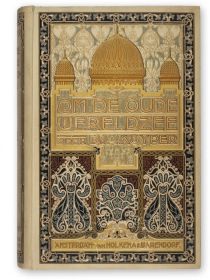
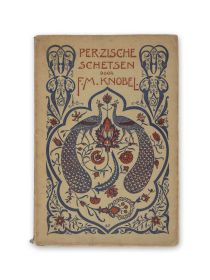
The University of Groningen Library holds a rich collection of Dutch travel accounts to the Middle East. It was discussed during the European Night of Researchers (26 September 2025) and it will be examined in greater depth during the 2026–27 Centennial of Middle Eastern Studies at the Faculty of Arts. Back in its early days, until 1925, this field was still housed within the Faculty of Theology.
Since 2023, the BA course Europe in the Middle East, the Middle East in Europe invites undergraduates to rethink familiar East–West binaries. Through seminars, archival research and a four-day field trip in Paris, students explore how political, religious and cultural contacts from the late-nineteenth to the late-twentieth century shaped identities on both shores of the Mediterranean. Last year, one of the class’s creative assignments was to write an individual historically informed travel blog based on letters, memoirs or books from Dutch travellers. The students first studied translated texts from Middle-Eastern travellers to Europe who rebutted politicized Western representations of the East—Middle-Eastern travellers well acquainted with the European political and cultural scene—and how they deconstructed clichés about ‘the Orient,’ investigating Orientalism from the perspectives of the ‘Orientals’ themselves, and the richness and vigourous intellectual debates between both shores of the Mediterranean.
What follows is a composite short narrative drawn from a few students’ blogs, showing how the Middle East has been imagined, visited and narrated by these selected Dutch travellers and how today’s students critically re-engage with those texts.
Across these travel accounts, recurring motifs link the most disparate journeys. Students described travellers moved between spiritual and political crossings, pursuing both faith and knowledge. At the same time, these travellers’ writings reveal a persistent tension between Orientalist stereotypes and moments of self-reflection, as Europeans defined their own modernity by contrasting it with an ‘East’ that they alternately admired and belittled. The routes they followed underscore a long history of mobility and material exchange, where goods, ideas and beliefs circulated well before the word globalisation existed.
Piety, Mission, Caravan Routes and Hospitality
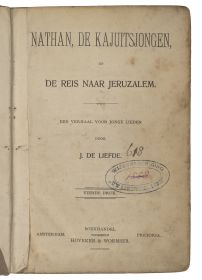
Jan de Liefde’s Nathan de Kajuitsjongen (1848) is a Protestant adventure story about a boy sailing toward Jerusalem. It is a double journey, ‘the physical journey to Jerusalem inextricably linked to the quest for spiritual truth’ (M. Mohammadi). This novel is also ‘a form of Orientalism at a distance’ (I. Wensik), the main character declaring: ‘There are two Jerusalems. One is bound, captive, in bondage and slavery; the other is free and glorious.’The story ‘subtly critiques religious pilgrimage and tourism by suggesting that within Christianity sacred places are not necessary for divine connection; rather, the true “Jerusalem” lies in the relationship between the believer and God’ (B. Krale), which is not surprising for calvinist travellers. This book also exposes how missionary zeal and endeavours for what was then qualified as ‘Christian universalism’ and a disdain for Judaism or Islam were intertwined with the era’s expanding travel networks. The main character’s imagined Jerusalem also shows how sacred landscapes became arenas for personal conviction and intellectual debate.
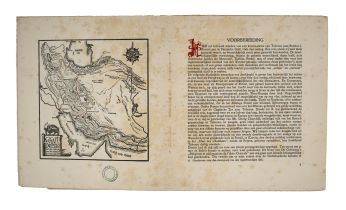
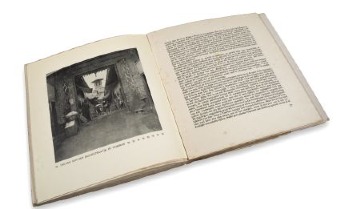
More Eastward, Maurits Wagenvoort’s Karavaanreis door Zuid-Perzië (1926) gives a detailed account of slow caravan travelling before modern highways. The Persian caravanserai becomes ‘a miniature version of society,’ its walls alive with inscriptions from generations of travellers (J. Kleinhuis).
-
Colonial eyes
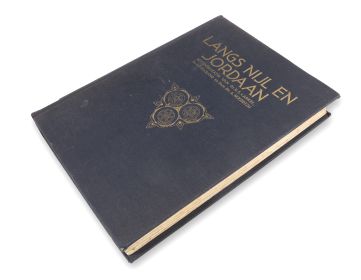
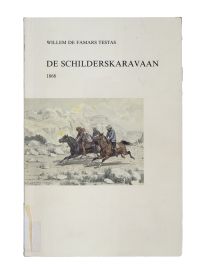
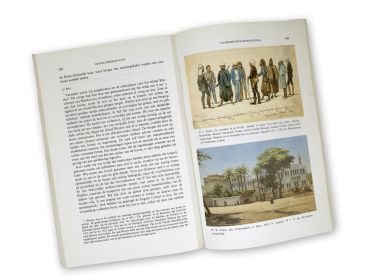
The Swiss Protestant Félix Bovet’s Reis door het Heilige Land (1862), often read in Dutch circles in its Dutch translation, appears as ‘an early form of empirical theology,’ yet the author ‘consistently contrasts the modernizing West with the ‘onbewijgelijke Oosten’ / ‘undisputed East’, ‘using the East as ‘a stabilizing reference point that allows him to reflect on the fragility of modern Europe’ (I. Beerens). Between Bovet’s wonder at Alexandria’s colours (D. van der Marel) and his ‘clear disdain towards the looting of native art’ by the British (S. Ostendorf), Bovet’s ambivalence in Cairo offers similarities with Willem de Famas Testas’s memoirs De Schilderskaravaan (1862) (J. Stenvert) and Dr. Noordtzij’s later travel account from the 1920s, Langs Nijl en Jordaan: reisindrukken uit Egypte en Palestina, where missionary work mixes uneasily with admiration for local hospitality (L. Roos).
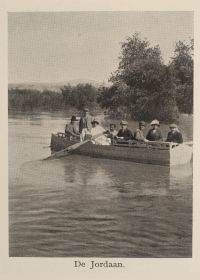
These narratives also expose unmistakable gendered gazes. Kuyle’s descriptions of Tunisian dancers and Aletta Jacobs’s judgements of Muslim women remind us that perceptions of the Middle East were filtered also through the traveller’s own gendered expectations. Aletta Jacobs’s letters written during her travels to Palestine (1915) reveal the colonial undertones of this pioneering Dutch feminist, praising Jewish agricultural colonies for their modern hygiene, opposing them to Arab streets of Palestine ‘indescribably filthy,’ and joking about distinguishing men from women by facial hair, while celebrating educated Muslim women who ‘defy tradition,’ showing the complexity of early-20th-century feminist travel writing (H. Noordhof).
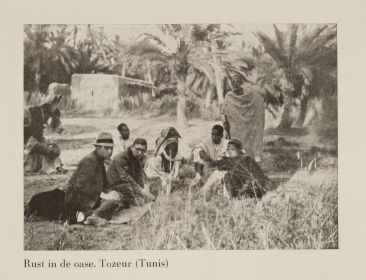
The Maghreb isn’t absent from these travel accounts. In Van Pij en Burnous (1927), Dutch Catholic writers Albert Helman and Albert Kuyle travel from Rome to Tunis. Their orientalist gaze is similar in many ways to Dutch travellers to the Middle East of that period: after a debate on Islam, they dismiss their hosts (‘Arabs do not reason’) and contrast veiled women with dancers, who are described in sensual details (A. Swinkels).
Travellers as Mirrors?
The aims of this course (challenging binary views of East-West relations and understanding cultural circulations) are vividly met in these blogs. By critically engaging with primary travel accounts, students demonstrated that the Middle East and Europe have never been isolated worlds. Their writings, of which only a few are quoted in this blog, invite today’s readers to question inherited stereotypes and to see travel not as mere movement through space, but as a dialogue of ideas, identities and imaginations.
Reading these 19th- and early-20th-century journeys, we meet travellers who were at once curious observers, cultural critics and products of their own times. Each of these writers shows how travel can be both encounter and projection. Their pages teach us that journeys are never neutral: they record the textures of various places and communities, but also the assumptions and desires that travellers carry with them. They remind us that mobility (of people, ideas and faiths) has long shaped the histories of Europe and the Middle East. By tracing how these voyagers described landscapes, judged customs and wrestled with faith, we also learn about the evolving European imagination, projection and encounters.
This blog contains contributions by (alphabetically) Isabel Beerens, Julia Kleinhuis, Boudewijn Krale, Dirk van Marel, Mo Mohamedi, Hugo Noordhoff, Simone Ostendorf, Lars Roos, Jens Stenvert, Alana Swinkels and Ivo Wensik, who were third-year BA students (2024–2025) participating in the seminar ‘Europe in the Middle East, the Middle East in Europe’.