Hoe kun je grote hoeveelheden data automatisch analyseren en doorgronden? Hoe kunnen we informatietechnologie zo ontwikkelen dat de behoeften van de mens centraal staan? Zijn AI-modellen zoals ChatGPT echt zo slim als ze zich voordoen, en hoe kunnen we ze verbeteren?

Bij Informatiekunde in Groningen staan twee thema's centraal: computertaalkunde en toepassingen voor het web. In Groningen wordt bovendien de studie onderwezen aan de Faculteit der Letteren, en wordt de aandacht gericht op gegevens die relevant zijn voor letteren, zoals tekst, taal en webtechnologie. De studie is toepassingsgericht, waarbij theorie en praktijk een goede balans vormen.
In het eerste jaar maak je kennis met programmeermethoden en softwareontwikkeling (er wordt geen bestaande programmeerkennis vereist) die belangrijk zijn voor data science projecten. Ook ontwikkel je praktische vaardigheden op het gebied van AI, web- en taaltechnologie.
| Semesters | ||||
|---|---|---|---|---|
| VakkenVakkencatalogus > | 1a | 1b | 2a | 2b |
| Grondslagen van de Taaltechnologie (5 EC) | ||||
| Inleiding Informatiekunde (10 EC) | ||||
| Programmeren (10 EC) | ||||
| Statistiek I (5 EC) | ||||
| Datamanipulatie (5 EC) | ||||
| Humane AI in Digital Societies: Introduction (5 EC) | ||||
| Machine Learning (10 EC) | ||||
| Webdevelopment (10 EC) | ||||
In het vervolg van de studie verbreed je enerzijds je theoretische kennis van data science en krijg je anderzijds de gelegenheid om je programmeervaardigheden in te zetten voor AI toepassingen zoals taaltechnologie, intelligente applicaties, en technologieën waar de mens centraal staat.
| Semesters | ||||
|---|---|---|---|---|
| VakkenVakkencatalogus > | 1a | 1b | 2a | 2b |
| Introduction to Neural Networks (5 EC) | ||||
| Zoekmachines (5 EC) | ||||
| Intelligent Databaseontwerp (10 EC) | ||||
| Conversational Interfaces (5 EC) | ||||
| Statistics I (5 EC) | ||||
| Computationale Grammatica (5 EC) | ||||
| Human Computer Interaction (5 EC) | ||||
| Global Change: Contemporary Issues (10 EC, keuzevak) | ||||
| Humane AI in Digital Societies: Projects (10 EC, keuzevak) | ||||
| Statistiek I (10 EC, keuzevak) | ||||
| Stories We Live By: Narrating the World (10 EC, keuzevak) | ||||
| Informatietheorie (5 EC) | ||||
| Sociale media (5 EC) | ||||
In het derde jaar volg je verder verdiepende vakken die ingaan op actuele thema's op het gebied van data science. Je leert over hoe mensen en AI creatief kunnen samenwerken en analyseert de impact van nieuwe technologieën op de samenleving. Je sluit je studie af met een onderzoek waarin je een technologische applicatie zelf ontwikkelt en kritisch evalueert.
| Semesters | ||||
|---|---|---|---|---|
| VakkenVakkencatalogus > | 1a | 1b | 2a | 2b |
| Minor (30 EC) | ||||
| Machine Learning Project (5 EC) | ||||
| Machine Translation (5 EC) | ||||
| Ba-scriptie Inf. met onderzoekswerkgroep (10 EC) | ||||
| Ethical Aspects in Natural Lang. Proc. (5 EC) | ||||
| Taaltechnologie (5 EC) | ||||
Meer informatie over de studielast, het aantal studieuren, je rooster en de benodigde boeken ontvang je tijdens de introductie in augustus.
| Programma-opties |
|---|
| Vrije ruimte (major) Tijdens de opleiding kom je in aanraking met meerdere disciplines. In het tweede en derde jaar heb je (naast je minor) de mogelijkheid om zelf vakken te kiezen in je vrije ruimte. Je kunt dit gebruiken om een specialisatie te kiezen die het beste bij je past. Je kan hierbij denken aan:
|
| Minoren (minor) Het vijfde semester besteed je aan je minor: een pakket samenhangende vakken dat toekomstgericht is. Het bereidt je voor op een vervolg in een mastertrack of op de arbeidsmarkt. Kies uit een careerminor, buitenlandminor, universitaire minor of facultaire minor. |
| University of Groningen Honours College (honoursprogramma) Het Honours College biedt talentvolle en gemotiveerde studenten de kans meer uit zichzelf te halen. Dat doe je door het volgen van een extra (honours)programma van 30 studiepunten naast je reguliere bacheloropleiding van 180 studiepunten, en door tal van andere activiteiten die je samen met honoursstudenten van andere opleidingen onderneemt en organiseert. Ontwikkeling van talent en eigen initiatief zijn de uitgangspunten van het honoursprogramma van de RUG. |
Met het VWO examen Engels voldoe je aan de taaleis.
Met het VWO examen Engels voldoe je aan de taaleis.
Met het VWO examen Engels voldoe je aan de taaleis.
Met het VWO examen Engels voldoe je aan de taaleis. Aangevuld met Wiskunde A of Wiskunde B. Heb je Wiskunde C gedaan, dan moet dit aangevuld worden met een behaalde toets van de Centrale Commissie Voortentamen (http://www.ccvx.nl/) of het Bosswell Beta Instituut (http://www.boswell-beta.nl/).
De opleiding verzorgt matching. Deelname is optioneel. Het advies is niet bindend.
De Faculteit der Letteren gaat er van uit dat jij, via een bezoek aan de Open dagen, deelname aan een Eén Dag student en/of aan een Webklas, jezelf goed hebt voorbereid op de opleiding van jouw keuze. Op basis van deze voorlichtingsactiviteiten bepaal jijzelf of je goed matcht met de opleiding.
| Type student | Deadline | Start opleiding |
|---|---|---|
| Nederlandse studenten | 01 mei 2027 | 01 september 2027 |
| EU/EEA studenten | 01 mei 2027 | 01 september 2027 |
| non-EU/EEA studenten | 01 mei 2027 | 01 september 2027 |
The Faculty of Arts believes students can decide for themselves whether they match with their chosen programme based on the available bachelor programme information, by visiting the Open Days, and by participating in a Webclass and/ or Student for a Day. If you are unable to attend one of these activities, a final opportunity for matching is to contact one of the students of the programme in June.
| Specifieke eisen | Extra informatie |
|---|---|
| vooropleiding |
A Dutch VWO diploma, a German Abitur, an International Baccalaureate diploma, a European Baccalaureate or another diploma that is sufficient for acceptance to a Dutch university. For other VWO-equivalent qualifications, see: https://www.rug.nl/vwo-equivalent-qualifications. Students with a Dutch 'hbo-propedeuse' diploma also need to meet the English language requirement mentioned below. |
| aanvullend vak |
Mathematics for social sciences (graphs and statistics) or higher level: This is merely an indication of required background knowledge. Based on the specific contents of this/ these course(s), it will be determined whether you can be admitted directly to the bachelor programme or if you need to pass an entrance exam to meet the admission requirements. |
| overige toelatingseisen |
Language requirement English: You must have obtained one of the following English certificates:
Language requirement Dutch: International students will have to satisfy an additional Dutch language requirement, which can be met by passing the State Examination in Dutch as a Second Language (NT2, programme II). This examination guarantees Dutch proficiency at CEFR level B2. However, Dutch proficiency at CEFR level C1 or higher is recommended. |
| Type student | Deadline | Start opleiding |
|---|---|---|
| Nederlandse studenten | 01 mei 2027 | 01 september 2027 |
| EU/EEA studenten | 01 mei 2027 | 01 september 2027 |
| non-EU/EEA studenten | 01 mei 2027 | 01 september 2027 |
Als je je universitaire opleiding voort wilt zetten door een master te volgen, zoals de meeste studenten doen, zijn er allerlei verschillende vervolgopleidingen waar je uit kunt kiezen. Masteropleidingen die aansluiten op de Bsc Informatiekunde zijn:
De perspectieven op de arbeidsmarkt zijn momenteel zeer gunstig voor informatiekundigen. Dat is ook niet vreemd, want veel (grote en kleine) bedrijven weten niet wat ze met de vele informatie die ze tot hun beschikking hebben kunnen doen (laat staan hoe). Ook is er behoefte aan verbetering van communicatie tussen klant en bedrijf (denk bijvoorbeeld aan chatbots die worden ingezet bij klantenservice, gepersonaliseerde advertenties, en automatische analyse van social media voor productrecensies).
Na afronding van de BA Informatiekunde heb je onder andere de volgende vaardigheden opgedaan:
- Programmeren in verschillende programmeertalen en omgevingen,
en je hebt het vermogen om makkelijke nieuwe programmeertalen te
leren gebruiken
- Complexe informatie-verwerkende systemen ontwerpen, implementeren
en evalueren;
- Op de juiste manier statistische methoden toepassen om informatie
te analyseren;
- Je weet welke technieken en methodes uit de taaltechnologie en
kunstmatige intelligentie je waar moet inzetten.
Onze afgestudeerden komen terecht bij een breed scala aan bedrijven. Enkele voorbeelden: Anchormen, Atos, Belsimpel, DUO, Fox IT, Goldman Sachs, IBM, Sogeti, en Wehkamp. Sommige van onze studenten hebben vaak al voor de afronding van de studie een baan bij een ICT-bedrijf. Anderen daarentegen zijn ondernemend ingesteld, vinden een gat in de markt, en kiezen ervoor een eigen bedrijf te starten. Er zijn al verschillende goedlopende ICT-bedrijven opgericht door alumni uit Groningen, vaak ook met medestudenten. Drie succesvolle voorbeelden: Crowdy News (social content curation), Flocker (online marketing), Klippa (digitaal declareren).
Als student Informatiekunde ontwikkel je een goede theoretische en praktische basis voor het verrichten van informatiekundig onderzoek. De kennis die je opdoet en de vaardigheden die je verwerft, sluiten goed aan op de eisen van de arbeidsmarkt voor onderzoekers in de Informatiekunde.
Het informatiekundig onderzoek in Groningen richt zich op het ontwikkelen, het gebruik en de evaluatie van taal- en webtechnologie. Voorbeelden zijn het automatisch zoeken en analyseren van informatie in oude en nieuwe media, machinaal vertalen, dialectology, corpus annotatie, gamification, en het automatisch ontleden en interpreteren van tekst. Dit onderzoek wordt gecoördineerd in de groep Computational Linguistics binnen het Center for Language and Cognition Groningen (CLCG).

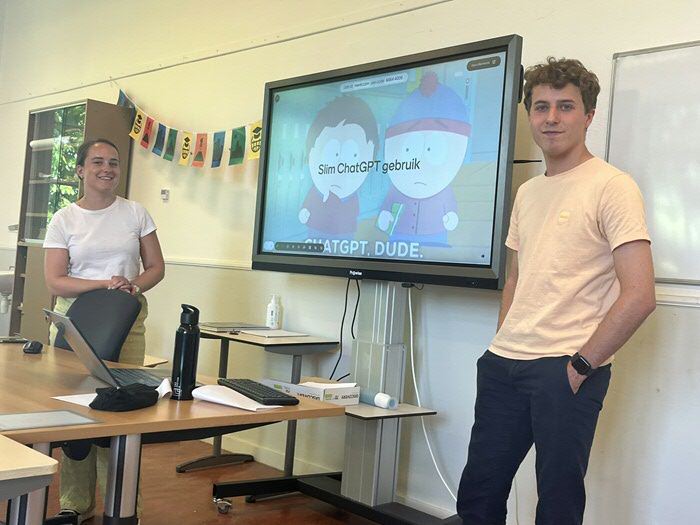
Studenten Informatiekunde gingen in gesprek met middelbare scholieren over de maatschappelijke impact van taaltechnologie. De bezoeken aan verschillende middelbare scholen in en rond Groningen zijn onderdeel van het derdejaars vak Ethical Aspects in Natural Language Processing, dat in het academisch jaar 2021-2022 aan het bachelorprogramma Informatiekunde is toegevoegd.
In dit vak leren toekomstige professionals om na te denken over de ethische implicaties en de impact op de samenleving als geheel van de op taal gebaseerde AI-tools waar ze later zelf aan zullen bijdragen, en leren ze hierover in gesprek te gaan met niet-professionals. Het vak is mede-ontwikkeld door prof. dr. Malvina Nissim.
Lees meer over leren en onderwijzen over ethiek in taaltechnologie.
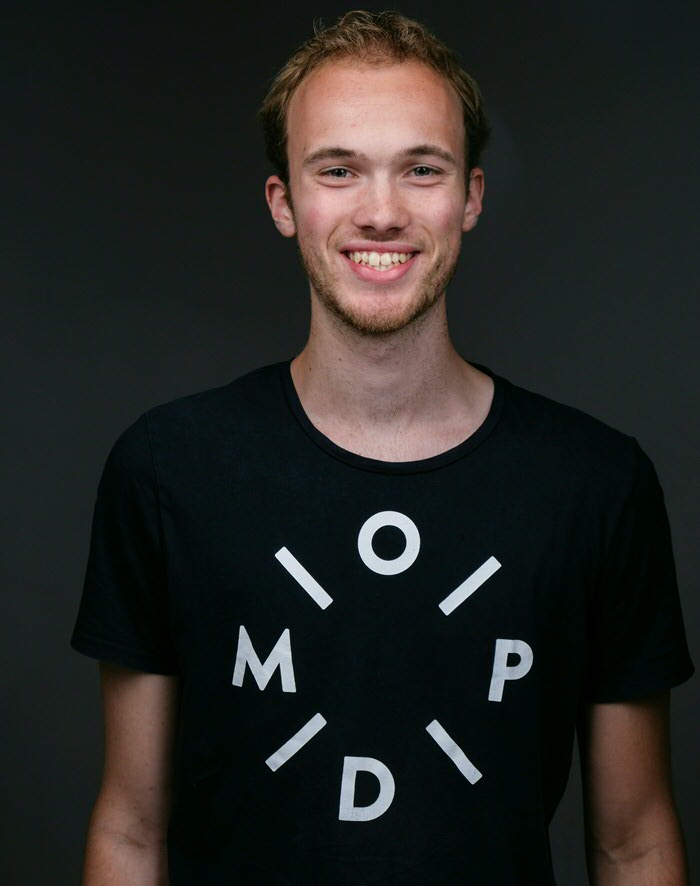
Voordat ik Informatiekunde ben gaan studeren in Groningen, heb ik eerst Kunstmatige Intelligentie gestudeerd aan de Universiteit Utrecht. Deze studie bleek na een half jaar toch niet helemaal iets voor mij te zijn. Toen ik op zoek ging naar andere ICT gerelateerde studies, kwam ik Informatiekunde tegen. Deze studie wist de onderwerpen die ik wél leuk vond bij Kunstmatige Intelligentie, zoals programmeren, te combineren met interessante taalkundige en communicatiewetenschappelijke onderwerpen.
Bij het maken van mijn studiekeuze, heb ik verschillende Informatiekunde open dagen in Nederland bezocht. De bijzondere combinatie van zowel programmeren als taalkunde in Groningen sprak mij van alle deze verschillende studies het meeste aan.
Aangezien een grote focus van deze studie ligt op het verwerken van taal met behulp van computers, is het wel belangrijk dat je (naast programmeren) enigszins geïnteresseerd bent in taalkunde. Hoewel deze combinatie mij goed is bevallen, kan het handig zijn om deze afweging te maken voordat je aan deze studie begint!
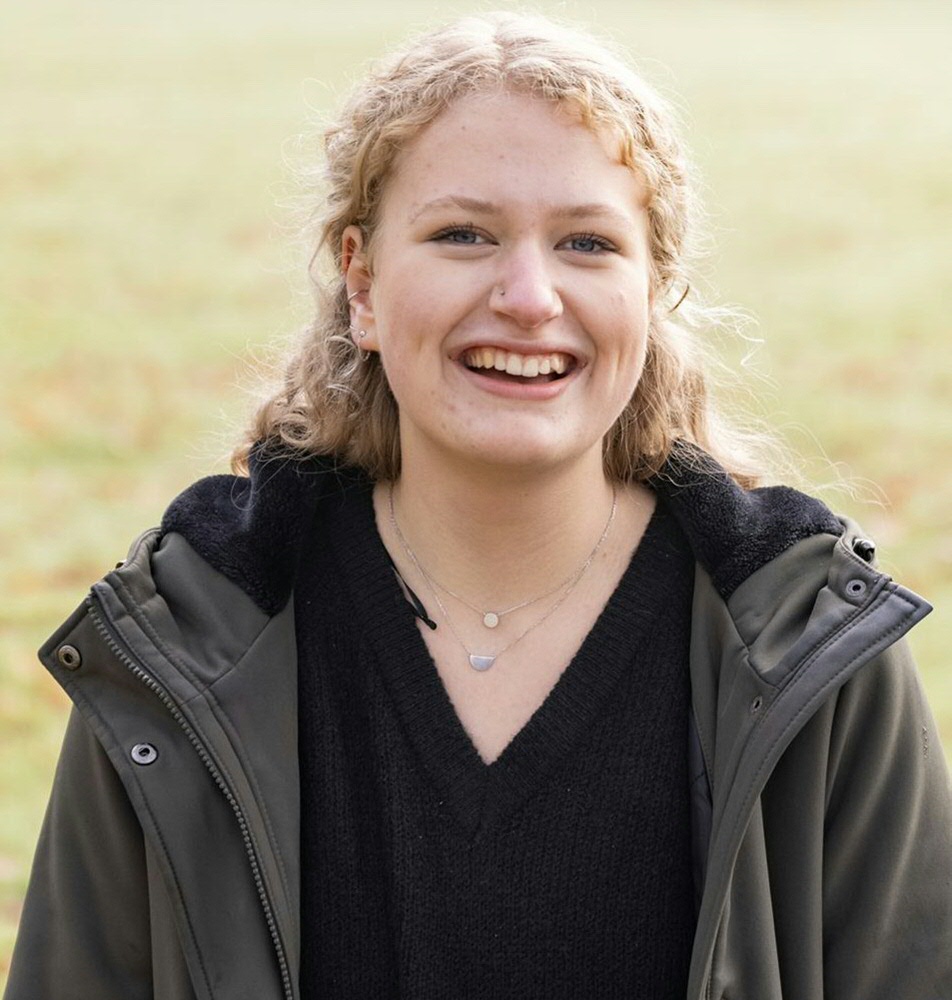
Ik vond het vak Informatica op de middelbare school erg leuk, maar ik wilde niet een studie die volledig gefocust was op programmeren. Hierdoor heeft de unieke combinatie van programmeren en taalkunde in Groningen mij persoonlijk aangetrokken tot Informatiekunde.
Toen ik de studie Informatiekunde gevonden had, ging ik mij oriënteren op de verschillende locaties waar deze studie wordt aangeboden. Groningen leek mij het leukst, omdat de studie kleinschalig wordt aangeboden, hierdoor ken je je studiegenoten goed, maar is ook de communicatie met de docenten laagdrempelig. Daarnaast vind ik de taalkundige aspecten van dataverwerking erg interessant.
Nadat ik mijn bachelor heb afgerond, ben ik van plan om mijn master ook in Groningen te volgen. Doordat de studie redelijk breed is, kun je meerdere masters kiezen, zelf ben ik geïnteresseerd in de master Computercommunicatie. Na mijn master kijk ik er erg naar uit om mijn opgedane kennis over Informatiekunde en Computercommunicatie onderwerpen toe te passen.
Raak niet ontmoedigd door het programeren! De programmeervakken starten allemaal op een beginnersniveau, zodat je dus ook zonder ervaring kan starten.
Verder ben ik tijdens mijn eerste jaar lid geworden van ASCI en hierdoor heb ik snel studiegenoten leren kennen, maar ben ik zo ook in contact gekomen met verschillende bedrijven. Ik raad het dus erg aan om lid te worden!
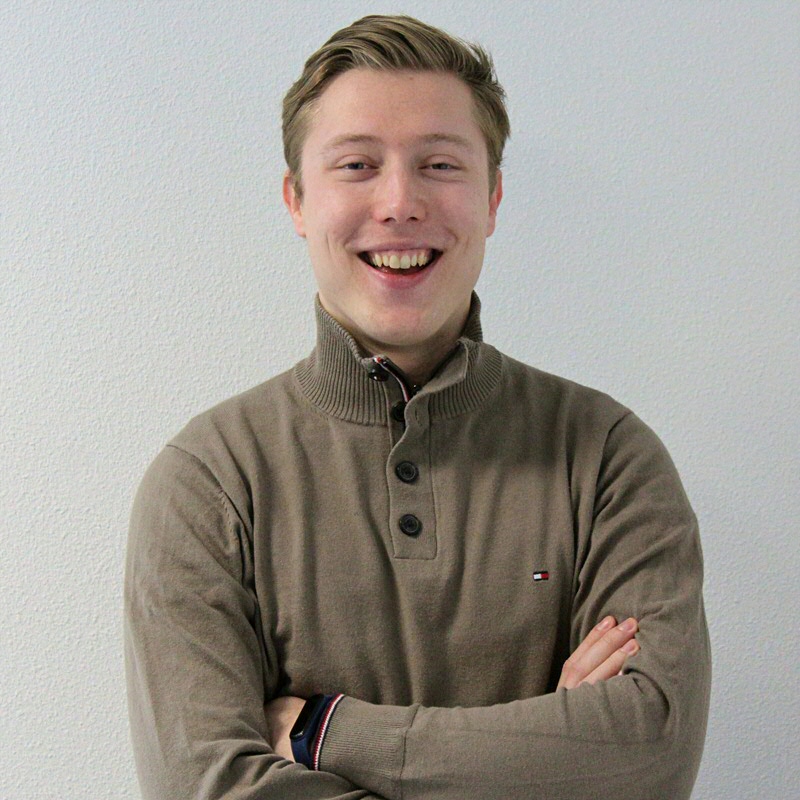
Voordat ik met de studie begon wist ik niet precies wat ik wilde. Ik heb maar liefst tweemaal de Open Dag van Informatiekunde bijgewoond voordat ik besloot om de gok te wagen. Data en programmeren was compleet nieuw voor mij. Enkele jaren later pas ik de opgedane kennis van Informatiekunde dagelijks toe binnen mijn eigen bedrijf.
Bij de opleiding leer je programmeren, doe je kennis op over databases, algoritmes, websites maken en leer je Machine Learning modellen te implementeren. Ook statistiek wordt behandeld, met programmeren is dat een uitstekende combinatie voor data science.
Een belangrijk onderdeel van Informatiekunde in Groningen is het werken met taal en tekst. Dit klinkt misschien suf, maar dat is het niet. Heb je bijvoorbeeld gehoord over ChatGPT? Hoe je zoiets zelf maakt, leer je bij Informatiekunde.
Aan de opleiding heb ik veel gehad. Naast hoe je wetenschappelijk onderzoek leest en schrijft, leer je ook de nieuwste kennis meteen toe te passen in de praktijk. Voor een universitaire opleiding is Informatiekunde erg praktijkgericht. Dat betekent dus relatief weinig tentamens en juist veel groepsprojecten.
De nieuwste kennis meteen in de praktijk toepassen, samenwerken in groepsverband en hoe omgaan met data zijn voor mij het belangrijkste wat ik bij Informatiekunde heb geleerd. Dit resulteerde dan ook in het oprichten van mijn eigen bedrijf, FRISCON, samen met Max Steg, een mede-Informatiekundestudent. Op onze website lees je meer over hoe wij onze kennis van informatiekunde nu toepassen!
Zit je op het vwo en wil je graag weten hoe dat is, studeren? De opleiding Informatiekunde biedt een webklas aan! Een webklas is een door de RUG gemaakte online cursus voor scholieren uit 5 en 6 vwo. Je kunt in zo'n cursus in tien studielasturen kennismaken met Informatiekunde door teksten te lezen, opdrachten te maken en met elkaar en de docent te discussiëren.
Interesse? Meld je hier aan!