Inhoud van de pagina:
English

Groningen Institute of Archaeology
 

The Groningen Institute of Archaeology (GIA) was established on 23 November 1995. Before 1995, archaeological research within the Faculty of Arts had been organized into four separate departments: the Biologisch-Archaeologisch Instituut, the Department of Classical Archaeology, the Department of Languages and Cultures of the Near East, and the Department of Arctic Archaeology. The founding of GIA was one of the outcomes of a national assessment of archaeological and historical sciences in April 1994. The peer review committee recommended placing all archaeological research in Groningen into one organizational framework in order to improve coherence within the discipline.
 

Affiliations

The Groningen Institute of Archaeology is a research institute within the Faculty of Arts of the University of Groningen , and is responsible for all archaeological research within the University. Nationally, GIA is associated with ARCHON, the Dutch research institute and graduate school for archaeology, which comprises archaeology departments at five universities (University of Amsterdam, Vrije Universiteit Amsterdam, University of Groningen, University of Leiden, University of Nijmegen), and the National Service for Archaeological Heritage (ROB) at Amersfoort. At present twelve GIA researchers are members of ARCHON.

Within the university of Groningen , GIA is associated with the Centre for Isotope Research (CIR), the Department of Molecular Biology of Plants (MBP), the Centre for Ecological and Environmental and Evolutionary Studies (CEES), the Department of Cultural Geography, and other research groups in the Department of Biology and the Faculty of Spatial Sciences.


Research area and mission

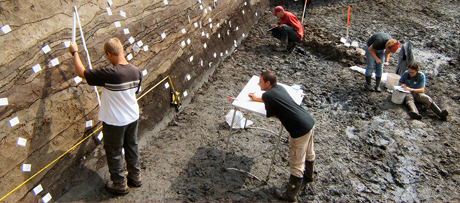
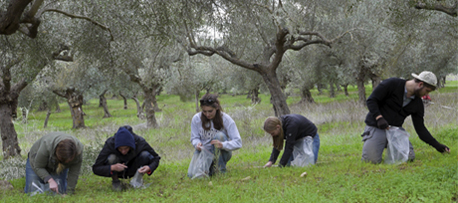
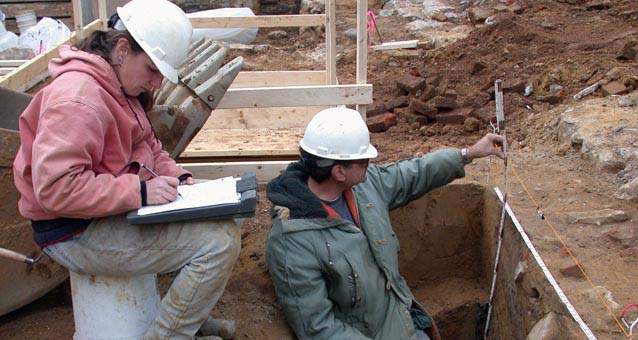
GIA engages in fundamental archaeological research with a strong ecological component in the Eurasian, Mediterranean and Arctic regions. Operating within the Faculty of Arts, it undertakes all the ecological-archaeological and cultural-archaeological research that is carried out by the  University of Groningen. GIA stimulates and integrates fundamental research on past human societies and their environments, from the level of Palaeolithic hunter-gatherers to that of historical complex urban societies. The Institute facilitates research and archaeological fieldwork through its laboratories, drawing facilities, documentation, GIS, and technical support. In addition, GIA co-ordinates the PhD student training programme and stimulates the dissemination of knowledge and culture to society at large.
 

Research facilities

The research group Arctic archaeology is located at the A-weg 30. The other research staff and facilities are housed close to Academy Square and the University Library, in two buildings in the centre of the city of Groningen, at Poststraat 6 and Broerstraat 9. The archaeological library is conveniently housed at Poststraat 6. The buildings were partly refurbished in 1996 and offer good facilities for archaeological research.

GIA has laboratories for palynological, palaeobotanical and archaeozoological research, a laboratory for conservation and material studies and a maceration laboratory. Reference collections of animal skeletons, seeds and pollen are available. The Poststraat building also has rooms for the cleaning and treatment of artefacts, as well as a large drawing office and facilities for digital cartography . Spacious but modestly equipped rooms to study large samples of artefacts are available in a nearby building in the centre of Groningen.


Laatst gewijzigd:24 september 2009 08:20
Associatieve links:
 
Naar boven