

Resilient local communities essential for reconstruction
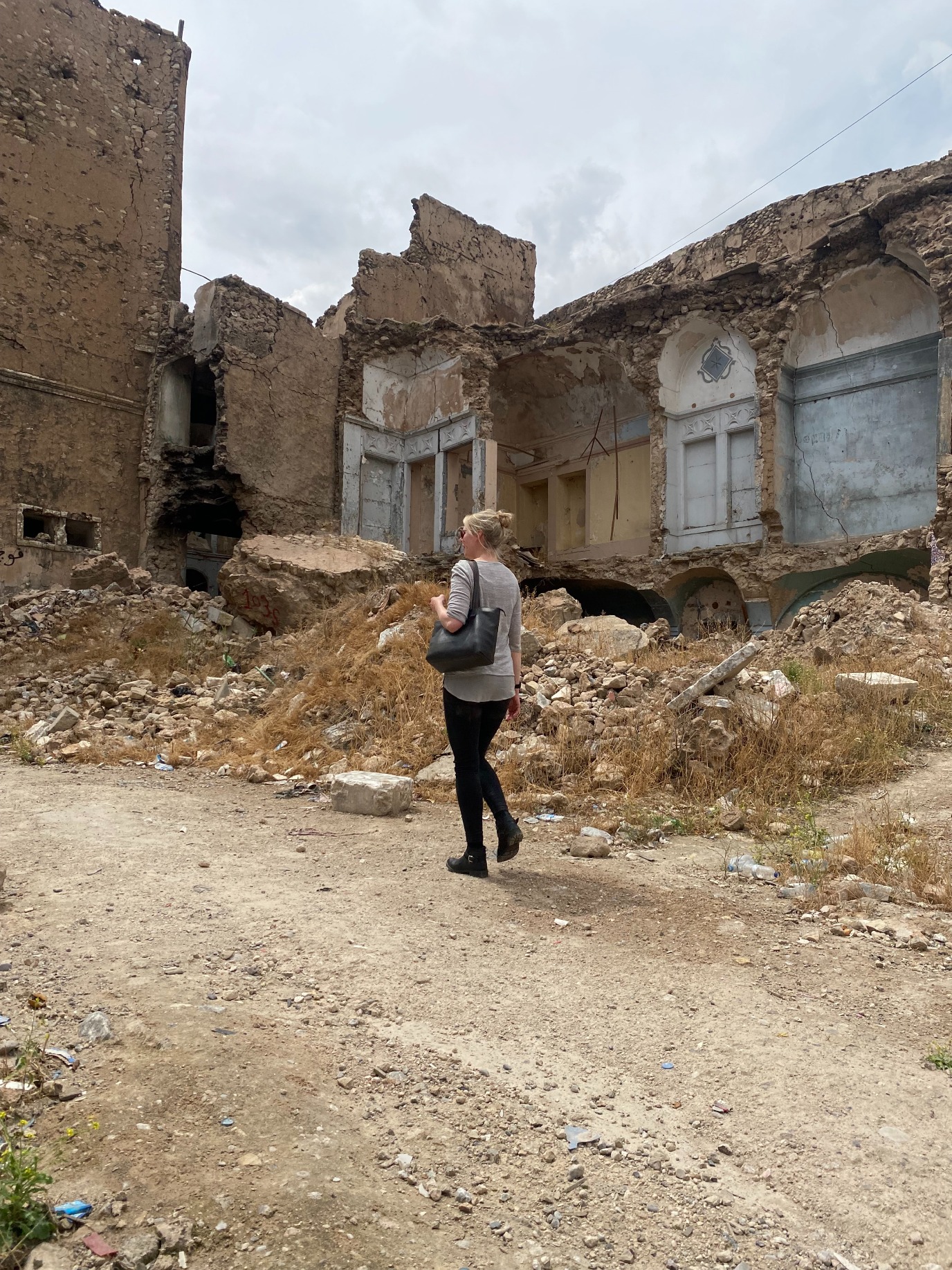
Homes, buildings, and infrastructure destroyed, unique historical heritage devastated, communities torn apart, and people traumatized. That was the situation in 2017 in the northern Iraqi city of Mosul after the defeat of Islamic State (IS). How do people rebuild their society following a period of conflict? Kiki Santing, specialized in issues relating to religion, politics, and sectarianism in the Middle East, is conducting research into this. Resilience, shared interests, and a common past form an important foundation in this regard.
Text: Helma Erkelens / Photo: Courtney Bonneau
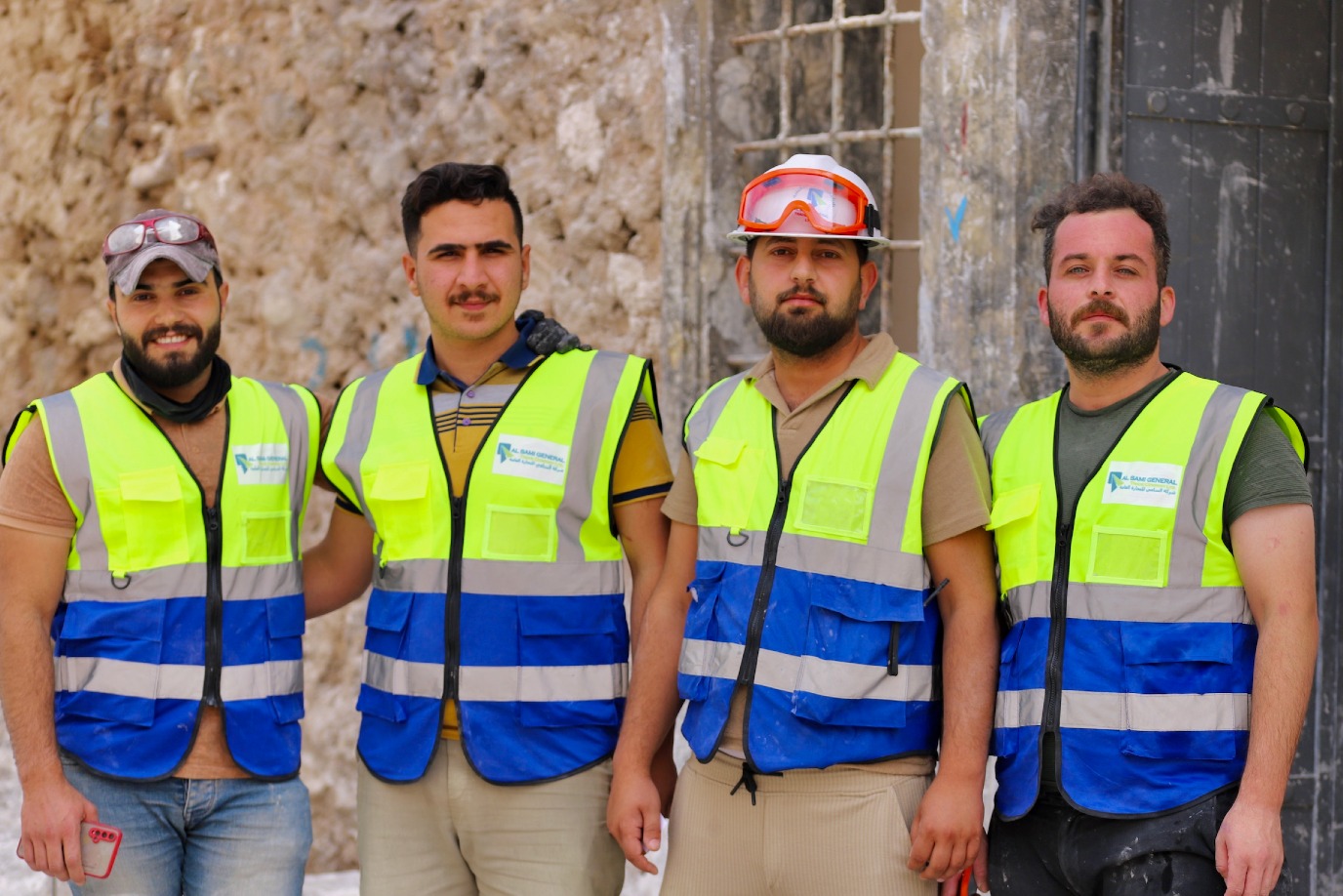
Although much remains to be done in Mosul, a great deal has already been restored. The world-famous Al-Nuri Mosque is one of the buildings to have been rebuilt, with substantial funding from the United Arab Emirates and the European Union and through the collaboration of UNESCO, the Ministry of Culture in Baghdad, local partners, and numerous experts.
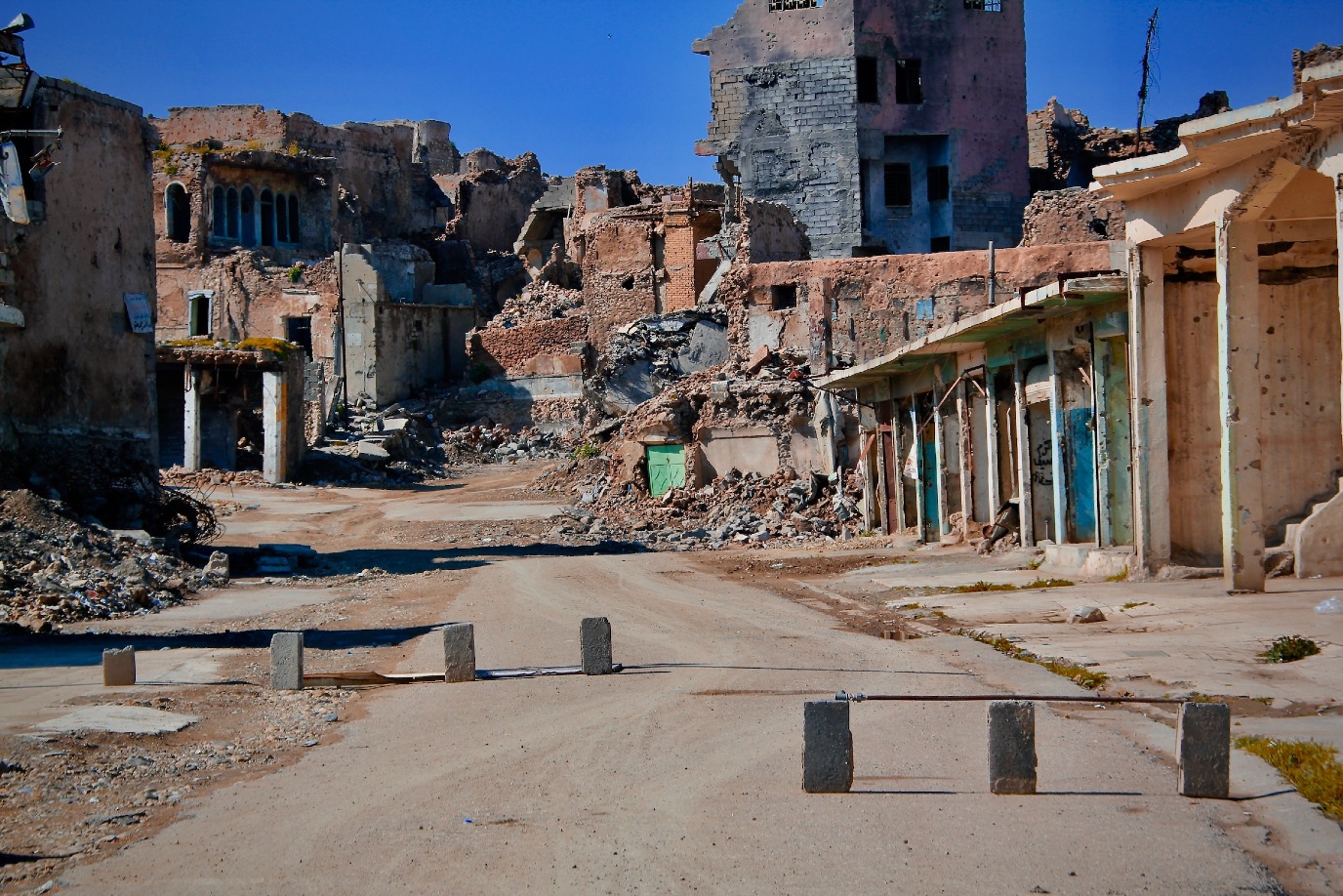
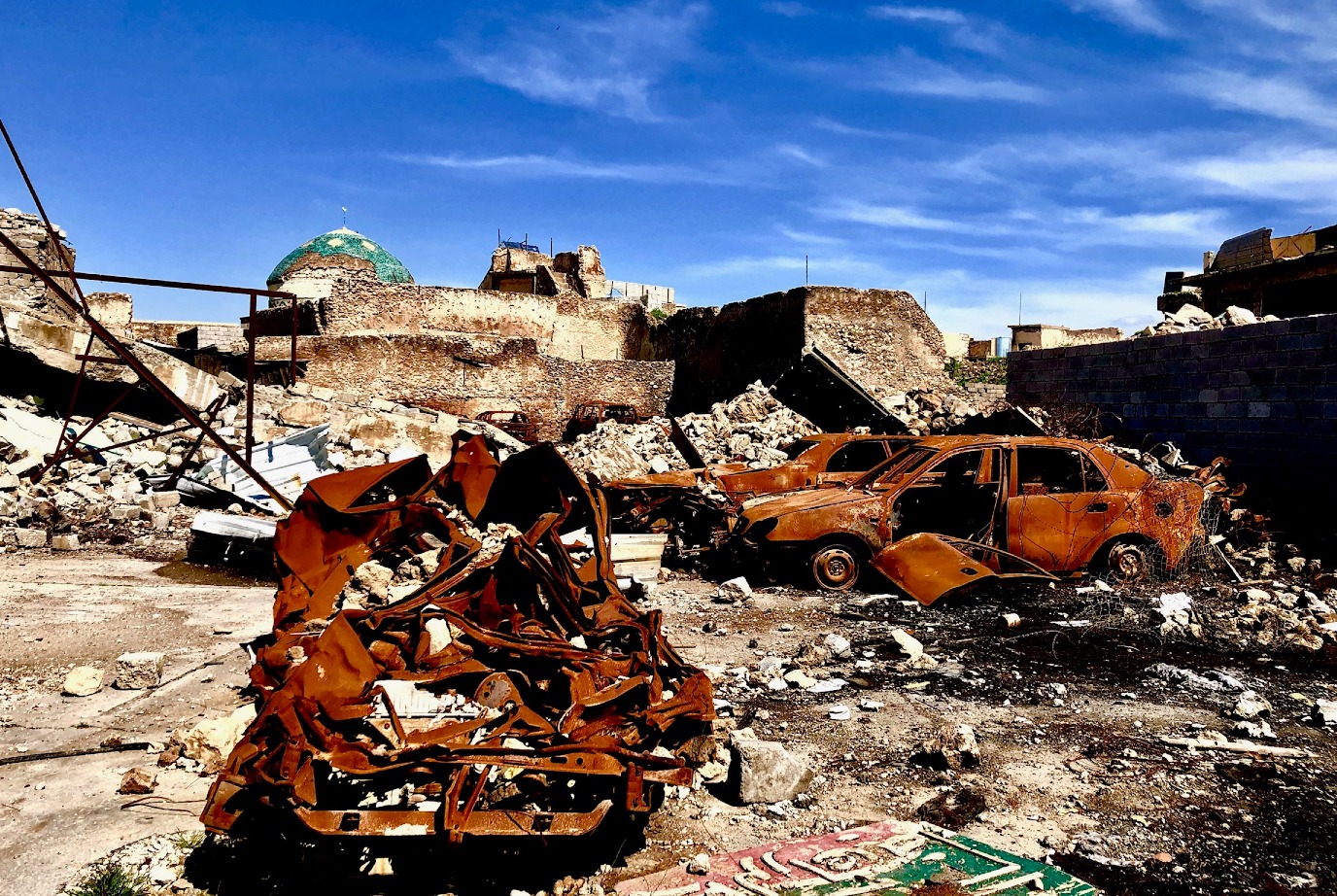
However, the Old City surrounding the ancient mosque remains largely uninhabitable. There are no funds to repair the countless damaged buildings and monuments, or to restore the social fabric and shattered lives of the people who live there. The immense complexity of the political, religious, and economic situation in Iraq seems to be standing in the way of reconstruction, and the recent war in the region is only adding to this. ‘Seems,’ says Santing emphatically, ‘because reconstruction is taking place.’
The desire to make something of it together again
Santing started researching the human side of reconstruction in 2023. She regularly travels to northern Iraq to interview key figures from all walks of life, such as local politicians, military personnel, architects, artists, entrepreneurs, and staff from a demining company, universities, and local and international NGOs. These are mostly Iraqis. Santing asks them about the successes and challenges. ‘Who do they need help from to get things done? How, for example, does a local Sunni politician try to ensure that the heritage of the Sunni community is rebuilt in a predominantly Shia political system?’
In the web that emerges, Santing highlights the alternative routes that people in Mosul take to get things done, and the lessons to be learnt. ‘Some truly wonderful initiatives have sprung up from within the community, despite the war, conflict, and mutual distrust. The common thread is a love of the city and a desire to rebuild it together.’
Old photographs as a record of the Old City
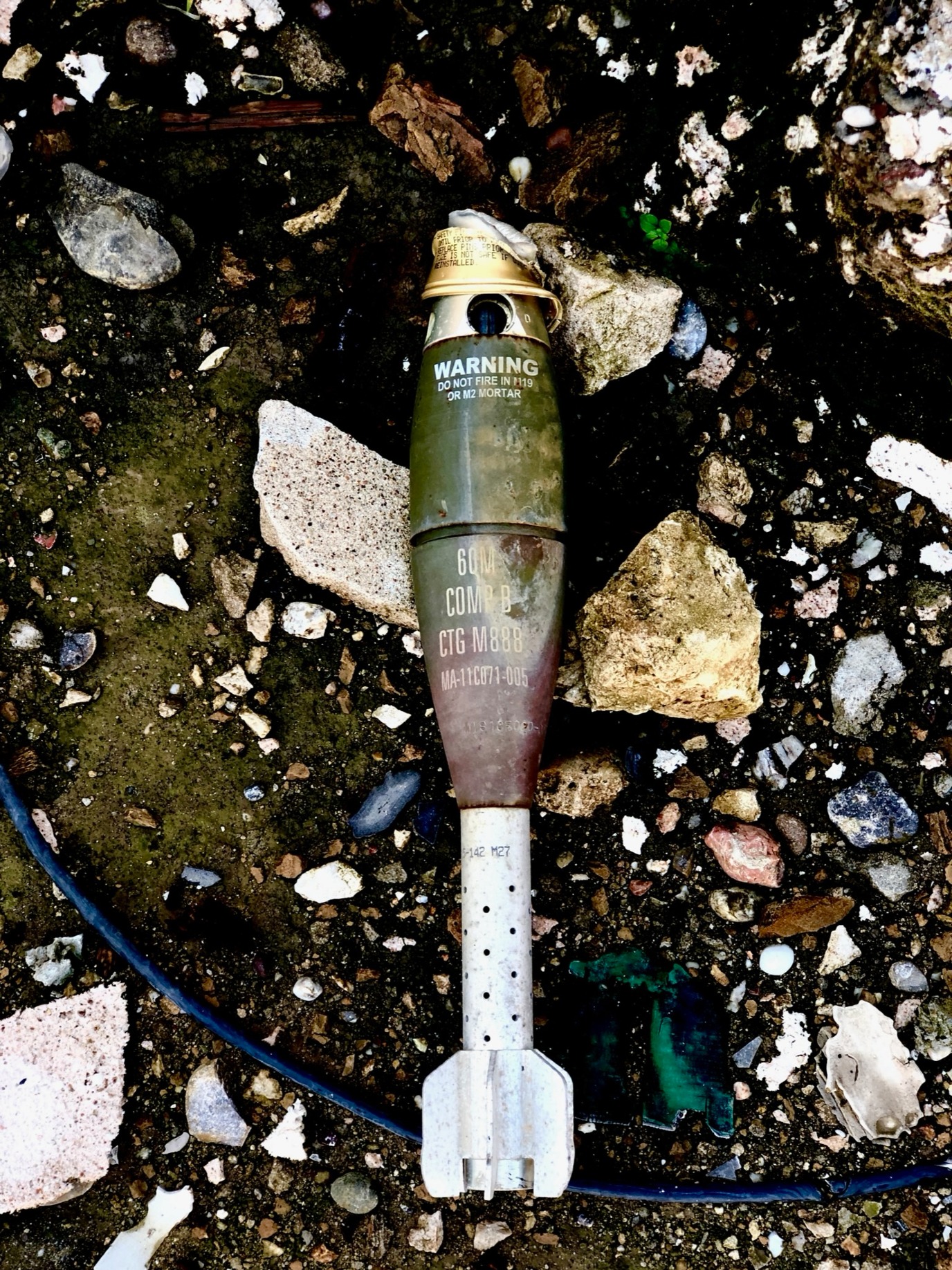
Recovery begins with clearing rubble, restoring basic services, and putting food on the table. Schools reopening, rubbish being collected, hospitals functioning: ‘once those things are in place, people have the space to devote themselves to the things they value most.’
As proof of local resilience, Santing pulls a thick book full of images from the shelf, created by Dr Sahar, an architect and lecturer at the University of Mosul. ‘She fled from IS and, on her return, set out with her students to document what remained of the Old City: mosaics, ornaments, structures, reliefs, tiles, patterns, dimensions, proportions… They searched through the rubble and asked everyone they knew for photographs. Across all dividing lines, she involved people in her project and created digital reconstructions.’
The result is this book: a memory of the buildings in the Old City. ‘Dr Sahar created it in her own time, paying for it out of her own pocket. She sends it to museums in Iraq and abroad, as well as to UNESCO teams working in the Old City, so that they don’t have to reinvent the wheel.’
Shared interest bridges differences
It is the power of shared interests that Santing highlights through her research. She demonstrates that, by working together, divisions can be bridged, at least temporarily, and hopefully this will eventually heal old wounds as well.
Santing also interviewed a local NGO working on the restoration of the tomb of the prophet Jonah (Nabi Younes in Arabic), a site of significance to Judaism, Christianity, and Islam. ‘He is working purely as a volunteer. In the evenings, he and other volunteers seek local and international funding, and he brings together representatives from a wide range of groups who can pull strings and open doors. This man understands that he needs to involve everyone to rebuild that tomb.’
This is how the community is recovering in predominantly Sunni Mosul, a city that is sometimes given little priority by the Shia central government in Baghdad. Pro-Iranian Shia militias largely hold the reins of power yet do not form a united bloc; they are affiliated with various religious and political groups, each with their own interests. It is a city where residents who were involved in acts of terrorism and victims may encounter one another on a daily basis.
Knowledge of local religions
Not everything goes to plan. For one thing, there is a heavy reliance on foreign funding. In a city such as Mosul, countries and international aid organizations are reluctant to fund projects. After all, will the money end up where it’s needed? Is it safe to work there?
Another stumbling block is the lack of knowledge among international donors about local religious institutions and practices. Santing tells the story of the director of the football association, who wants the children of Mosul to be able to play football again. ‘He found a Western sponsor, but this sponsor demanded a certain number of girls’ teams. In a conservative Islamic city such as Mosul, it is highly unusual for girls to play football. The director managed to find a few Christian girls through his contacts but, he said: “I can’t put together as many girls’ teams as my sponsor is asking for,” with the result that the money ultimately reaches no one.’
The need for bribes
Foreign organizations also sometimes lack a proper understanding of how to operate in an unstable region where militias are in charge. ‘Suppose an accountant has to justify how the grant was spent. How do you record the 10% bribe you had to pay to get through a checkpoint, or the unsolicited armed convoy provided by a militia to escort you to an archaeological site for 500 dollars a day? This is not an argument in favour of bribery, but without payment nothing would happen at all. At the same time, this also raises ethical questions: who is the money actually being spent on?’
The church was also important to the Muslim
Santing’s research sheds light on why some things succeed and others go wrong in Mosul. It also shows that assumptions based on your own cultural perspective can stand in the way. An example is the assumption that every group is motivated solely by its own interests. ‘A Muslim resident of Mosul told me, in tears, how important a destroyed church was to him. He had volunteered there and put a lot of time into helping with its reconstruction. Why? Because he had grown up next to it and had had friends there. For him, the church was a reminder of his youth and of his city’s history, and was important to his identity.’
Through cooperation, divides are bridged—at least temporarily—and hopefully, in the long run, this also heals old wounds.
One day, places in Gaza, southern Lebanon, Syria, Iran, and many other parts of the world will undergo a similar process of reconstruction. ‘That too will involve collaboration between local, regional, and international actors who must weave their own web to get things done. Some of these actors are universal.’ The Mosul study provides a valuable starting point.
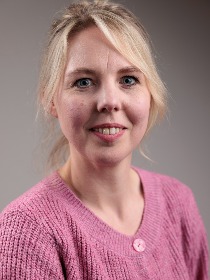
Kiki Santing is Assistant Professor in Middle Eastern Studies at the University of Groningen; an interdisciplinary Bachelor’s, Master’s, and Minor study programme.
The knowledge and experiences regarding the reconstruction of Mosul have been documented in the book 'Reconstructing Mosul: Occupation, Destruction and Rebuilding'. For this book, Kiki Santing collaborated with Courtney Bonneau (photography) and Stella Martany (journalist).
Click here to order the book >>
This summer, Santing once again received a grant (NWO XS) to set up a project in Baghdad. The project examines how the reconstruction and transformation of public space in Baghdad provides insight into post-conflict urban recovery, memory formation, and state-society relations. The project builds a sustainable research network with Iraqi scholars and provides a model for accessible, participatory, and contextually grounded research on urban reconstruction in post-conflict environments.
More news
-
22 October 2026
Seven UG and UMCG researchers awarded Vidi grant
-
14 October 2026
The Change: menopause is more than just a hormonal matter
-