

Ronald Stolk
Professor of Clinical Epidemioly
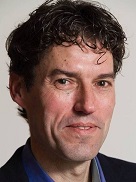
Professor Ronald Stolk (Nov 1963) is an internationally established researcher in clinical epidemiology. Currently he is Chief Scientific Officer of the LifeLines study and program director “Research Data and Biobanking” of the UMCG.
He got his medical training in Rotterdam and was subsequently trained in epidemiology at the universities of Rotterdam, Utrecht and Sydney (Australia). He has been involved in many different studies, ranging from large population based studies to randomized clinical trials with invasive clinical measurements. His research within the Department of Epidemiology focuses on life course epidemiology approaches of chronic diseases, based on cohort studies and gene-environment interactions.
Cohort studies are the basis of Life Course Epidemiology, the principle study design to investigate Healthy Ageing. Since ageing starts at conception, research on healthy ageing should include the entire lifespan, and not limited to older individuals. Over the last years, professor Stolk has become increasingly involved in the infrastructure for cohort studies, including biobanking, at local, national and international level. These include both population based studies (LifeLines, GECKO, PIAMA, BioSHaRE) as well as clinical projects (Parelsnoer Institute, Mondriaan). Apart from infrastructure, he is actively involved in the harmonization of data from different cohort studies, including cataloguing. Harmonization allows pooling of data from different studies, required to investigate complex interaction of multiple genetic and/or lifestyle factors. Knowledge on these combined risk factors will improve Personalized Medicine and Personalized Prevention.
Professor Stolk is Chief Scientific Officer of the LifeLines project, a three-generations longitudinal population-based study to investigate risk factors of multifactorial diseases and its modifiers among inhabitants of the northern provinces of the Netherlands. LifeLines is a large population-based cohort study and biobank: in total 167,729 children and adults are followed in a family design over a minimal period of 30 years. LifeLines is a research resource for data on complex interactions between environmental, phenotypic and genomic factors in the development of chronic diseases. The aim is to facilitate research in the field of Healthy Ageing, ultimately resulting in an increase in healthy life years.
He is program director Research Data & Biobanking , which is part of the UMCG corporate staff. In this role he coordinates the UMCG-wide facilities for both clinical and population based cohort studies / biobanks. He advises the board of the UMCG on Big Data in Health and biobanking, and represents UMCG on these topics at national level. He has initiated BiKE : Biobank/cohorts Knowledge and Expertise center. This is a collaboration between LifeLines and Healthy Ageing Campus of the UMCG, providing a dedicated knowledge resource for the local, regional, and international biobanking community, and offering common services for biobank researchers.
At the national level, professor Stolk is board member of PSI (Parelsnoer: String of Pearls Institute, a series of disease-based cohorts in all Dutch UMC’s) and member of the steering committee of BBMRI-NL . He is principal investigator of Mondriaan (a national project to provide and standardize data from clinical care for scientific research) and board member of the HAPS project (Healthy Ageing, Population and Society; a multidisciplinary research project on healthy ageing in society). Moreover, he chairs the Partner Advisory Committee of DTL (Dutch Techcentre for Life Sciences, ELIXIR-NL) and is member of the Program Committee of the NFU research IT program “data4lifesciences”.
Professor Stolk is coordinator of a landmark European-Canadian collaborative project on standardization and harmonization of biobank studies: BioSHaRE (funded by FP7). The European studies are embedded within BBMRI-ERIC (an European research infrastructure of population and clinical biobanks); the main Canadian collaboration is Maelstrom Research , which is associated with the Public Population Project in Genomics and Society project ( P3G ).
During his whole professional career professor Stolk has been involved with teaching epidemiology to both undergraduate and postgraduate students. Currently he coordinates the UMCG Summer School in Biobanking . He has supervised over 35 PhD projects (8 currently running) and published more than 250 papers in international peer-reviewed journals.
A selection of relevant recent publications
Scholtens S, Smidt N, Swertz MA, Bakker SJ, Dotinga A, Vonk JM, van Dijk F, van Zon SK, Wijmenga C, Wolffenbuttel BH, Stolk RP. Cohort Profile: LifeLines, a three-generation cohort study and biobank. Int J Epidemiol 2014 [Epub ahead of print]
Gaye A, Marcon Y, ... Stolk RP... Ferretti V, Burton PR. DataSHIELD: taking the analysis to the data, not the data to the analysis. Int J Epidemiol. 2014; 43: 1929-44
Doiron D, Burton P, Marcon Y, Gaye A, Wolffenbuttel BH, Perola M, Stolk RP, Foco L, Minelli C, Waldenberger M, Holle R, Kvaløy K, Hillege HL, Tassé AM, Ferretti V, Fortier I. Data harmonization and federated analysis of population-based studies: the BioSHaRE project. Emerg Themes Epidemiol 2013; 10: 12.
Jansen H, Stolk RP, Nolte IM, Kema IP, Wolffenbuttel BH, Snieder H. Determinants of HbA1c in non-diabetic Dutch adults: genetic loci and clinical and lifestyle parameters, and their interactions in the LifeLines Cohort Study. J Intern Med 2013; 273: 283-93
Fortier I, Doiron D, Little J, Ferretti V, L'heureux F, Stolk RP, Knoppers BM, Hudson TJ, Burton PR; on behalf of the International Harmonization Initiative. Is rigorous retrospective harmonization possible? Application of the DataSHaPER approach across 53 large studies. Int J Epidemiol. 2011; 40: 1314-28.
Qin L, Corpeleijn E, Jiang C, Thomas GN, Schooling CM, Zhang W, Cheng KK, Leung GM, Stolk RP, Lam TH. Physical activity, adiposity and diabetes risk in middle-aged and older Chinese population: The Guangzhou Biobank cohort study. Diabetes Care 2010; 33: 2342-8.
Stolk RP, Hutter I, Wittek RP. Population ageing research: a family of disciplines. Eur J Epidemiol. 2009;24:715-8.