

Hip Hop as a critical lens through which to see the world
From March 18th to 21st, Groningen will briefly transform into the Hip Hop capital of Europe. With the Things Done Changed conference, organizers and Hip Hop researchers Steven Gilbers (University of Groningen) and Dastan Abdali (Leiden University) hope to spread the love for Hip Hop - both as a culture and a valuable field of academic research.
Text: Lieke van den Krommenacker
Often when they're traveling together, for example to a Hip Hop conference in the Czech Republic, they play a rhyming game. As soon as one of them says a word or phrase that sounds appealing to the other, they start rhyming. 'So you abstract the words from their content and interrupt the other with rhyming words. For example: "Krommenacker, pottenbakker, domme stakker". And then the other one goes off again. It keeps going back and forth like that,' says Dastan Abdali. Steven Gilbers adds with a laugh: 'It's a kind of mix of art and ADHD, I guess.'
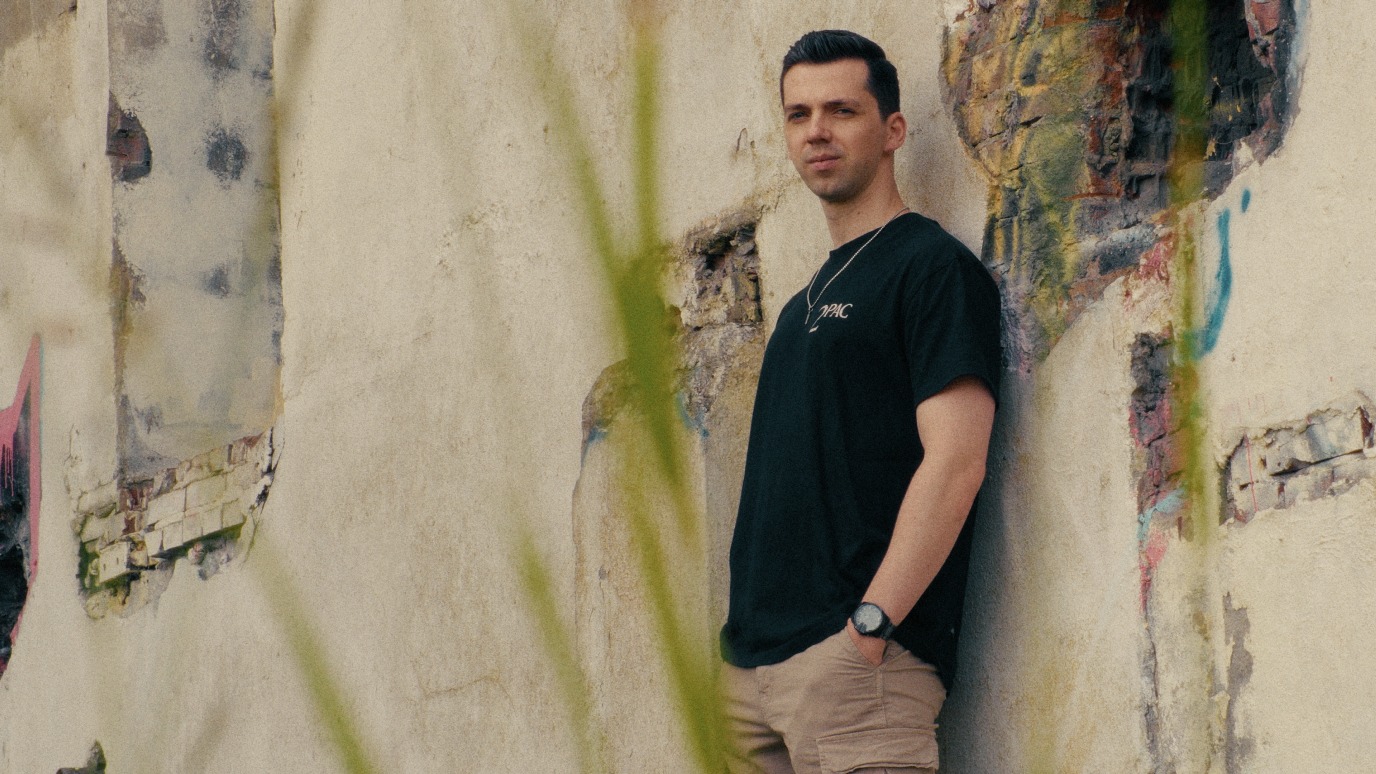
Gilbers and Abdali are engaged with language, society, and music - and Hip Hop in particular - both professionally and otherwise. Both are rappers ánd conduct academic research on Hip Hop. Gilbers, an assistant professor in English Linguistics, earned his doctorate on the language and rap style of rapper Tupac Shakur, who was shot dead in 1996. Anthropologist Abdali is conducting his doctoral research on the social impact of Hip Hop practitioners in the Netherlands. Together with a third colleague, assistant professor in Popular Music Alex de Lacey, the colleagues and friends are organizing the ninth annual European Hip Hop Studies Conference this spring: Things Done Changed – Hip Hop Futures for a World on Fire. The conference, organized in collaboration with the Groninger Museum this year, focuses entirely on Hip Hop as a culture, art form, and academic field.
Hip Hop grew into an influential subculture with a strong political character

On the map
Gilbers: 'We have the opportunity to put Hip Hop firmly on the map. Or at least: Hip Hop scholarship. With this conference, we bring together the academic and musical worlds on a scale never before seen. People are coming from America, South Africa, New Zealand, and all over Europe, as well as from the local and national Hip Hop scene. All to demonstrate that Hip Hop studies is an important field. But also to critically examine our field: what can and do we want to do with it in the future?'
For Gilbers and Abdali, there’s no doubt about it: anyone who wants to better understand how the world works can’t ignore Hip Hop. Take the history of the Netherlands, says Abdali. 'It is my view that you can’t look at recent Dutch history without looking at Dutch Hip Hop history. It’s relatively underexplored. Hip Hop has ensured that all kinds of marginalized groups, as well as indigenous Dutch people, had a place to exist.' In taht way Hip Hop made multicultural society possible before people even started talking about diversity and inclusion. It created a common language and way of being through which many people could express their struggles. Hip Hop also has strong ties to our colonial history and all sorts of postcolonial migration flows.
Hip Hop made multicultural society possible before people even talked about diversity and inclusion
Influential and Political
Hip Hop emerged in the 1970s in America, out of resistance to the dire socio-economic position of many African Americans, Latinos, and Caribbean migrants. DJ Kool Herc from New York began experimenting with new, experimental music in the deprived neighborhood of the Bronx. His beats formed the foundation of what we now know as Hip Hop; the music genre that grew into an influential subculture with a strong political character.
'Look at the current mayor of New York, Zohran Mamdani,' says Gilbers. 'He has a very clear connection to Hip Hop culture. You see that in how he presents himself, in his speeches, but also on social media. That makes it worth studying. Hip Hop is built on promoting certain values. Think of competition and authenticity. These, of course, also play a role in the world outside of Hip Hop, but in the context of Hip Hop, they often exist in an exaggerated form. That makes them easy to observe.'
Pressure Cooker
A striking example is Gilbers's Tupac research. The famous gangster rapper moved from the East Coast to the West Coast of the United States at some point. As a result, he actively turned against the East Coast due to a personal conflict. Gilbers: 'And what did I see there? During the period he became anti-East Coast, his accent changed much more rapidly than before. His music also became increasingly West Coast-esque, in terms of rhythm and melodies. He even started sounding almost exaggeratedly West Coast, to compensate for the fact that he wasn't originally from there but was now the figurehead of the region. This development clearly demonstrates how closely language and identity are intertwined.'
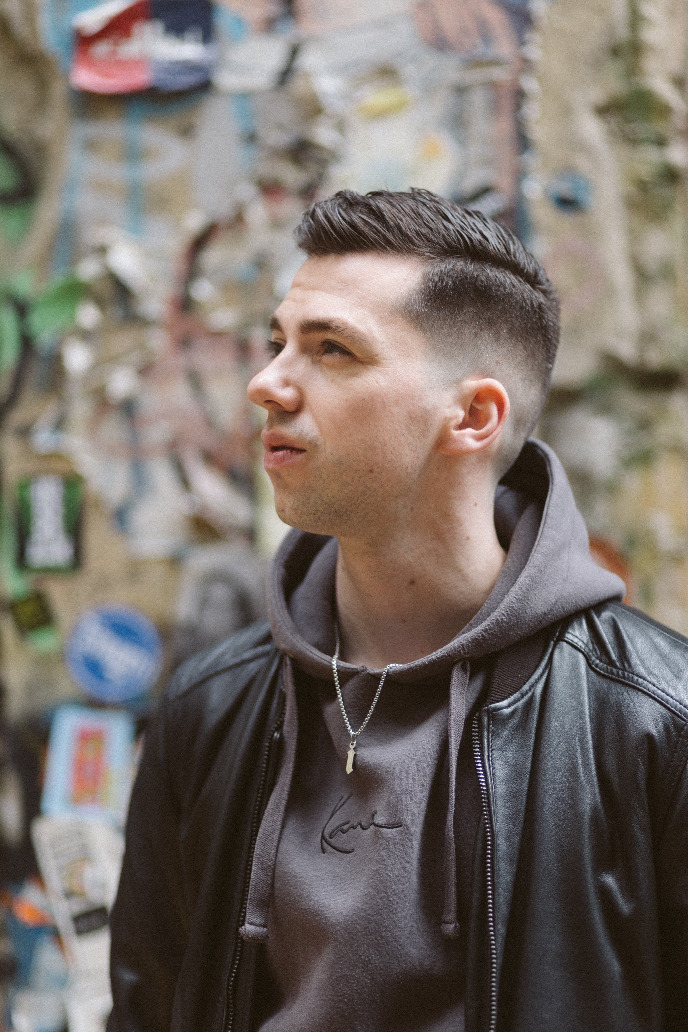
Photo: Erwin Nijboer
This is just one case study, Gilbers emphasizes. 'But it's obviously much bigger than that.' Anyone moving from Groningen or Friesland to Drenthe or the Randstad may experience a similar shift. 'If you move from Amsterdam to Rotterdam, the effect is probably even stronger because the rivalry between those two cities is stronger. The great thing about Hip Hop is that it's a kind of pressure cooker for these kinds of processes.'
Swastika
Abdali, who, like Gilbers, grew up in Groningen, delved into local Hip Hop history for his research, which is undoubtedly remarkable. 'I mainly looked at Zombi Squad, a Hip Hop group from the 1980s and 1990s,' he says. 'They strongly opposed rising racism, neo-Nazism, and anti-Semitism, both in the Netherlands and in Europe.' The direct impetus was the fact that the leader of the neo-Nazi Action Front National Socialists (ANS) lived in Beijum: Eite Homan. His party promoted a homogeneous white Europe and sought scapegoats for the social problems of the time in "newcomers."
Zombi Squad—without the "e," due to the negative connotations of the word "zombie"—consisted of precisely these newcomers, with multicultural backgrounds. Their performance at Vera on March 5, 1993, described by Abdali in a chapter of the book World Cities of the Low Countries (Atlas Contact, 2025) is truly unforgettable. That evening, members of the group, who were opening for American rapper Paris, stormed the stage wearing balaclavas and baseball bats, where a colossal Styrofoam swastika was to be destroyed. In the first verse, frontman Sherlock Telgt addresses neo-Nazis and their followers. He sings to a frenzied audience: 'You got the rights to say Blacks this and Jews that. We got the right to say: Nazi punks better be dead.'
Representation
Abdali: 'I’ve heard from many people in the scene that they’re happy I’ve put this piece of Hip Hop history down on paper. That hadn’t happened before. They feel seen and acknowledged. It’s valuable that I can contribute to the representation of marginalized groups in this way. Their perspective is so often overlooked.' Hip-hop, Abdali emphasizes, isn’t so much a standalone research object, but rather a lens through which to study society.
'And therefore a serious discipline,' says Gilbers. 'That’s already clear to us. But we still hear too often from people in the Hip Hop community: the university isn’t a place for me, they’re not my kind of people.' With the conference, the researchers hope to prove the opposite. 'By offering a platform to diverse hip-hop researchers and practitioners, we can indirectly contribute to a Hip Hop future for a world on fire. It’s so important that talented and engaged people engage critically with the world. I hope they find their way to the university.' And vice versa.
More news
-
01 July 2026
Ninah Tiemersma named Alumnus of the Year
-
02 June 2026
Impact |The wainscotting at Museum Janning
-
28 April 2026
Groningen on the map as European capital of hip-hop