

‘Learning to live together is not a utopian ideal, but a practical necessity’
Refugees have a right to protection and states must respect those rights. That is the essence of the 1951 International Refugee Convention, which marks its 75th anniversary this year. Yet the current debate centres on limiting the number of asylum seekers, reducing public disturbances, and the threat to our security. Above all, it focuses on how we can manage the influx. Senka Neuman-Stanivuković proposes a different approach. Namely, that we look at how different histories of displacement are connected to one another. Including to our own.
Text: Helma Erkelens / Photo: Reyer Boxem
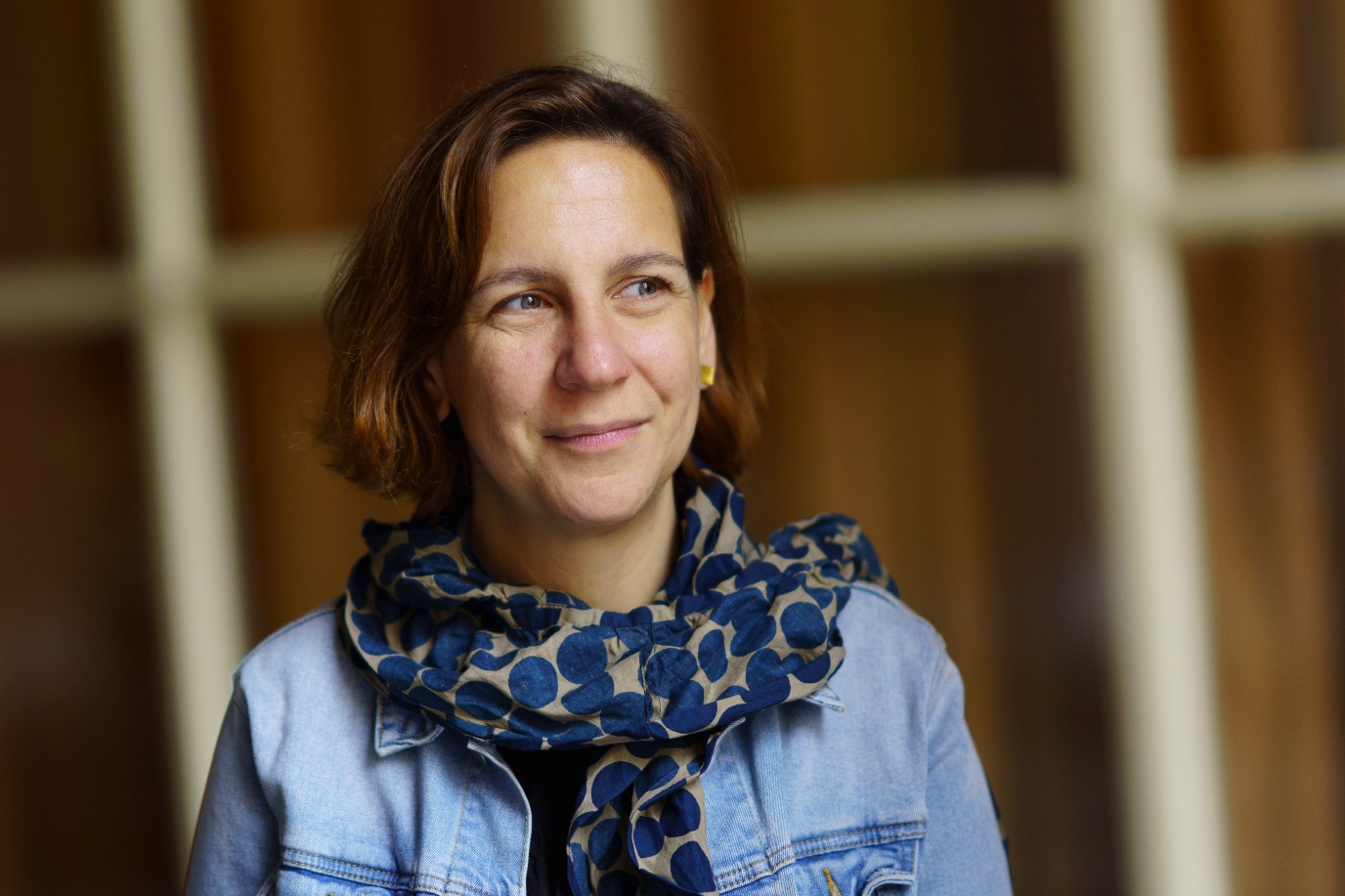
Neuman-Stanivuković is an associate professor and affiliated with the Global Political Anthropology research group at the Faculty of Arts. She identifies two dominant narratives. ‘In one, refugees are primarily victims who need to be rescued; in the other, they are a threat that must be controlled. Both images reduce people to categories and leave little room for their own histories, ambitions, and agency. In my research, I take a different starting point: people have always moved and will continue to do so as a result of war, violence, climate change, environmental problems, and inequality. Against this backdrop, learning to live together is not a utopian ideal, but a practical necessity. If there is any utopian idea lurking in the contemporary migration debate, it is the notion that walls, fences, and ever-stricter controls will offer a solution to anything.’
Shifting ideas about protection
‘How protection is organized says something about how societies think about rights, responsibility, and political community,’ she explains. Her research focuses on the conditions under which people can actually claim rights, including the right to protection as enshrined 75 years ago by the United Nations in the Refugee Convention. ‘This means that in Groningen, we are conducting research on borders, asylum procedures, refugee shelters, and other institutions, but also on the ways in which people cope with these circumstances, react to them, and have found — and continue to find — their way through them.’
By connecting different experiences of displacement, she investigates how ideas about protection, solidarity, and responsibility are shaped across time and space. ‘For example, people are currently divided into legal categories, subjected to administrative procedures, and assessed on the basis of political priorities even before the merits of their application for protection are considered. There are other ways of doing this.’
European displaced persons
Neuman-Stanivuković’s research brings unknown, forgotten histories to light. ‘Among the millions of displaced people during the Second World War were also refugees from Greece and the Dalmatian coast. They found protection in places such as Damascus and El Shatt in the Sinai Desert. There were many more European refugees for whom protection was organized outside Europe. In camps that were not merely places of confinement, but also spaces where education, work, culture, and political communities took shape.’
Alternative perspectives
This example highlights that the history of refugee protection is often narrated as a matter concerning Europe alone, whilst the locations where protection was organized were geographically far more diverse. Neuman-Stanivuković: ‘After 1945, people were displaced once again. These displacements were linked to wars and political conflicts, but also to broader processes of decolonization and state-building that radically altered the political map of large parts of the world.’
People have always moved and will continue to do so as a result of war, violence, climate change, environmental problems, and inequality.
Old travel routes
Another little-known story is that histories of displacement are often linked by routes, landscapes, and infrastructures along which people have moved in different periods. Her research also focuses on this aspect.
‘Many of the roads, border crossings, forests, and mountain paths used by people fleeing Bosnia, Croatia, and Kosovo in the 1990s later became part of the subsequent travel routes taken by people from Syria, Afghanistan, Bangladesh, Palestine, and other places. The so-called Balkan Route. During the Second World War, these were routes and hiding places for people fleeing persecution and for the anti-fascist resistance. By following these routes, I investigate how different histories of displacement, mobility, and solidarity become interconnected through the same places and continue to influence the present. How do such places, which often no longer exist, and their histories continue to influence contemporary views on refuge and protection?’
Broadening the refugee debate
For Neuman-Stanivuković, the refugee debate should not only be about control and return, but also about the knowledge we gather. ‘Much of the knowledge about asylum and migration is based on statistics, policy documents, legal categories, and border registrations. Although these sources are indispensable, they mainly reveal how we attempt to make sense of migration. My research also brings other sources to light: memories, stories, objects, drawings, traces in the environment, and everyday experiences. Together, they form a richer archive of migration, revealing how people experience displacement and how different histories of displacement are interconnected.’
World Refugee Day
Neuman-Stanivuković sees World Refugee Day on 20 June as an invitation to look at displacement differently. ‘Refugee movements are often discussed as if they begin and end with a specific crisis. My research shows something different. People have always moved and will continue to do so, regardless of how strictly borders are guarded. The routes, places, and infrastructures along which people move bear traces of earlier journeys, conflicts, and forms of solidarity. Against this background, learning to live together is not a utopian ideal but a practical necessity.’
She describes this day as an opportunity to reflect on the histories of war, displacement, refuge, and solidarity. ‘Stories that connect different places and generations with one another, stories that travel with people.’
Reimagining Europe’s Futures:
Connectivity, Creativity, and Care in a Changing World
These questions are also central to the Euroculture Festival Reimagining Europe: Connectivity, Creativity, Care in Groningen (29 June — 4 July). Researchers, artists, policy-makers, students and societal partners will come together to discuss new ways of thinking about mobility, protection, solidarity, and living together in a world that is constantly in flux.
Senka Neuman-Stanivuković is an associate professor and affiliated with the Global Political Anthropology research group at the Faculty of Arts.
More news
-
14 September 2026
Dementia in migrants: does care in the native language help?
-
14 September 2026
Cesspits reveal what the Dutch ate centuries ago
-
01 September 2026
Resilient local communities essential for reconstruction