

Combating climate injustice through art
With the large-scale Just Art project, educational and research institutions in the Netherlands and abroad will, over the coming years, join forces with artists to combat climate injustice. The initiative is led by Ann-Sophie Lehmann from the University of Groningen and Ruby de Vos from Hanze University of Applied Sciences.
Text: Lieke van den Krommenacker
Climate justice. It sounds abstract, as does the climate crisis. Global warming, the loss of biodiversity, rising sea levels: these are the issues that worry many of us, yet for many they remain abstract — a luxury that is by no means available to everyone. How do you change this?
Sure, we do some recycling, and, with a bit of luck, we cut the meatballs from our diet. But how do you really arm yourself against such a complex, overwhelming, and all-encompassing problem, whose consequences reach so much further than many are prepared to see? And above all: how do you ensure that those least responsible for the crisis are also the least affected, rather than the other way round — as is currently the case?
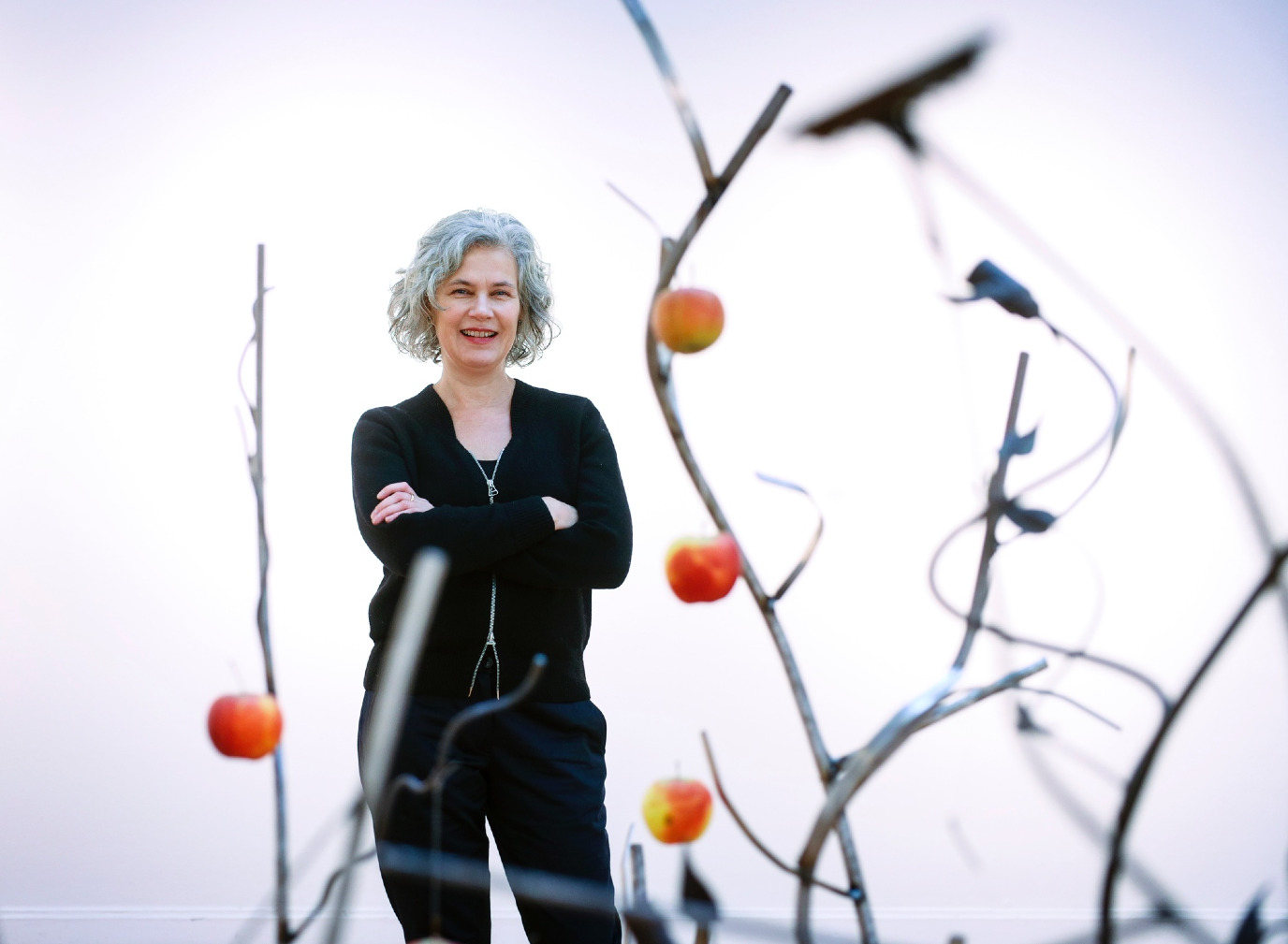
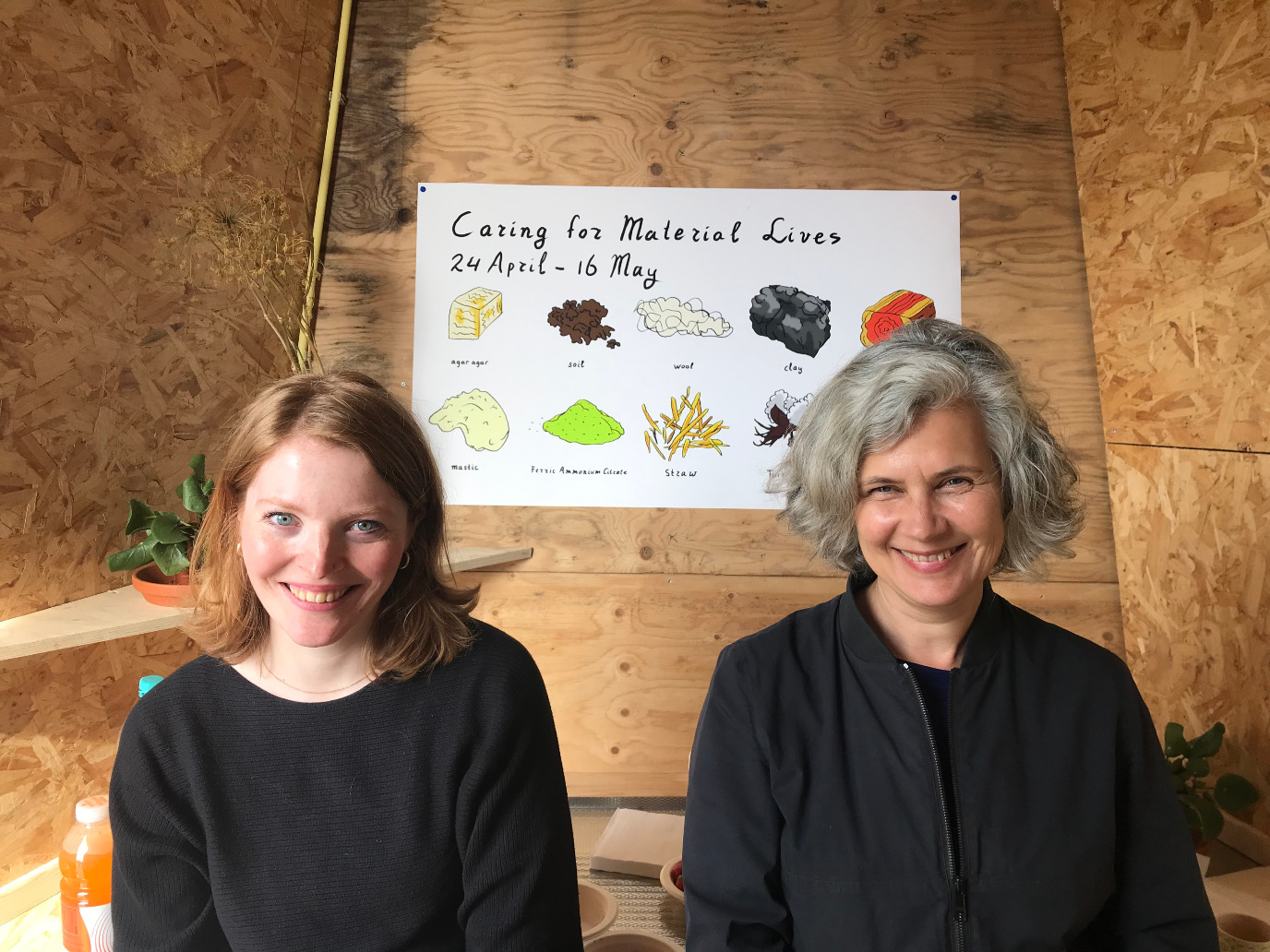
By working with artists, say Ann-Sophie Lehmann and Ruby de Vos. Because they are able to make the problems tangible and understandable. And: by uniting, across the boundaries of science and art. That is why, in their Just Art project, they bring together art and research, and theory and practice. Their aim is to contribute to a more just future, with concrete initiatives at local, national, and international levels. Last year, they secured an NWO grant of €6.8 million.
Gap
‘Just Art is about science to society,’ says Lehmann, Professor of Art History and Material Culture in the Faculty of Arts at the University of Groningen. ‘In other words: how can we truly bring research to society and thereby contribute to making an impact in the field of climate justice? The core answer is simple: by seeking ways to use art and artistic research to raise awareness of climate justice. And narrow the gap between awareness and taking action.’
As simple as it sounds, reality is just as stubborn, often consisting of countless realities and just as many brave, yet fragmented attempts at constructive action. This week, on 22 April, is Earth Day, the day that since 1970 has been dedicated to environmental protection. More than 190 countries now take part, with all sorts of events. Nevertheless, the phenomenon triggers resistance in Lehmann.
'The idea that you have to designate a special day for this shouldn’t be necessary. Every day should be Earth Day. There are many art projects, as well as many people and institutions, both large and small, working in the field of climate action. It is Just Art's ambition to forge connections and establish a shared infrastructure, with the help of 10 PhD candidates who are also artists. So that, in the end, a municipality interested in promoting climate justice can easily find an artist, and vice versa.’
Climate mural
What do we actually mean when we talk about climate justice? ‘Climate change exacerbates existing inequalities between social groups, while also impacting nature, animals, and the landscape,’ says Ruby de Vos, Senior Researcher in Materials and Art at the Art & Sustainability research group at Hanze University of Applied Sciences. ‘Many voices are not being heard at all. We want to make it clear that climate change has many degrees of severity. It is bad for everyone, but there are communities for whom the consequences are more severe, and also become severe more quickly than for others.’
Take Aruba, where one of Just Art's partner universities is based. In the long term, the island's population faces not only problematic rising temperatures on land and in the sea, but also flooding and erosion along the coast. Moreover, there is drought. Climate phenomena with far-reaching consequences for the social, ecological, and marine structures.
Lehmann: 'The researcher in the project will explore how data on climate change can be visualized so that the impact becomes much more tangible for a wider audience. Data is complex and abstract. It is quickly forgotten, or it is too meaningless for most people to really engage with. Our partners in Aruba are now collaborating with an artist who creates large murals, so that viewers see something they can relate to, rather than the dry, dense research findings.’
Museum tomato
Closer to home, there is a collaboration with De Onkruidenier artists’ collective, founded by Jonmar van Vlijmen and Ronald Boer, who use their art to speculate on future and contemporary relationships between humans and nature. ‘They work with the Van Abbemuseum in Eindhoven on a long-term, participatory art project, in which people are invited, among other things, to grow their own tomatoes at home. This creates a growing tomato community.’
The project is a nod to greenhouse cultivation, which makes fresh tomatoes available all year round, even in months when they wouldn't survive in the wild. At the same time, temperatures are rising in the Netherlands, and growing tomatoes on the balcony is becoming increasingly easy. De Vos: ‘By placing the tomato in an art context, you encourage people to look at tomatoes differently and to reflect on climate change.’ The collaboration is a perfect example of Just Art's science to society approach, she emphasizes. ‘Anyone can sign up to grow tomatoes at home. You don't need to be a museum-goer or art lover.’
Side by side
Reaching beyond the walls of institutions and abstractions: according to Lehmann and De Vos, that is the artist's greatest strength. De Vos: ‘It is easy to become paralysed by the complexity of climate issues. Politicians are doing too little, major polluters are not held to account, and as an individual you feel powerless. Artists dare to step into that void and often feel called upon to challenge climate injustice.’
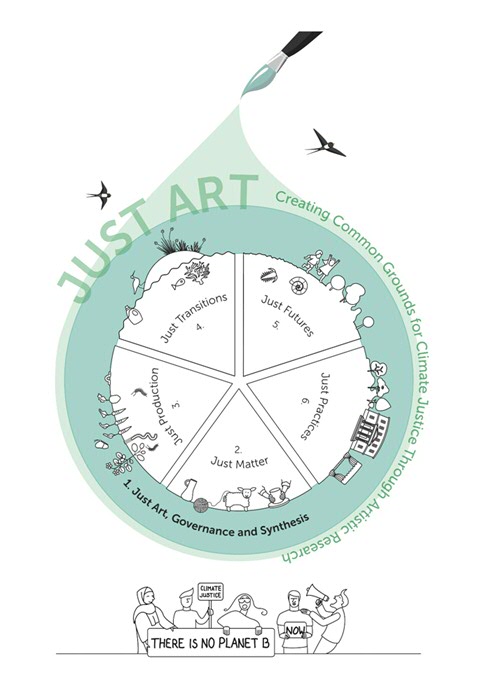
But to actually have any impact, these artists need research time and funding. And societal partners with a wide reach — from museums and festivals to governments and climate organizations. That is precisely why, argue Lehmann and De Vos, Just Art is needed. It is no coincidence that this large-scale project was given the subtitle Creating Common Grounds for Climate Justice Through Artistic Research.
So, bringing together artists, disciplines, communities and stakeholders from across the entire Kingdom of the Netherlands. Thanks to the grant, they will in any case be combating climate injustice between 2026 and 2031, together with 10 other educational and research institutions in the Netherlands and Aruba and more than 40 societal partners. Lehmann: ‘If this goes well, Just Art will help to make those who are most affected visible and heard. I believe that being able to work on this together with as many others as possible is extremely valuable, both for the academic field and beyond.’
Want to know more about Just Art? See www.justart.info
Earth Day (22 April) is a global event dedicated to raising awareness about environmental protection and celebrating our planet. To celebrate Earth Day, we’re bringing climate justice into focus across the Harmony Building. A week of events and experiences inspiring action on climate justice.
More news
-
14 September 2026
Dementia in migrants: does care in the native language help?
-
14 September 2026
Cesspits reveal what the Dutch ate centuries ago
-
01 September 2026
Resilient local communities essential for reconstruction