Abstract
As part of the application procedure, prospective graduate students are asked to sketch a research proposal that will form the largest part of their four-year graduate program. A definitive proposal is not required until the end of the first year of study. The sketch will be used in order to determine whether a candidate's interests can be accommodated in CLCG, how the project fits within the institute's profile and also as an indication of the candidate's scientific potential.
CLCG
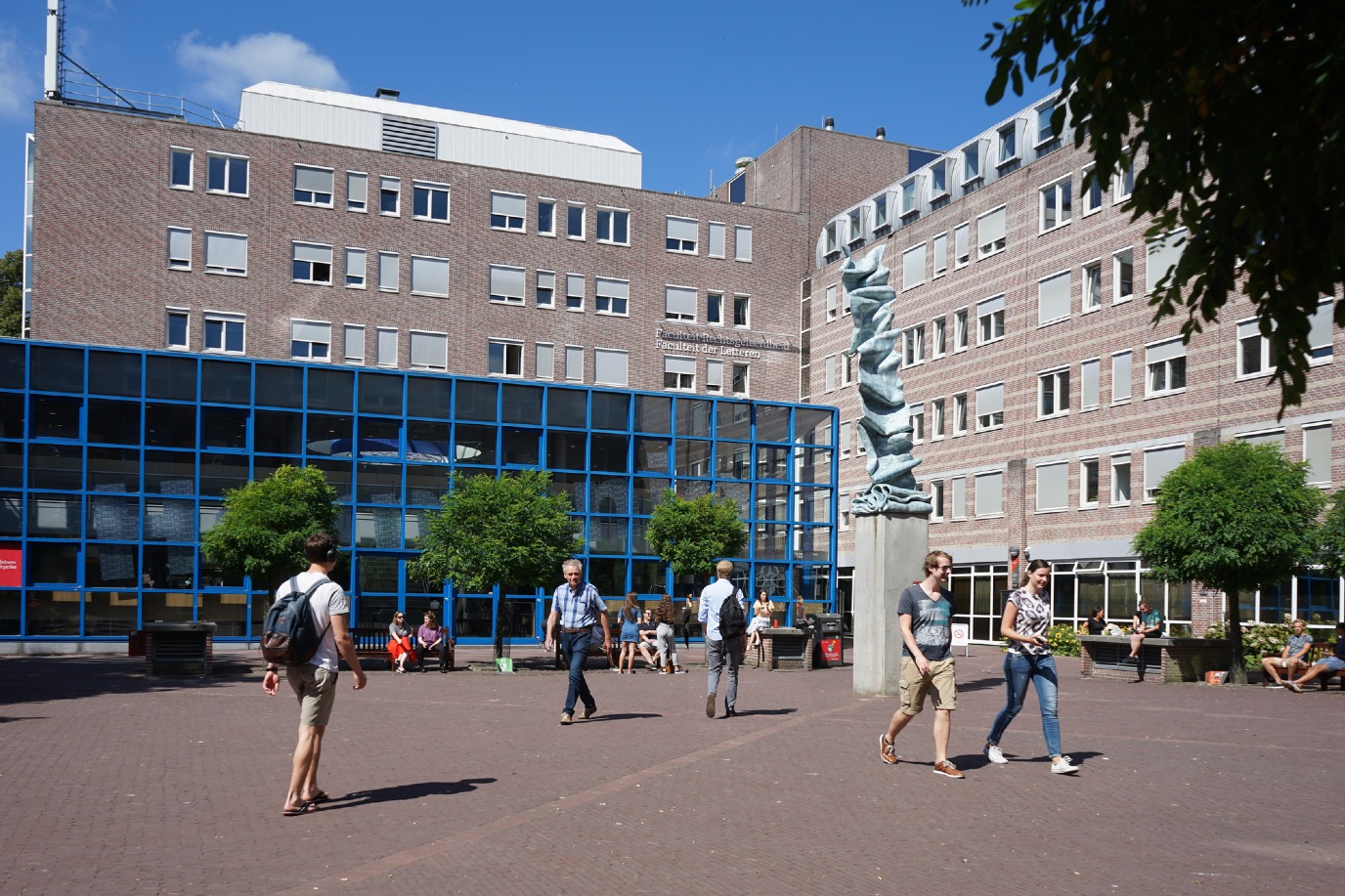
The Centre for Language and Cognition Groningen (CLCG) comprises the Linguistics Research of the Faculty of Arts in Groningen. Most linguists are members of the Groningen graduate faculty in the Behavioural and Cognitive Neurosciences (BCN)
Groningen Linguistics revolves around European languages (Germanic, Romance, Slavic and Finno-Ugric), including the Dutch languages Frisian and Lower Saxon. Applications of linguistics in language teaching, communications and computational linguistics are actively pursued, and a special focus is sought in the cognitive neurosciences, including psycholinguistics and aphasiology.
Projects that fall outside this profile stand little chance of acceptance.
The work in CLCG is organized in six groups: Syntax & Semantics, Discourse & Communication, Neurolinguistics, Computational Linguistics, Language Variation & Change, and Language Development. The coordinators of these groups are listed on the CLCG web site, and may be contacted about project sketches.
Sketches
The ability to choose subjects intelligently and plan work effectively is important throughout a scientific career. The project sketch is an early exercise in these activities. The sketch also plays a role in selecting candidates.
Function and Responsibility
Candidates will be judged on their academic record, including course grades and theses, but also on the basis of other scholarly activity already undertaken (if any), and on recommendations we shall request. The project sketch typically plays little role in the initial selection. It becomes important in selecting among the best candidates.
The function of the sketch is twofold: on the one hand we must determine whether the sort of research a candidate would like to pursue makes sense in Groningen, and on the other, we wish to see whether a prospective candidate can express himself in effective scholarly prose.
To meet the latter requirement it is essential that the candidate is responsible for the sketch. We do not object to a candidate obtaining help, esp. in editing or in referring to relevant research, but candidates will be asked about the sketch and must be prepared to defend it in every detail.
Structure
We will examine sketches for the following elements. Our most important question is always: will a project contribute to our scientific understanding of language? To determine this we want to know whether an important question is addressed, and whether there is a reasonable strategy for finding an answer.
The table below is meant to remind the candidate of the sorts of questions we'll ask. A sketch may deviate from the structure suggest, but should try to provide the information.
| Length |
3 pp. (plus figures and references) |
| Structure |
Background, Research Question(s), Intended Approach (perhaps including methods and intended experiments), Scholarly Significance, other significance (if any), Work Plan, Relation to CLCG profile |
| Language |
English or Dutch |
| Readers |
Professional Linguists |
At least eighty percent of the proposal should explain the questions to be posed, sketch the approach to be taken and fill in the background needed to make this understandable. The work plan should focus on the first year and should be summary about the rest. The relation to the CLCG profile can be described in most cases in a sentence.
Common and easily avoided errors in project sketches are:
- to overemphasize non-scholarly interest -- that parents want to know about their children's speech, etc. Limit this sort of remark to max. 5%.
- to emphasize only that the answer to a particular question is unknown or that no one has sought it. "How much does human language have in common with pigeon cooing, error-correcting codes, or whatever." The question must be significant and there must be a reasonable chance of success.
- to suggest a work plan of the sort: three years reading and thinking, one year of writing. See "Graduate Study at the CLCG". Tells which questions you'll address first, which experiments you'll replicate, etc.
It is difficult to distill interest into a focused question, but the effort is worthwhile.