
RUG op Bevrijdingsfestival 2026
RUG Science Space - Stap ons klaslokaal binnen tijdens Bevrijdingsfestival 2026
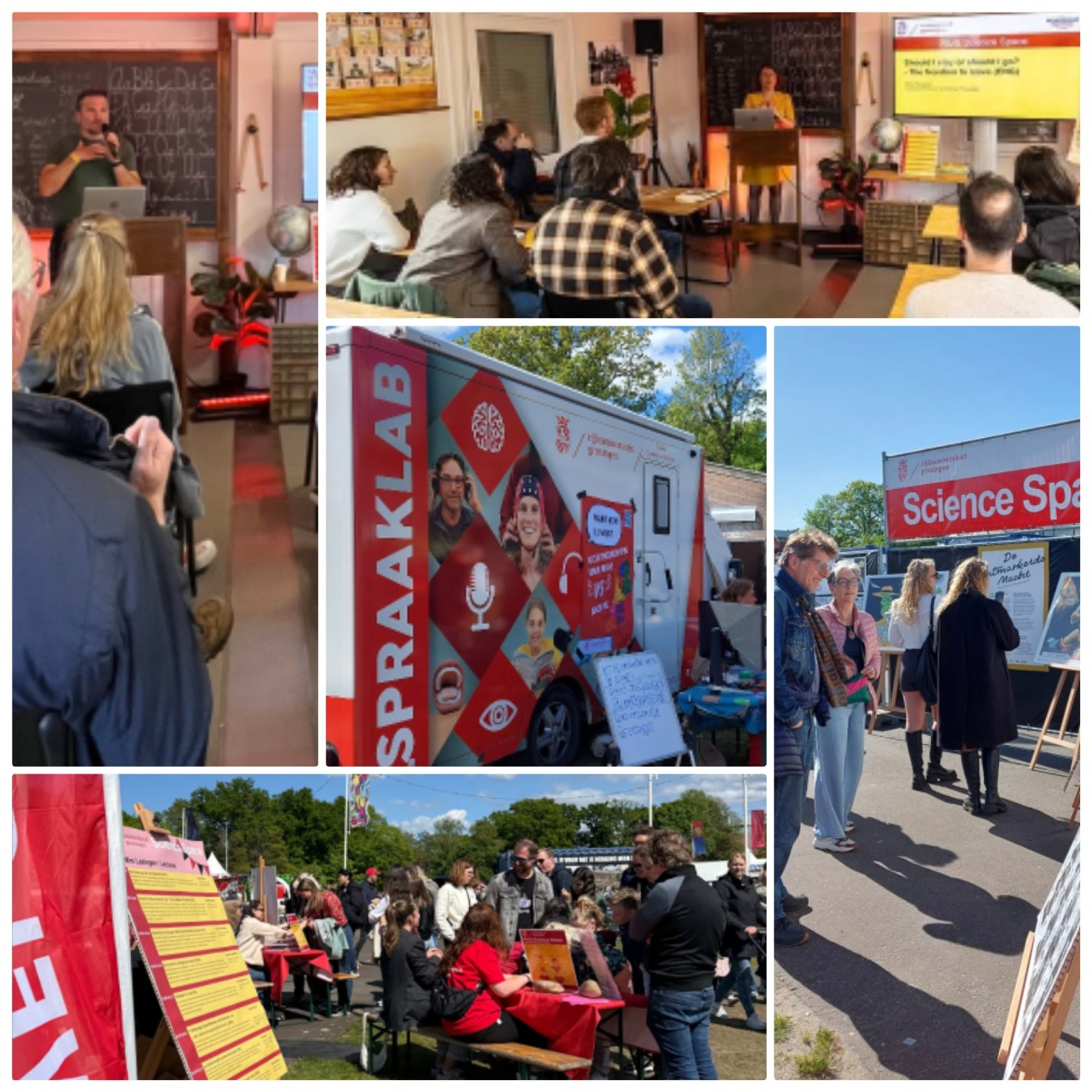
Even ontsnappen aan de muziek? Schuif aan in ons mini-klaslokaal: een plek waar het volume omlaag gaat, maar de ideeën juist harder binnenkomen.
Tussen de optredens door biedt het Bevrijdingsfestival ook ruimte voor iets anders: verwondering, nieuwe inzichten en het plezier van leren. Want dit festival is meer dan alleen muziek, het is ook een moment om stil te staan bij wat vrijheid betekent.
Ook dit jaar staat de RUG weer op het festivalterrein in Stadspark op 5 mei. Geen lange colleges, geen ingewikkeld jargon, maar toegankelijke mini-lezingen van onderzoekers van de Rijksuniversiteit Groningen. In een paar minuten nemen ze je mee in verrassende inzichten over één centraal thema: vrijheid.
Ook ben je van harte welkom om popcorn mee te knabbelen tijdens ons kortfilmprogramma, of mee te doen aan een echt wetenschappelijk spraak experiment in het mobiele SpraakLab!
Zie het volledige programma hieronder.
RUG MINI-LEZINGEN:
Wat is gezondheidsvrijheid? |
||
|
13.00 - 13.15
|
Tessa Jager
(Faculteit Rechtsgeleerdheid) |
Taal: Nederlands
|
|
Moet de fietshelm verplicht worden? Mogen ouderen in het verpleeghuis gedwongen worden op de afdeling te blijven? Mag de overheid ingrijpen in de beschikbaarheid van alcohol op festivals om comazuipen te voorkomen? Vrijheid is een groot goed. Gezondheid is dat ook. Maar vrijheid kan er ook toe leiden dat ongezond gedrag gefaciliteerd wordt. Kortom, er is dus spanning tussen vrijheid en gezondheid. Wanneer mag de overheid de vrijheid van mensen beperken om gezondheid te bevorderen?
|
||
What does freedom look like in North Korea? |
||
|
13.30 - 13.45
|
Nazanin Zadeh-Cummings
(Faculteit der Letteren) |
Taal: Engels
|
|
What does freedom look like in one of the world’s most closed societies? Behind everyday life stands a tightly controlled system in which the Kim regime has maintained power across three generations, often through serious human rights abuses. Do international sanctions put pressure on the state, or do they mainly harm ordinary people? And how is it that a war that never officially ended still shapes life in North and South Korea today?
|
||
Vrijheid: geluk of keuze? |
||
|
14.00 - 14.15
|
Petra Bolhuis
(HOVO) |
Taal: Nederlands
|
|
In deze mini-lezing staat het denken van filosoof Hannah Arendt centraal. Het werk van de filosoof richt zich met name op totalitaire politieke systemen. Arendt ziet vrijheid als iets dat ontstaat tussen toeval en noodlot, waar mensen kunnen handelen en het verschil maken. Juist in onzekere tijden ligt daar volgens haar de bron van hoop. Wat betekent dat voor onze kijk op vrijheid vandaag? En welke rol spelen wij daar zelf in?
|
||
Hoor je het gevaar aankomen? |
||
|
14.30 - 14.45
|
Anastasiia Krushynska
(Faculteit Science and Engineering) |
Taal: Nederlands
|
|
Hoe klinkt macht, en wanneer wordt geluid gevaarlijk? Van sonar tijdens de Tweede Wereldoorlog, dat hielp om vijandelijke onderzeeërs op te sporen en zo levens redde, tot de inzet van geluid als onzichtbaar wapen vandaag de dag: in deze mini-lezing leer je hoe geluidsgolven niet alleen kunnen detecteren, maar ook desoriënteren en uitschakelen. We verkennen hoe deze technologie werkt én hoe vergelijkbare technieken zelfs buiten het slagveld worden gebruikt, bijvoorbeeld door dieven die honden uitschakelen.
|
||
Zou ik een oorlogsmisdadiger kunnen zijn? |
||
|
15.00 - 15.15
|
Alette Smeulers
(Faculteit Rechtsgeleerdheid) |
Taal: Nederlands
|
|
Als we horen over gruweldaden tijdens oorlogen, dan distantiëren we ons onmiddellijk van de daders. Dat zijn mensen die heel anders zijn dan wij, denken we tenminste. Maar is dat wel zo? Of zijn daders angstaanjagend normaal? Zouden wij oorlogsmisdaden kunnen plegen? En zo ja: hoe dan? En wat moeten we weten om niet bij oorlogsmisdaden betrokken te raken?
|
||
Wat gebeurt er als je niet vrij bent om helemaal jezelf te zijn? |
||
|
15.30 - 15.45
|
Wouter Kiekens
(Faculteit Gedrags- & Maatschappijwetenschappen) |
Taal: Nederlands
|
|
25 jaar geleden werd het homohuwelijk in Nederland gelegaliseerd - een historisch moment van acceptatie en vrijheid. Maar hoe voelt die vrijheid voor LHBTQ+-jongeren nu? Kunnen zij écht zichzelf zijn? En wat zijn de gevolgen voor hun welzijn als ze dat niet kunnen?
|
||
Hoe ziet vrijheid eruit na de oorlog? |
||
|
16.00 - 16.15
|
Kiki Santing
(Faculteit der Letteren) |
Taal: Nederlands
|
|
De oorlog is voorbij… maar wat betekent dat eigenlijk voor het opnieuw opbouwen van een samenleving? Waar begin je als infrastructuur kapot is, vertrouwen ontbreekt en politieke spanningen blijven doorwerken? Kun je dan al spreken van echte vrijheid, of is dat iets wat stap voor stap opnieuw moet worden opgebouwd? Deze mini-lezing verkent hoe moeilijk én belangrijk die eerste keuzes na een conflict zijn.
|
||
Where is the line for cartooning and freedom of expression? |
||
|
16.30 - 16.45
|
Alberto Godioli
(Faculteit der Letteren) |
Taal: Engels
|
|
Humor and satire play a vital role in democratic life, and should therefore be protected as a crucial part of freedom of expression. However, drawing cartoons or telling jokes can sometimes have serious consequences, for example leading to defamation or hate speech lawsuits. Besides, cartoonists and satirists today face growing pressures around the world, from censorship to personal risk. Where, and how, does the law draw the line for their work? And why does humor matter for keeping societies open and free?
|
||
Over het festival:
- Het festival is gratis te bezoeken en interessant voor jong en oud.
- Het terrein gaat open om 12.00 en sluit om 00.00 / Wij staan er met een programma tussen 13.00 en 20.00.
- Bekijk de complete line-up van artiesten en activiteiten op de website van bevrijdingsfestival Groningen
Kortefilmprogramma:
Na de mini-lezingen ben je welkom om wat popcorn mee te knabbelen en een aantal korte films te bekijken in de RUG Science Space. Uiteraard allemaal gekozen rondom het thema: Vrijheid.
|
18.00
|
The Muscles Are Tense
Duur: 16 min | Taal: O.a Duits met Engelse ondertiteling |
|
The Muscles Are Tense (2026) - Mahshid Mahboubifar / Iran; Germany
|
|
|
18.45
|
Waking up in Silence
Duur: 17 min | Taal: Duits & Oekraïens met Engelse ondertiteling |
|
Waking Up in Silence (2023) - Mila Zhluktenko, Daniel Asadi Faezi / Ukraine; Germany
In een voormalige Duitse militaire kazerne die nu onderdak biedt aan ontheemde Oekraïense families, volgt deze documentaire kinderen terwijl ze zich bewegen door ruimtes die door geschiedenis zijn getekend. Door hun alledaagse spel reflecteert de film op hoe vrijheid opnieuw wordt aangeleerd en verbeeld in de nasleep van oorlog, en vorm krijgt in kleine gebaren van beweging, verbeelding en samenzijn.hape in small acts of movement, imagination, and togetherness. |
|
|
19.15
|
KRIICH
Duur: 14 min | Taal: Fries met Engelse ondertiteling |
|
KRIICH (2024) - Johanneke Dijkstra / Friesland, The Netherlands
|
|
Dit korte filmprogramma is samengesteld door Liza Kolomiiets, een Oekraïense filmcriticus en curator. Ze werkt met thema’s als ontheemding en culturele uitwisseling. Ze studeerde onlangs af in Film and Contemporary Audiovisual Media aan de RUG.
Dit programma werd mede mogelijk gemaakt door sponsoring van de Young Academy Groningen en de Faculteit der Letteren.