Page content:
English

Econometrics and Operations Research


European countries and businesses are in the process of building a vast radio telescope network across Western Europe. What are the best locations for the telescopes, taking into account matters such as optimal coverage, building costs, interference from cities and site stability? If you choose to study Econometrics and Operations Research there is a high chance that you will encounter questions like these.  

Language English
Duration 3 years (180 EC)
Degree Bachelor of Science
Start programme 1 September 2012
Deadline for application
  • 1 December for applicants who wish to apply for a scholarship
  • 1 May for all other students
Tuition fee EU/EER citizens

2012/2013: € 1,771 per year

Tuition fee Non EU/EER citizens

2012/2013: € 7,500 per year

Details Detailed information about tuition fees
Accreditation Accredited by the Dutch Government


General information

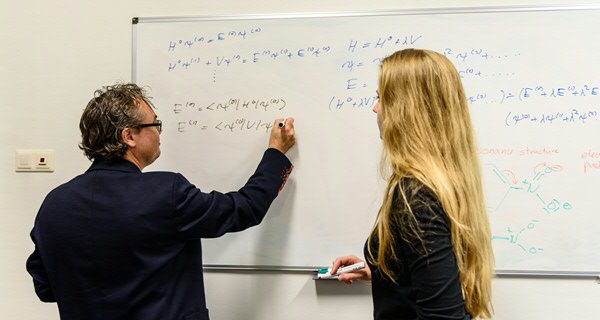
You will look for answers to practical problems using mathematical models. These models are at the heart of Econometrics and Operations Research. There are usually no immediate answers to economic questions, but by formulating the question in a model, you will nevertheless try to find an answer that you can defend. As a researcher into such problems, you must be able to think logically and analytically. And of course you have to be interested in exploring complex problems and puzzles. You map the economic problems that you research in Econometrics and Operations Research using mathematical and statistical methods, which is why the subjects economics, mathematics and statistics form the basis of the programme. It is important that you enjoy these subjects, particularly in combination. In addition, you will spend a lot of time working with computers. In Econometrics and Operations Research, It is above all about application; it is a tool rather than a subject in itself.

Career prospects

Assuming that you will continue with a Master's degree programme after finishing your Bachelor's degree, it will be relatively easy to find a job. Econometrics graduates can be found in government institutions, the business world, consultancy firms and organizations such as the Netherlands Bureau for Economic Policy Analysis and the Nederlandsche Bank, working on various issues such as macroeconomic predictions, stock and routing matters, the choice of advertising media, currency issues and unemployment analysis. After graduating, many econometricians continue with scientific research in a four-year PhD appointment.

Assuming that you will continue with a Master's degree programme after finishing your Bachelor's degree, it will be relatively easy to find a job. Econometrics graduates can be found in government institutions, the business world, consultancy firms and organizations such as the Netherlands Bureau for Economic Policy Analysis and the Nederlandsche Bank, working on various issues such as macroeconomic predictions, stock and routing matters, the choice of advertising media, currency issues and unemployment analysis. After graduating, many econometricians continue with scientific research in a four-year PhD appointment.

Admission

  • English test

  • TOEFL (580/237/92); IELTS (6.5); Cambridge Proficiency (A/B/C) or Cambridge Advanced

  • Maths passed at higher level (advanced) subject

  • Secondary or pre-university diploma, including a good background in mathematics.

For detailed information about admission, please check the Faculty website.

More information


Last modified:December 23, 2011 12:45
Associative links:
 
To top