| |
| |
|
|
Page content:
|
voorzitter: Prof. Dr. H.B.Levinsky
|
(chairman: Prof. Dr. H.B.Levinsky, photo to the right)
The research in the Combustion Technology addresses issues arising from the conversion of chemical fuels to useful energy:
-
Efficiency of combustion processes and development of new combustion methods
-
Formation of pollutant species
-
Effects of sustainable fuels (biogas, hydrogen) on efficiency, fitness-for purpose and environmental impact of combustion processes
-
Development and use of non-combustion conversion methods, such as fuel cells
-
Efficient production methods for sustainable fuels
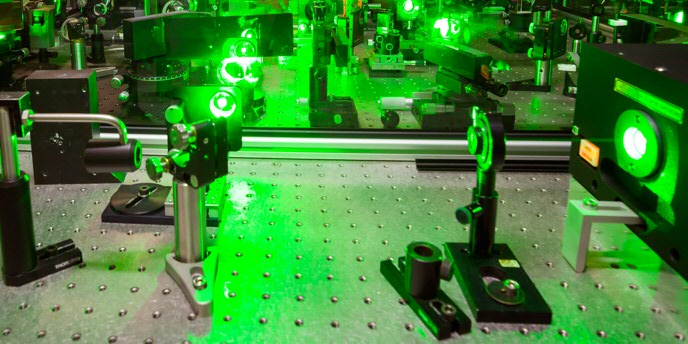
To achieve major improvements in the use of combustion for energy conversion, required for a sustainable future, such as five-fold increases in efficiency and order-of-magnitude decreases in pollutant formation, it is essential to understand the microscopic details of combustion processes. Towards this end, the Laboratory studies elementary physical and chemical processes in high temperature combusting systems employing state-of-the-art, laser-based measurement techniques: laser-induced fluorescence (LIF), spontaneous Raman scattering, coherent anti-Stokes Raman scattering (CARS), laser-induced incandescence (LII) and various methods for infrared absorption, such as tunable diode laser absorption (TDLAS). Analyses of stationary combustion processes are performed using flames at atmospheric and reduced pressures, while a rapid compression machine (RCM) is used to study transient phenomena such as spontaneous ignition.
The effort has recently been expanded for the study of fuel cells and efficient production methods for sustainable fuels, such as biogas and hydrogen. Hydrogen production by both electrolysis using renewable electricity as well as production from fossil fuels including precombustion CO2 capture is explored. In this research, the emphasis is not only on technical aspects, but considers the economic and infrastructural aspects as well.
The Laboratory works closely with industry and other research institutes, and owes a significant fraction of its basic financing to KEMA and ECN.
|
The distribution of temperature in a methane flame is measured by coherent anti-Stokes Raman scattering (CARS)
|
| Last modified: | January 31, 2012 10:22 |
|
Associative links:
|
| |
| To top
|