

Current and recent scholarshipholders
Here are the current and recent scholarshipholders listed.
Scholarshipholders 2026-2027, Autumn cohort
Here are the scholarshipholders of 2026-2027, autumn cohort listed.
Jessica Plant - scholarshipholder for postdoctoral research
University of Groningen

My research explores the value of ancient surfaces as interfaces and as things made by artisans. I focus on plaster relief applied to architecture (or ‘stucco’); a prevalent surfacing mode, yet one which, I argue, is easily overlooked and understudied in scholarship. As part of my larger book project which offers a new synthetic history of stucco as medium in Roman antiquity (ca. 200 BCE – 700 CE), my research at KNIR recontextualises funerary surfaces in imperial Rome (ca. 2nd – 3rd centuries CE). I will combine autopsy of primary plaster assemblages in Rome and Ostia alongside archival and textual evidence, investigating how plasterers built on centuries’ worth of technical expertise and were themselves integrated within commemorative monuments in manifold ways.
Wouter Kreuze - scholarshipholder for preparing a postdoctoral project
University of Groningen

In the early modern period, news was transmitted by handwritten sheets of paper, also known by their Italian name of avvisi. These documents appeared all over the European continent, but Rome was one of the most central locations in the early modern handwritten news network. There are not only many documents in archives across Europe with the headline ‘from Rome,’ the genre also found a large readership in the city, resulting in a large number of extant collections. My project endeavors to develop new methods of visualizing the dissemination of handwritten news from the basis of these collections. I will use my time at the KNIR to assess their usability and think about a work plan for digital data collection.
Marcello de Vos - scholarshipholder for preparing a postdoctoral project
University of Groningen

This project investigates long-term human–environmental dynamics in the highlands (>1000 m) of the Matese Massif, a poorly explored mountain landscape along the Campania–Molise border. Challenging traditional views of mountains as marginal and economically unproductive spaces, it examines their role within wider systems of settlement, mobility, production, and exchange. A multidisciplinary approach combines pedestrian survey, remote sensing, landscape modelling, geological coring and ethnographic research to reconstruct changing patterns of upland exploitation. By integrating archaeological, environmental, and ethnographic evidence, the project aims to reconstruct the longue durée history of human occupation in the Matese uplands, while documenting and contextualising rapidly disappearing traditions of seasonal farming and transhumant pastoralism.
Gloria Moorman - scholarshipholder for preparing a postdoctoral project
Leiden University
What makes the perfect ‘discovery,’ and why? In the catacombs of subterranean Rome, antiquarians and curious individuals uncovered a series of painted rooms. Visual evidence in the shape of fragmentary wall paintings seems to have been too good not to use. As so often, relatively small archaeological finds gave rise to grand narratives of discovery, meant to justify the appropriation of space and objects. My project argues that the Renaissance ‘rediscovery’ of subterranean Rome—supported and publicized by the Counter Reformation Church—was not just the surprise find authenticated by individual antiquarians, but formed the result of concerted, archaeological efforts to stress Roman Catholic supremacy in print. By way of the book, the new discipline of Christian archaeology would turn Italian antiquarian Antonio Bosio (1575-1629)—author of monumental atlas Roma sotterranea (1635-1671)—into the Vatican’s self-proclaimed Columbus of the catacombs.
Gabriel Dinda - scholarshipholder for PhD research
University of Groningen
My project examines grassroots youth climate activism in the vulnerable coastal ecosystems in Kenya. During my fieldwork, which was after a prolonged drought, I watched community elders gather for collective prayers and ritual land cleansing rather than “technical” climate adaptation solutions. That moment changed my thinking. I realized that in some cases, climate hazards are read there through a moral and spiritual lens rather than scientific ones. This view influences effectiveness of proposed strategies. At KNIR, I will trace how such localized ecological beliefs meet ecological doctrine, working through the URBS network in the Biblioteca Apostolica Vaticana, the archives of the Pontifical Academy of Sciences and the FAO's David Lubin Memorial Library on adaptation and rain-fed agriculture.
Jelle Lammerts van Bueren - scholarshipholder for PhD research
Utrecht University
After the Second World War and the era of fascism, politicians in Western Europe typically envisioned ‘democracy’ to be a matter for political elites. Since the 1970s however, across the continent, a wider call for more participatory politics in the form of referendums arose. In my PhD project, I investigate the double questions of why this historical development took place and how it differed across the continent. During my research stay at the KNIR, I will have the opportunity to perform the primary source research for my Italian case study. This case is vital for my project, as Italy is one of the most frequent users of the tool, but also because here it largely served dissatisfied citizens, not politicians.
Laura Pasterkamp - scholarshipholder for PhD research
VU Amsterdam
This project researches child-characters in the biblical text of the Gospel of Luke and the Acts of the Apostles that have been studied as adults or overlooked entirely. The childist perspective of my research aims at understanding how being-a-child influences the role and position of the characters in the story. To better understand the portrayal of children and their behaviours in the biblical narratives (the space they occupy, their activities, etc.), I also explore the socio-cultural context of children in the first-century CE Mediterranean world. My stay at the KNIR will contribute to this by giving me the opportunity to explore material evidence of children’s lives from this context in the early Christian and Jewish catacombs in Rome and museums.
Susanne Bartels - scholarshipholder for PhD research
University of Amsterdam
tbc
Jet Kleine Schaars - scholarshipholder for preparing a PhD project
Radboud University
What we know about early modern intellectual networks is shaped by selected archival corpora, often centering research on individual authors rather than transnational networks. This imbalance is evident in scholarship on Gisbert Cuper (1644–1716), a Dutch scholar and intermediary in the Republic of Letters, whose exchanges with Roman intellectuals and ecclesiastical circles remain largely underexplored. During my stay at the KNIR, I will investigate this Roman dimension through manuscript research, particularly in the Biblioteca Angelica and Biblioteca Apostolica Vaticana. This complements my broader project on the visual construction of globality, examining how works on paper circulated through intellectual networks to produce knowledge of a connected world.
Pim Storm - scholarshipholder for preparing a PhD project
University of Amsterdam

The rise of the Mongols during the thirteenth century led to a period of remarkable interconnectivity across Asia and Europe. Landscapes, plants, animals, and peoples whose characteristics and customs had for centuries been the subject of speculation could now be observed firsthand by Franciscan and Dominican missionaries travelling through Asia. At the KNIR, I will study the papal correspondence with these missionaries and the Mongol khans, preserved in the Vatican Apostolic Archives. Connecting cross-cultural encounters to contemporary scholastic discussions about species and the natural order, this project makes a case to study the historical development of the natural sciences and global connectivity beyond the context of European colonialism that started in the early modern period.
Amber IJsveld - scholarshipholder for (R)MA research
Leiden University

Looting and illicit trade of archaeological artefacts result in the irreversible loss of archaeological knowledge and cultural memory. My research compares cultural heritage management in Italy and the Netherlands, focusing on how archaeological heritage is protected and how this work is communicated to the public. Italy provides a relevant case through the central role of the Carabinieri Tutela Patrimonio Culturale (TPC), while the Netherlands relies on a network of institutions. In Rome, the work of the Carabinieri TPC will be examined alongside museums and other heritage institutions. The aim is to understand how the two systems differ, what these differences reveal about heritage protection, and how this work can be made more visible through museums and public engagement.
Feline van Leeuwen - scholarshipholder for (R)MA research
VU Amsterdam
Stories of Metamorphoses, stories of people transforming into animals, trees, rivers and rocks, have fascinated people for millennia. In my research I will focus on three authors (Ovid, Nonnus and Marino) and their versions of the famous myths of Actaeon (a man turned into an animal) and Daphne and Ambrosia (women turned into plants), situating these within long-lived visual and textual traditions of stories about human-nature interactions. Additionally, I will include several visual representations of these myths. In these texts and images, I will look into the presence, lack or disappearance of boundaries between the human and the non-human, where humans morph into animals and other natural entities, and natural landscapes and animals acquire human-like features like emotions and/or a (human) voice.
Scholarshipholders 2025-2026, Spring cohort
Here are the scholarshipholders of 2025-2026, spring cohort listed.
Beer Prakken - scholarshipholder for PhD research
At KNIR, I will build on the concept of “carnivalesque fascism” from my dissertation about humor in far-right politics. Carnivalesque fascism encompasses a carnivalesque humorous form of mob violence where it is both effectively ‘embodied’ and serves an ideological function. In my dissertation, I trace carnivalesque fascism as a historical and contemporary phenomenon in the United States through two case studies, a 1910 lynching in Tennessee; and the 2021 Capitol insurrection. In Rome, I will apply carnivalesque fascism to an Italian case study, one from the interbellum (e.g., the March to Rome), and one from a post-1945 (‘post-fascist’) period. By doing so, I will advance fascism scholarship by comparatively analyzing the US with Italy and examining the largely neglected role of carnivalesque humor within fascist movements.
Sointu Cantell - scholarshipholder for preparing a PhD project

Reputation, risk, and reciprocity: this project proposal examines how European institutions navigated contested mercantile patronage across Italy and the Low Countries between 1450 and 1600. This period witnessed the flourishing of private patronage operating in tension with institutional authority, as contemporaries increasingly recognized concepts of futurity and contingency. Where existing patronage research often focuses on donors and artists, this project centers institutional recipients as strategic actors. My central question asks: What strategies did early modern European receiving institutions develop for navigating contested mercantile patronage, and what factors determined which strategies were deployed? Through comparative archival research, material analysis and economic theory, my research defines and examines three recurring institutional approaches to contested patronage: ex ante refusal, conditional acceptance, and retrospective sanction. In doing so, this project aims to recover institutional decision-making processes around patronage and memory while providing historical precedents to buttress contemporary discussions of controversial cultural funding.
Ella Campbell - Winner Ted Meijer Prize 2025
The aristocratic taste for classical antiquity found a new outlet in the eighteenth century in the form of porcelain figurines, which were produced in manufactories across Europe to decorate the drawing rooms and dining tables of the elite. My research at the KNIR focuses on how the primary porcelain factories in Italy - specifically Tuscany, Venice and Naples - catered to this market, with a view to understanding how their respective artistic and archaeological histories shaped their treatment of classical themes. More broadly, I am interested in how the shift from large-scale statuary into this intimate, decorative medium altered or reflected the status of antiquity in Italy and abroad, and the status of those collecting it.
Babs van Eijk - scholarshipholder for (R)MA research
From gods connected to woods to Lares in the Roman home and deities in temples: ancient religions were often closely connected to elements in the environment, giving them a location-bound character. The Roman Empire, however, stimulated migration for shorter as well as longer periods of time. How did people practice their religion in daily life, when moving away from these places? My research focuses on religion on the move in the Roman imperial period. This thesis will shed new light on cultural interaction by using religious theories on place and space. Through the lens of small, portable religious objects, this topic will be explored in order to get a deeper understanding of religion in daily life.
Lisanne Ledegang - scholarshipholder for (R)MA research
Coping with loss is a universal struggle, and language can play a big part in the grieving process. Metaphors like ‘they are in a better place now’ are commonplace in modern English and can help make sense of the death of a loved one. My research focuses on the stylistic elements of Greek funerary poems in Rome for children and examines how these poetic features contribute to the grieving process of bereaved parents. For this research I will be studying ancient poems through the lens of modern theories on grief. The stylistic elements in these inscriptions can offer consolation to bereaved parents by framing death as something that does not have a definitive ending.
Veronica Vatne - scholarshipholder for (R)MA research
For my thesis, I'm looking at the ideological origins of the terror group Lehi. I'll be researching the reception of Italian fascism among the Jewish far-right in Mandatory Palestine between 1938, the year racial laws were introduced in Italy, to 1940, when the terror group Lehi was formed. Lehi split from the paramilitary group Etzel. One of the main reasons for the split was Lehi's insistence on a future collaboration with Italy to free Mandatory Palestine from British control. By reading personal documents and articles written by individuals who would later make up Lehi's central leadership, I aim to better understand which aspects of Italian Fascism the group sought to emulate and which aspects to discard or adapt.
Maxine van Veelen - scholarshipholder for (R)MA research
My research is focused on the religious comedies of Hrotsvitha, a tenth-century canoness in the convent of Gandersheim. In her plays – the first known classicizing comedies in hundreds of years, borrowing heavily from Roman playwright Terence – Hrotsvitha marries comedy with hagiography, paganism with christianity, and classical culture with medieval Germany. Anomalously, the plays exist outside of a larger theatrical tradition, and it is disputed to what extent they were actually performed.
I analyze how stylistic strategies such as irony and pastiche help create a dissimulative effect, potentially in addition to literal role-play. I hope to contribute to a broader understanding of the wide-ranging forms medieval performance takes and of its potential to shape individual and communal identity.
Renske de Vries - scholarshipholder for (R)MA research
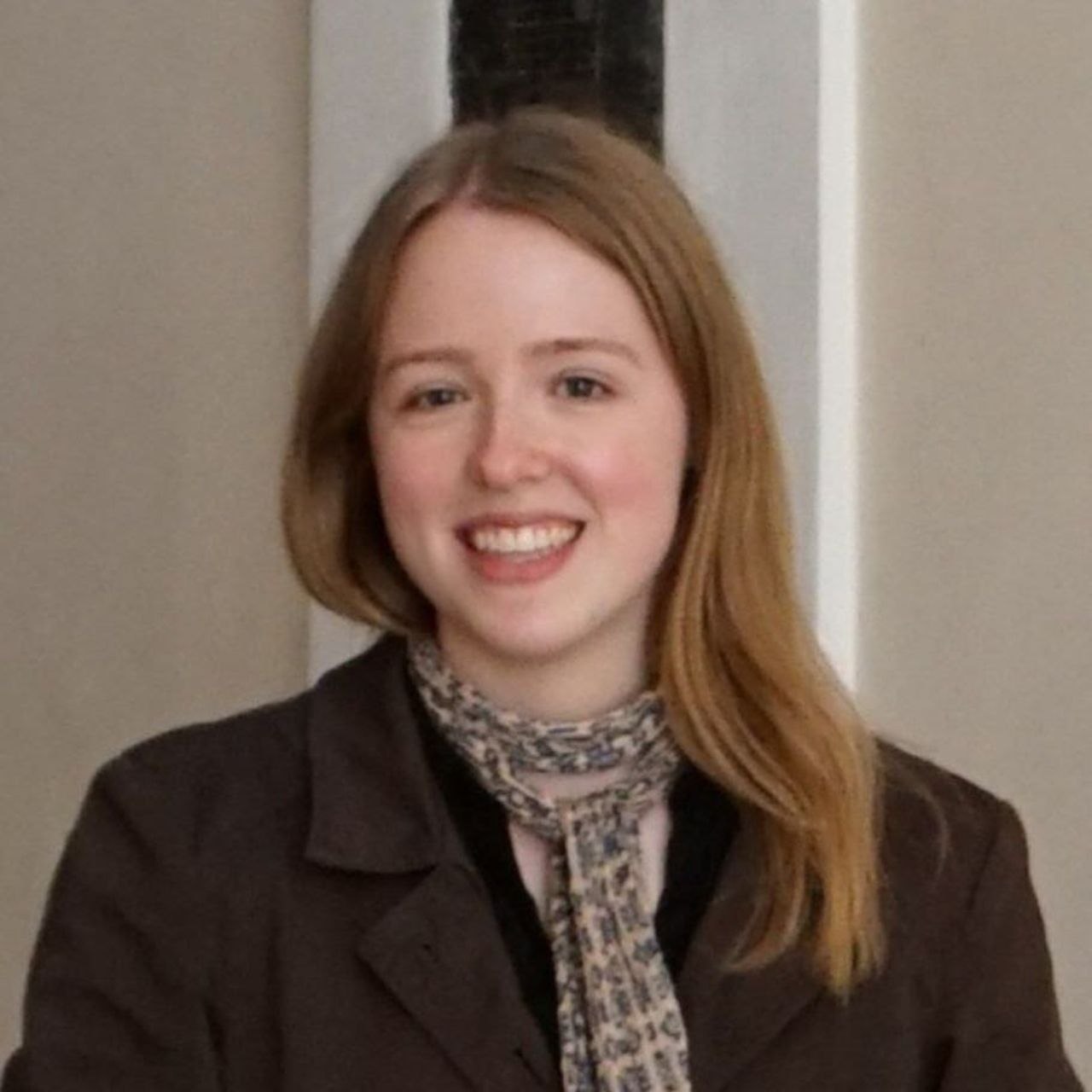
My MA thesis examines how the Dutch painter Abraham Teerlink (1776–1857), born in Dordrecht, came to regard Rome as his true home after arriving there in 1808 as élève-pensionnaire of king Louis Napoleon. Focusing on the last decades of his life, spent entirely in Italy, I will combine biographical research with formal and iconographic analysis to reconstruct his later career and oeuvre. In doing so, my research investigates the factors that contributed to Teerlink’s permanent settlement in Rome, and considers how the Roman climate, landscapes and artistic traditions influenced his development as a painter. Special attention is given to changes in subject matter and to his collaboration with his wife, the Italian painter Anna Muschi, a yet underexplored aspect in the literature.
Scholarshipholders 2025-2026, Winter cohort
Here are the scholarshipholders of 2025-2026, winter cohort listed.
César Reigosa Soler - scholarshipholder for postdoctoral research
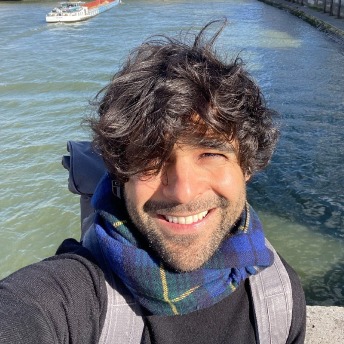
My project investigates Thomas Aquinas’s account of ‘sins of speech’ in the Summa Theologiae (II–II, qq.72–76) with an eye to contemporary speech act theory and recent work on hate speech. At the heart of the project lies the question of how can words effect change in the world. Such changes include producing harm, eliciting emotions and establishing rules that govern individuals. By looking into classical rhetorical theory, twentieth-century speech act theory (J. L. Austin and John Searle), and Rae Langton’s account of hate speech, the project aims to assess the historical and philosophical significance of Aquinas’s views on the performativity and morality of language.
Anna Meens - scholarshipholder for preparing a postdoctoral project
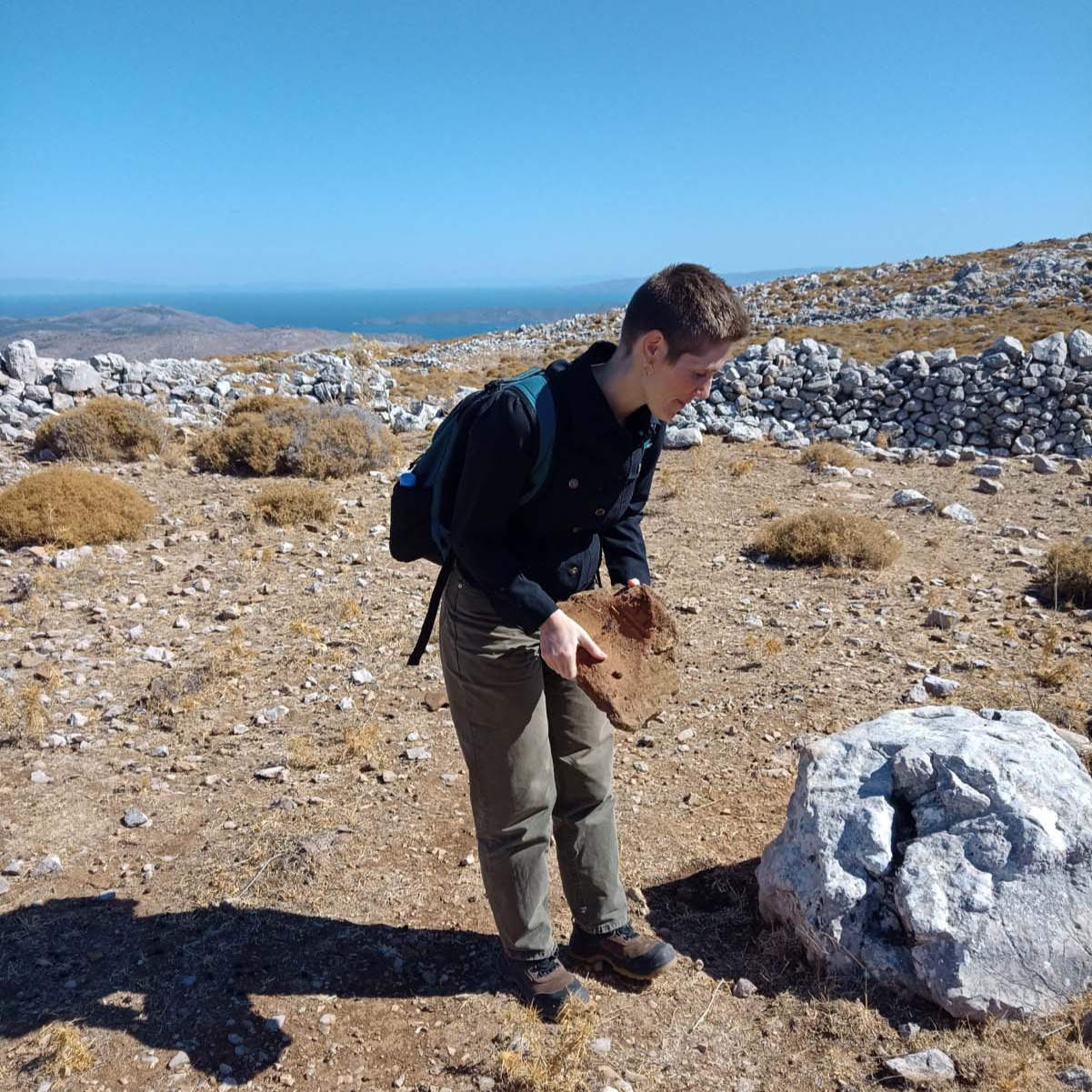
I am an archaeologist who is at KNIR to prepare a postdoctoral project that will use the architectural remains of farmsteads to gain insights in the identity and organization of farmers who lived and worked in Greek areas. I am developing a digital comparative approach highlighting the adaptability of farming communities in different countrysides and tracing chronological developments and regional trajectories in ancient farming practices. After focusing on farmstead sites in Greece for my PhD at the University of Amsterdam, it was time to familiarize myself with farmsteads documented in Magna Graecia. My stay at KNIR is the ideal starting point to get acquainted with this archaeological evidence in the many research libraries in Rome.
Ren Ewart - scholarshipholder for PhD research
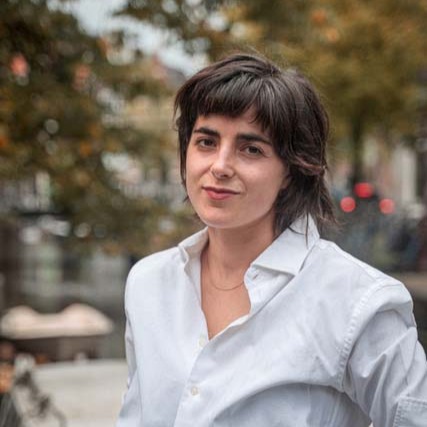
My thesis project critically examines histories and practices of needlework repair to understand the ethical and political significance of mending across museum and cultural contexts. The project is divided into three distinct yet overlapping parts, addressing needlework repair as (1) a site of cultural heritage that crosses the tangible and the intangible; (2) an embodied conservation practice; and (3) a space of experimental and participatory pedagogy. Through archival and ethnographic research, the project aims to centre histories and processes of maintenance and care-work that remain hidden or neglected in production-oriented approaches to renewal. Drawing together artistic research, critical heritage and conservation ethnography, the project considers the different ways in which specific mending practices intersect with broader networks of repair to sustain objects, institutions, and social relations. Most prominently, it asks how can needlework mending re-frame understandings of repair, care, and maintenance within and beyond the museum?
Julia Kok - scholarshipholder for preparing a PhD project
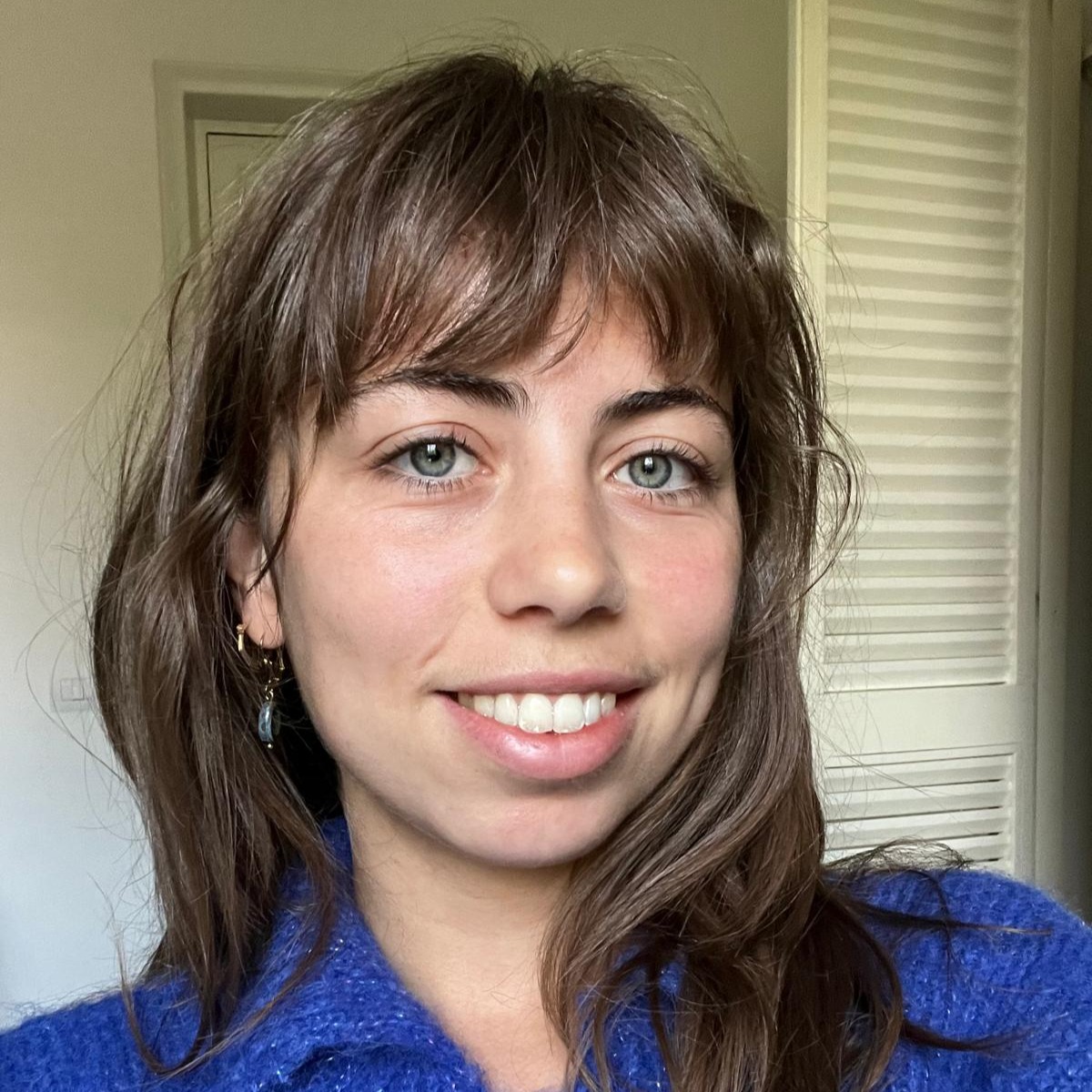
My research is focused on women in confraternities for northerners in sixteenth-century Italy. While confraternities are generally known to have been societies for the male lay, scholars are starting to have more attention for the role of women. As the associations played a central role in late medieval and premodern society, this forms a relevant contribution to gender history. However, much is still to be explored. My research in Rome, then, is centred around the question: how did women and gender relations play a role in confraternities for northerners in sixteenth-century Rome? This research will be the foundation for a PhD proposal, in which I will present my research on both Florence and Rome, and propose a more in-depth study of the meaning of gender in confraternity life.
Iris Verbiesen - scholarshipholder for preparing a PhD project
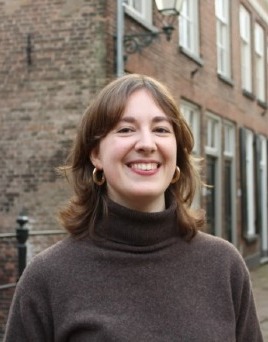
As part of the Tappino Area Archaeological Project (TAAP), run by the KNIR and CeDISA Jelsi in Molise, my research aims to better understand the functions of Roman villas in the southern Apennines. Contrary to the coastal zones in Latium, Etruria, and Campania, this remote, mountainous zone has been largely overlooked: only a few villas have been excavated, and others are known only from low-resolution data produced by large-scale surveys. Moreover, the rugged terrain has caused limited access to sites, obstructing further investigation. Nonetheless, what little information we have on mountain villas suggests rather humble and small-scale enterprises compared to their counterparts in the well-researched areas of Roman Italy. By combining historical models with landscape archaeology, I will analyse how villa systems worked in mountain economies and communities. To this end, I will use detailed archaeological data from newly discovered sites, which will be retrieved by several new methods that are suitable for this fragmented landscape and do not require excavation. This entails field survey and remote sensing, the latter including drone photography and georesistivity, among others. During my stay at the KNIR, I will focus on my theoretical framework, and prepare exploratory fieldwork that will take place on selected sites during the KNIR remote sensing practicum in Molise later this Spring.
Anouk de Bruin - scholarshipholder for (R)MA research
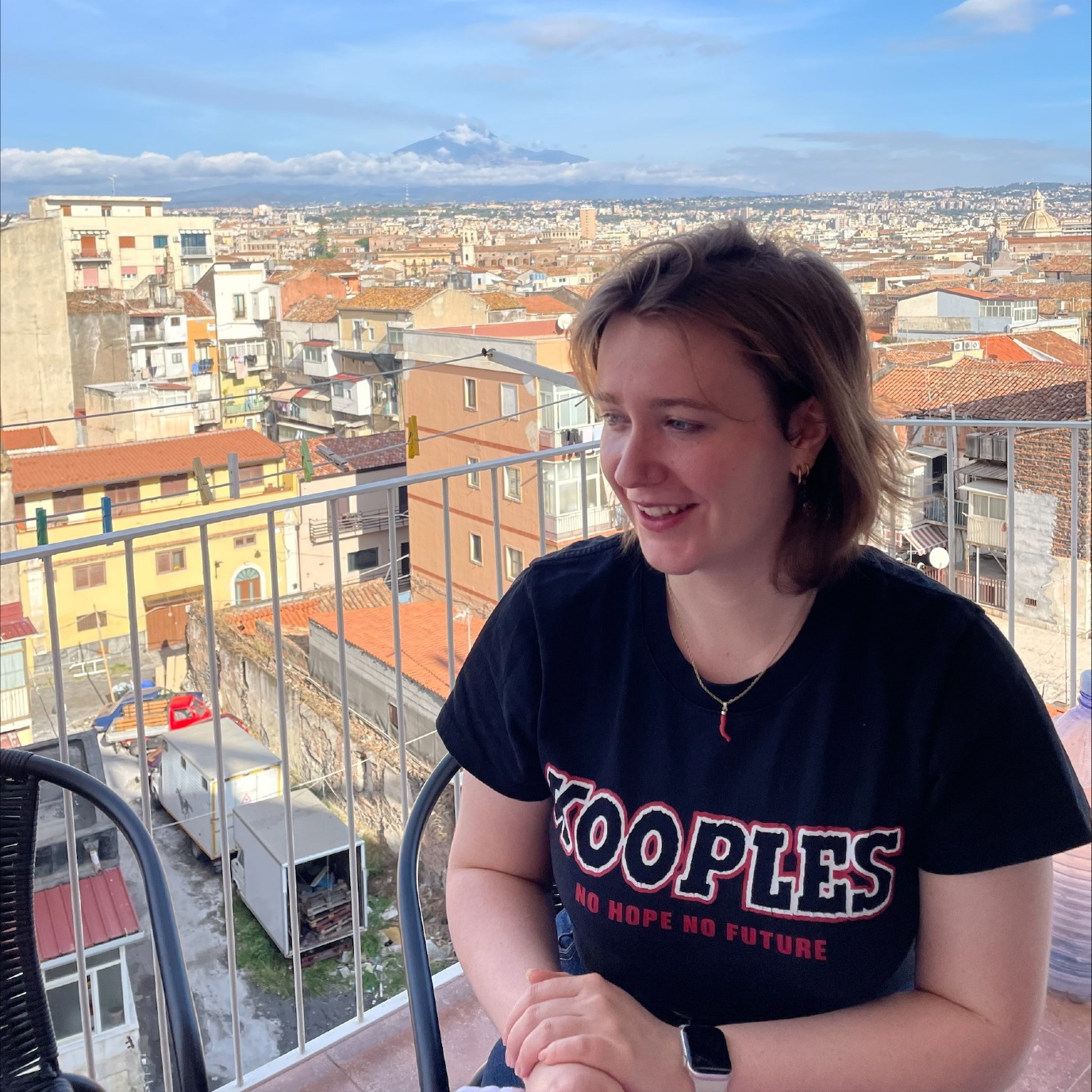
The hearth served as a crucial element for human survival in the past: it provided a means of preparing food, maintaining warmth, and illuminating darkness. In Roman religion, the hearth is often represented by Vesta, whose temple on the Forum housed the sacred hearth of the empire. Interestingly, images and references to Vesta are lacking in the more practical context of hearths. During my time at KNIR, I am researching this particular aspect of the hearth cult of the Roman Empire: the religion of kitchens. Based on archaeological data, literary sources and cultural anthropological approaches, I will examine hearth-related rituals and the domestic deities of early Imperial Italy and will attempt to reconstruct the daily functions and the roles of the kitchen and those working in it.
Nina Manola Čoholić - scholarshipholder for (R)MA research
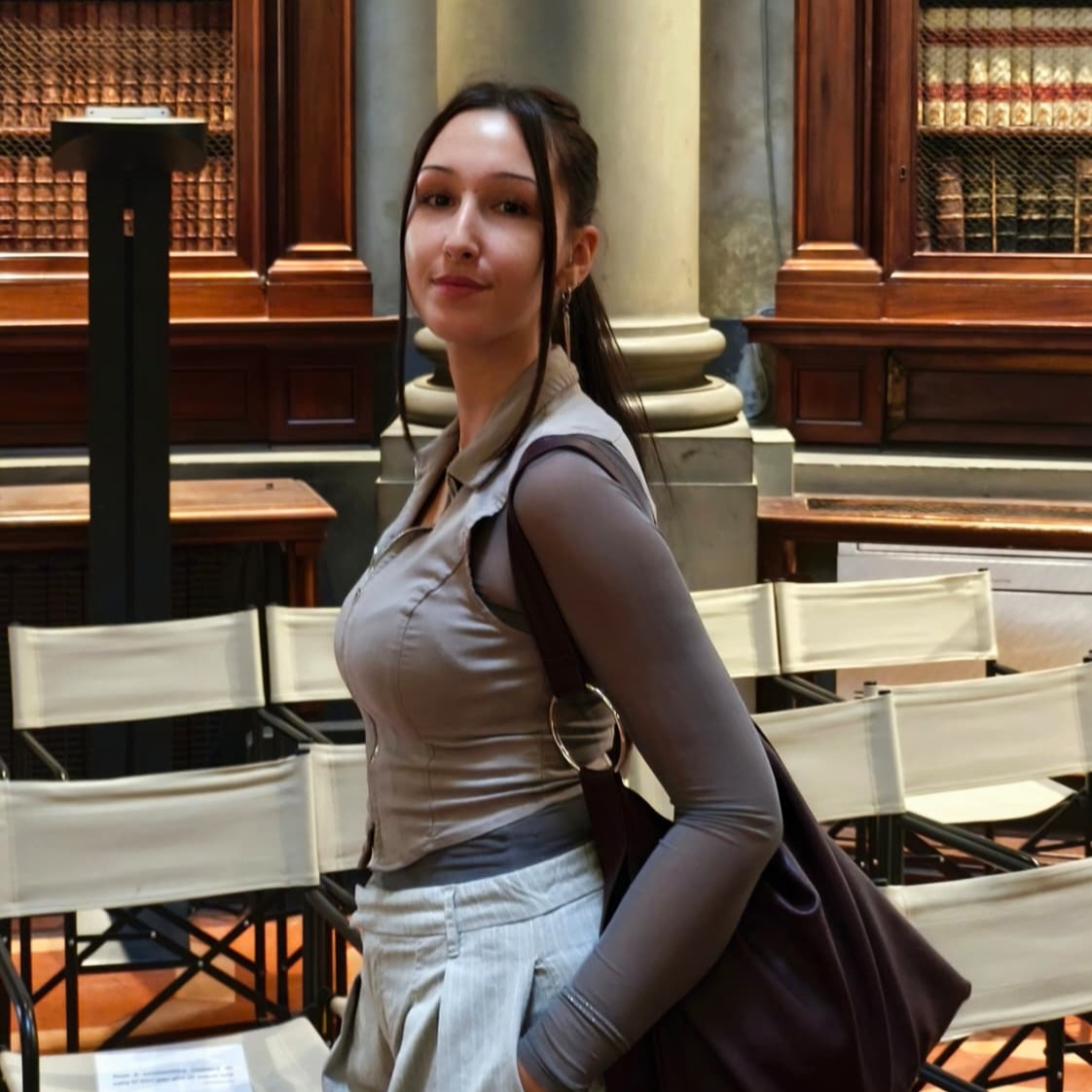
My research explores printers’ devices in late 16th-century Venice, one of the most important centres of book production in early modern Europe. Printers’ devices, small visual marks placed on title pages or in colophons, were traditionally understood as practical signs of identification and proof of quality within the book market. For this reason, scholarship has tended to treat them primarily as commercial and institutional markers, often giving limited attention to the interpretative possibilities they offer.
My project asks whether printers’ devices could function not only as marks of commerce but also as discreet visual statements through which printers articulated position, affiliation, or belief.