

Rosa Anna Di Lella
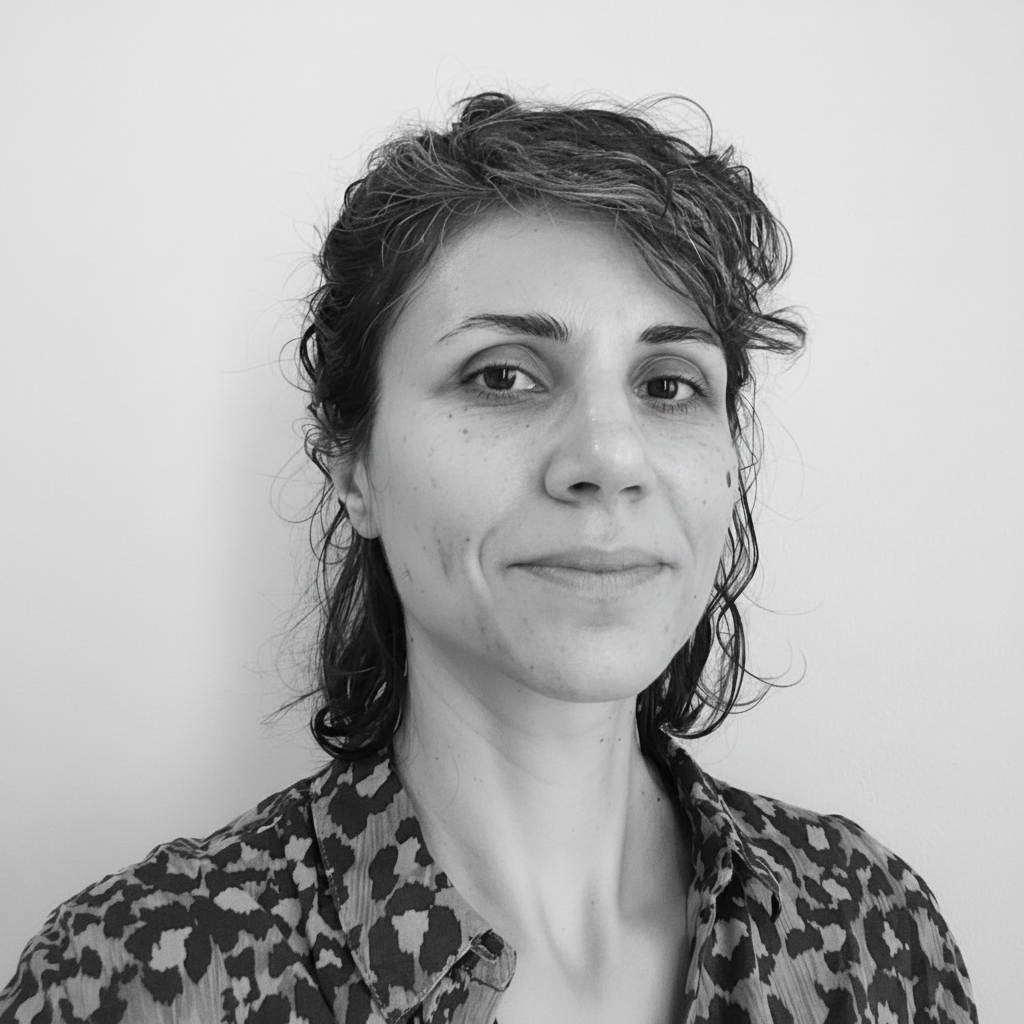
Rosa Anna Di Lella is a KNIR Museum Fellow and a cultural anthropologist and curator based at the MUCIV-Museum of Civilizations in Rome, where she curates the former Colonial Museum collections and coordinates the museum's educational department.
Over the last twenty years, her work has focused on finding innovative ways to open up museum spaces through collaborative, participatory practices and community-led projects. She has actively contributed to major European research networks, including SWICH - Sharing a World of Inclusion, Creativity and Heritage and Taking Care - Ethnographic and World Cultures Museums as Spaces of Care.
Her current research interests and museum practices center on turning historical spaces of propaganda and colonial archives into shared hubs for international research and critical inquiry. A key expression of this methodology is her ongoing work on the dynamic exhibition project Museum of Opacities.
During the fellowship at the KNIR, Rosa Anna Di Lella will develop the project "Decentring Knowledge: Conversations on Colonial Legacies. Provenance Research, Critical Curatorship, and Memorialisation."
The project explores the decolonisation of cultural heritage as a critical practice that questions the epistemic foundations through which European museums, universities, and research institutions have historically produced and legitimised knowledge. Focusing in particular on museums and colonial collections, it examines how institutional narratives, classificatory systems, and forms of representation have been shaped by colonial histories and power relations, and how these legacies may be critically reworked today.
Conceived within the interdisciplinary research environment of the KNIR, the project takes the form of a series of roundtables understood not simply as public events, but as dialogical spaces for collective reflection. Bringing together scholars, curators, writers, and researchers from different disciplinary backgrounds, the roundtables will investigate how colonial legacies are addressed through provenance research, curatorial practice, literature, and forms of memorialisation. Rather than aiming at definitive conclusions, they are intended as shared analytical laboratories in which different methodologies, temporalities, and positionalities can enter into productive dialogue.
Across the three roundtables, particular attention will be given to the role of museums and cultural institutions as historical sites of inclusion and exclusion, and as key actors in shaping the relationship between past, memory, and the present. Central questions will concern narrative authority: which histories are told, by whom, and under what conditions.
The project grows out of the ongoing research and curatorial work carried out by Rosa Anna Di Lella at the MUCIV-Museo delle Civiltà in Rome, especially in connection with the progressive reinstallation of the former Colonial Museum collections within the framework of Museum of Opacities. That experience has highlighted the need to address the colonial origins and functions of the collections without resolving their contradictions into simplified or reconciliatory narratives. In this sense, the fellowship will extend a situated curatorial inquiry into a broader interdisciplinary conversation, using dialogue itself as a decolonial method of research.
E-mail: rosaanna.dilella cultura.gov.it