

Dr Asker Pelgrom
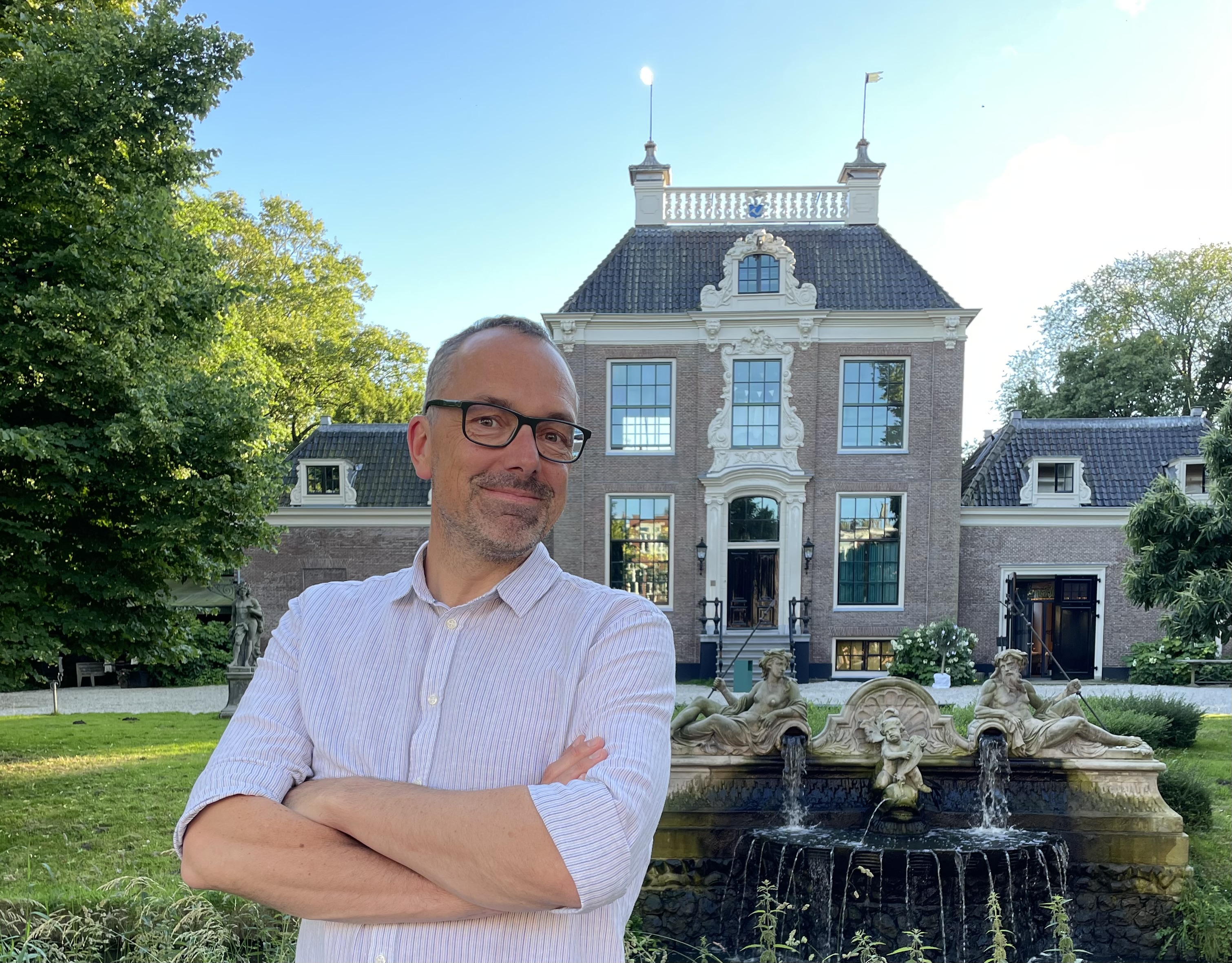
Asker Pelgrom studied History, specializing in modern Italian cultural history, at the Università degli Studi di Pisa and the University of Groningen, where he also defended his dissertation Storie italiane. Romantic historical culture between urban traditions and national consciousness. Milan and Florence, 1800-1848. From 2012-2017, he was Assistant Professor of Cultural History at Utrecht University, both in the Department of History and Art History and at the Italian Language and Culture program in the Department of Languages, Culture and Communication. From 2017-2021, he was the Director of Studies in History at KNIR.
Over the years, he has also gained extensive experience outside academia, as a literary translator from the Italian, as a guest curator in the museum field and in the heritage sector, as coordinator of a national knowledge and expertise centre on Dutch country house culture. Although his expertise primarily concerns the cultural history of the Italian Risorgimento and cultural and artistic relations between Italy and the Netherlands in the 19th century, he has also published on a range of other topics including eighteenth-century bibliophilia, Romantic landscape painting in the Netherlands and Luxembourg, and the relationship between archaeology and fascism. For KNIR, he coordinates the digitization project DELEGATO - Digital archive of the Dutch Legation in Turin and Rome, 1816-1874 (2021-2026).
Research
Asker’s research focuses on the relationship between art and politics in nineteenth-century Italy; in particular the role of foreign artists as ‘cultural brokers’ in the transmission of the image of Italy and the narratives of the Risorgimento. His two main projects represent two different political and geographical perspectives.
The first project focuses on the Dutch painter Pierre Henri Théodore Tetar van Elven (1828-1908). His work is fascinating because of the prominent role he played in visual propaganda in the period of the Italian unification, in particular several royal commissions and his appointment in the service of King Vittorio Emanuele II. This required Tetar van Elven to express the ‘official’ point of view of Italy's aspiring - and from 1861 - new ruler. The Dutchman even served as an ‘embedded artist’ during the King's campaigns in 1859 and 1860; his representations appeared both as reproductions in journals in Italy and abroad, and on monumental paintings intended for royal palaces and other representative buildings.
Using the artist's artistic legacy, archival material and a range of contemporary sources, the role of Tetar van Elven in this image campaign will be investigated. The results will be published in an article and as part of a monograph on P.H.T. Tetar van Elven (2028), in which the Risorgimento-thematics and the two long periods he spent in Italy (1854-1865 and 1882-1908) occupy a central, though not the only, place.
The second project follows on earlier research conducted at KNIR, which led to the publication of a scholarly edition of the Roman memoirs of Dutch artist Jan Philip Koelman, who lived in Rome between 1844 and 1857 and witnessed the political turmoil during the revolutionary triennio of 1846-1849.
As Koelmans' memoirs and numerous other sources reveal, he was by no means the only artist to experience these turbulent times. Hundreds of artists witnessed the revolutionary events first hand, many of them serving in the so-called civic guard in 1848 or during the republic of 1849 (‘national guard’). Among them were also dozens of foreign painters, sculptors, photographers, etc., some with active military service, others engaged in non-military ways with the republican cause. At the same time, other foreign artists found themselves on ‘the other side’ and continued to support papal authority openly or secretly, in some cases even trying to sabotage the revolution. Others still simply tried to continue their lives and work, but were inevitably affected by the events.
This project aims to investigate the relationship between art and politics during the revolutionary triennio in Rome, based on the lives and work of a select corpus of foreign artists from over a dozen different countries. A series of their ‘portraits’ will provide insight into the specific contribution of the arts to political discourse and image-making about the Italian unification, both in Italy and abroad; into artists’ sense of belonging to both a supranational artistic community and universal political ideals on the one hand, and different, sometimes conflicting national and religious identities on the other.