

Keynote lecture: The logic of the Sammelband, the illogic of the Sammelband
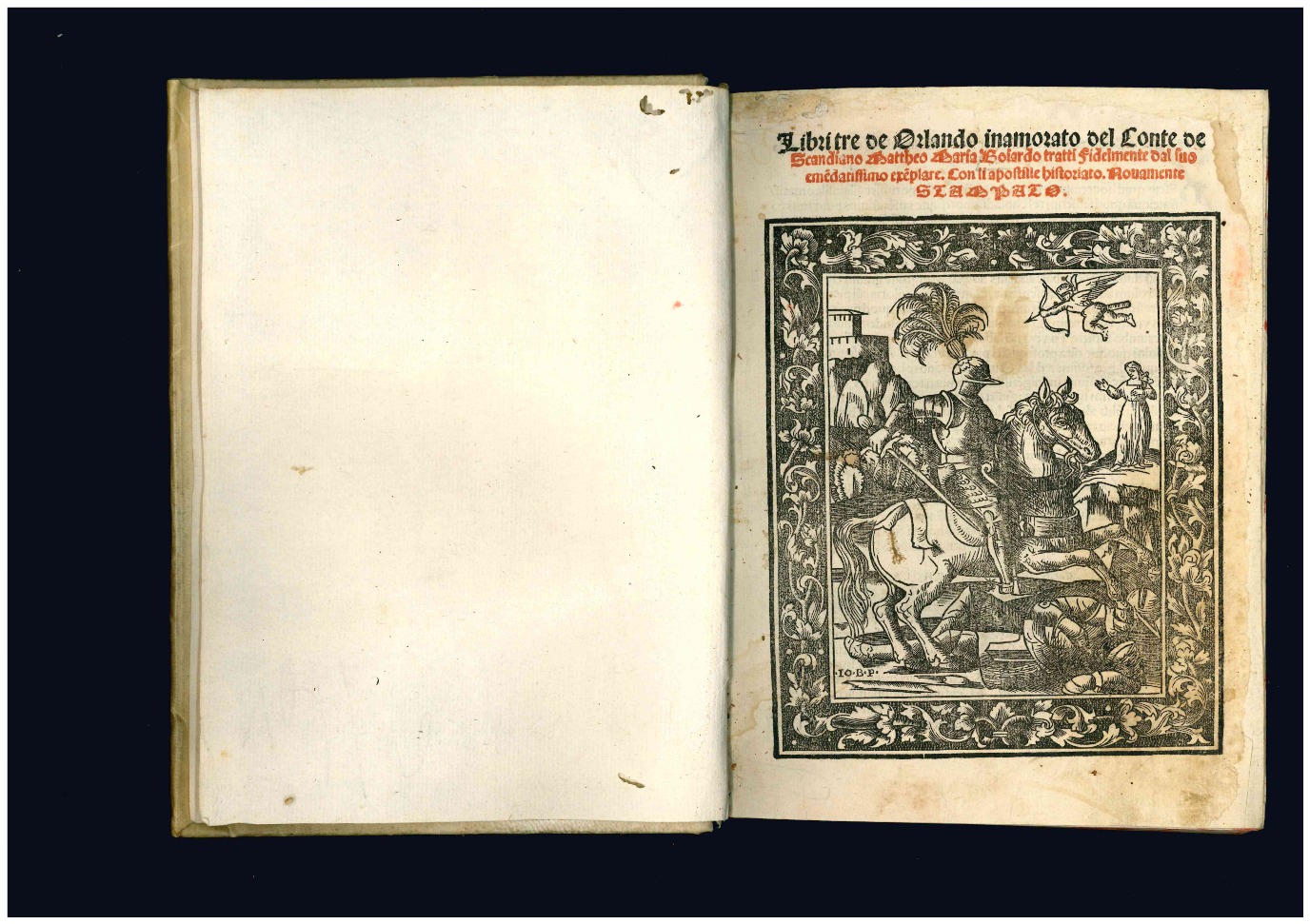
This keynote lecture by Prof. Neil Harris (University of Udine), with a response by Prof. Malcolm Walsby (Enssib in Lyon), is part of the KNIR Colloquium “Material Memory: Sammelbände and the Preservation of Popular Print in and from Italian Contexts (c. 1470-1650)” organised by Dr Rozanne Versendaal (Utrecht University).
A Sammelband (in German), or a miscellany or a miscellanea (respectively in English and Italian), or a recueil factice in French, as well as different designations in other languages is a collection of separate works, both intellectually and materially, bound up together. Though by choice we use the less ambiguous German term, the linguistic awkwardness serves as a pointer to the difficulty in grasping the importance of a binding solution that most librarians and scholars consider a nuisance or, at best, an irrelevance. And libraries – not to mention booksellers – have often conspired to conceal or destroy the material evidence afforded by Sammelbände, both by breaking up collectively bound volumes and by dispersing information about the items therein to the far ends of the catalogue. In doing so much information has been lost, both about the materiality of the book, how it was viewed by its original owner, and why and how it has survived. Book history is about money, about the affordability of texts, and the cost of binding for an early owner sometimes doubled the purchase price of a volume. Collectively binding several items in the same cover therefore reduced the expense, as well as providing bulk for small and fragile books.
A Sammelband is therefore a context and a means of grouping texts. The choice of these texts depends on the owner, since the only physical requisite is that they must be more or less the same size. Some Sammelbände suggest that the assembly of the texts happened in the bookshop, since all the items are from the same publisher and have the same date; in others the evidence suggests that they were separate for a while, before an owner, perhaps as a means of tidying up a bookshelf, had them bound collectively. After a first owner, however, many Sammelbände passed into other hands, sometimes as a single item, sometimes as part of a larger library, and so new owners found themselves exploring the matchings and juxtapositions of previous possessors. The first step to knowledge is understanding, and therefore it is important to establish the place and the role of Sammelbände in book history.
One category of texts that often involved Sammelbände was the chivalric romance, especially where a successful work inspired continuations by other authors. The Orlando innamorato by Matteo Maria Boiardo was left unfinished by the author on his death in 1494: the first two books had already been published in 1482/83 (the princeps is lost), and in 1495 at Scandiano his widow, Taddea Gonzaga, reprinted the original with the addition of an incomplete third book. Continuations and continuations to continuations were added by other authors, taking advantage of the prestige of Boiardo’s original to hide their works in – yes, you have guessed! – Sammelbände. Although Ariosto’s masterpiece, the Orlando furioso, which first appeared in 1516, with a definitive revised version in 1532, stands alone (to my knowledge, also for reasons of bulk, there is no copy in which the two works are bound together), the rival continuations proved surprisingly resistant and were published together with Boiardo’s original until the end of the Seventeenth century. The picture is distorted by a low survival rate, since the early editions of many of these continuations, like Boiardo’s original, have been destroyed by the enthusiasm of early readers, but the remaining copies provide an intriguing picture of how the Renaissance publishing industry exploited collective binding as a means of selling more books.
Biographies
Neil Harris is Professor of Bibliography and Library Studies at the University of Udine in Italy. Born in Uganda in 1957, he read English at Balliol College, Oxford, followed by a Ph.D. in Comparative Literature at Leicester and a Perfezionamento at the Scuola Normale Superiore in Pisa. He is best known for his work on the Italian printed Renaissance book, especially for the Bibliografia dell’«Orlando Innamorato» (1988-91). Together with Cristina Dondi, he is working on an edition of the Zornale of the Venetian bookseller, Francesco de Madiis.
Malcolm Walsby is Professor of Book History at Enssib in Lyon and director of the Gabriel Naudé research centre. He co-founded the Universal Short Title Catalogue, and has written and edited several volumes on the history of the book in Europe as well as a number of bibliographies. His most recent monographs are Entre l’atelier et le lecteur. Le commerce du livre imprimé dans la France de la Renaissance (2025) and Booksellers and Printers in Provincial France 1470-1600 (2021). His research focuses on the archaeology of the book and the economy and circulation of printed matter. He is currently leading a project on the creation and use of Sammelbände in Renaissance Europe.