

Research Dialogue “Classicist Architecture and Colonial Vision: The Dialectic of European Self-Fashioning and the Production of Alterity at the Mauritshuis”
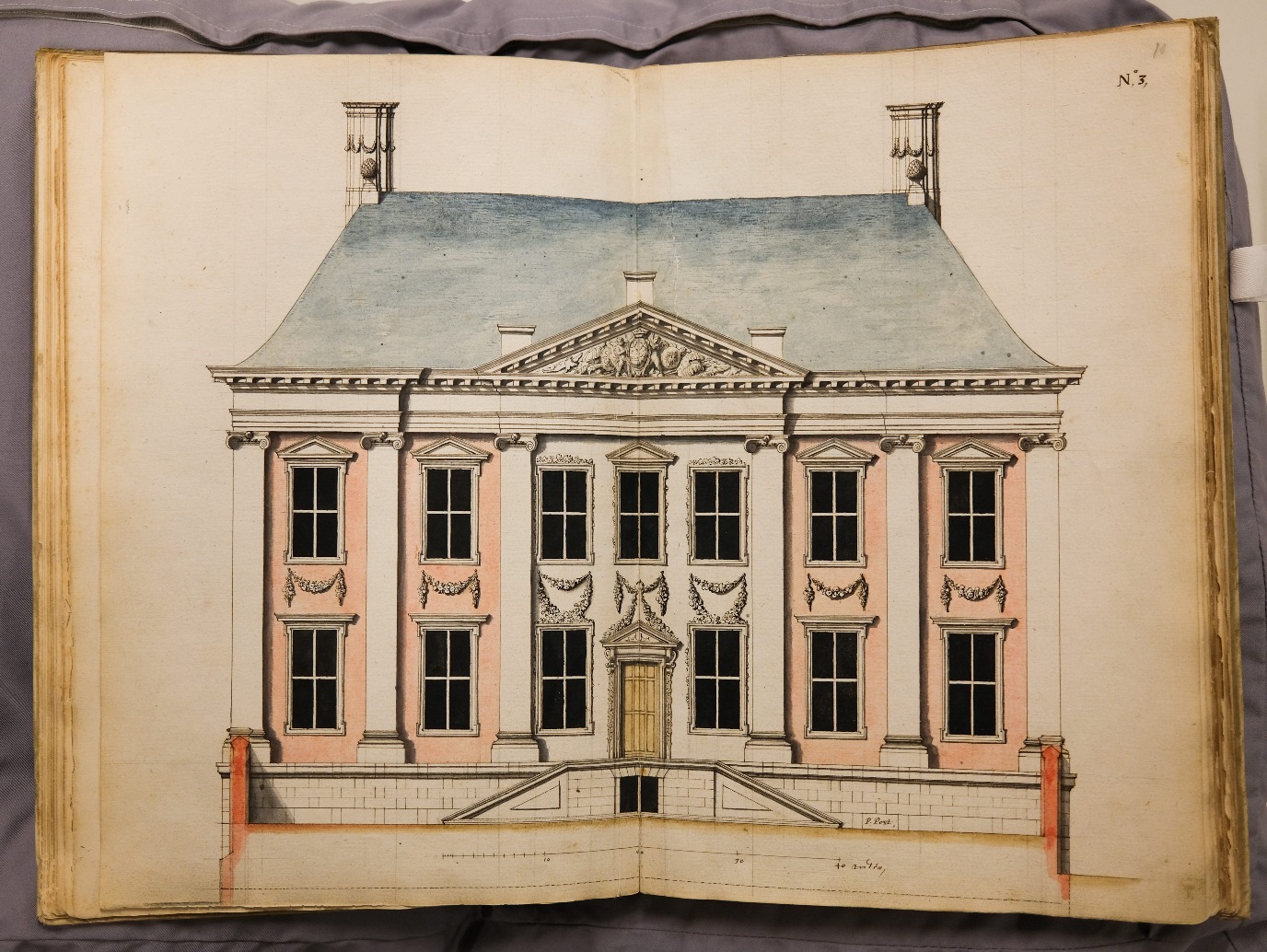
The Mauritshuis (1633-44) constitutes a key example of the reception of Italian architectural theory in the Dutch Republic - what Konrad Ottenheym has termed the “Northern Italian classicism of Palladio and Scamozzi.” Johan Maurits of Nassau-Siegen commissioned the building during his tenure as Governor-General of Dutch Brazil. Upon his return to The Hague, it served as his residence. Its architect Jacob van Campen also devised a comprehensive iconographic programme for the interior. Within this programme, paintings by Albert Eckhout and Frans Post as well as a tapestry cycle were conceived to correspond to the order of the classicist architecture.
Brazilian landscapes rendered in Dutch pictorial idioms and ethnographic portraits of the colony’s inhabitants translated the colonial periphery into a metropolitan language of representation, structured through classicist compositional principles. In doing so, they rendered colonial territories and populations visually legible and orderable, projecting the image of a peaceful and prosperous colony under the enlightened rule of the Count while shaping the Dutch imaginary of empire.
Architecture and decoration thus appear as two sides of the same medal. The classicist architectural language, grounded in the reception of antiquity and mediated through the Italian Renaissance treatise tradition, articulated a claim to legitimacy by staging both the Republic and the Count as rooted in the European tradition. The interior decoration, by contrast, stabilized this claim through the visual production of alterity: by bringing the familiar and the foreign into a hierarchical relation, it inscribed the colonial project into a metropolitan setting.
What emerges is a system of representation in which the appropriation of antiquity and the construction of the colonial other are mutually dependent. Within Dutch humanist culture, the study of antiquity had long served to assert a cultural lineage for the young Republic; its imagined classical heritage provided symbolic legitimacy within the European balance of powers. The adoption of Italian architectural theory, which promised access to ancient Rome through Renaissance treatises, was therefore closely intertwined with imperial aspiration.
The talk examines this convergence: the Mauritshuis as a metropolitan site in which the appropriation of antiquity and the visualization of the New World mutually reinforce one another.

About the speaker:
Since 2025, Albert Maximilian Fischer has been a pre-doctoral fellow at the Bibliotheca Hertziana (Max Planck Institute for Art History). He studied Art History and History at Technische Universität Dresden and Ruhr-Universität Bochum, where he completed his Master’s degree with a thesis on social housing in postwar Italy. His studies included two semesters at Università degli Studi Roma Tre, deepening his engagement with Italian architectural and urban history.
From 2024 to 2025, he served as a Research Associate at Ruhr-Universität Bochum, where he taught seminars on Dutch art of the so-called “Golden Age” in the context of the Republic’s independence, as well as on residential architecture from Palladio to the modern townhouse.
His research focuses on architectural history from transcultural and postcolonial perspectives, with particular attention to the social logic and experience of space and to the critical re-evaluation of European art history.
His doctoral project takes the Mauritshuis in The Hague as its starting point for a broader European study. It examines the convergence of the reception of antique architecture mediated through Italian treatise literature in Northern Europe and extends to comparative case studies in England and Scandinavia. The project investigates how classical forms were mobilized as instruments of imperial ideology, inscribing colonial claims into the architectural and political fabric of the European metropolis.