

Collections
The KNIR library principally specialises in archaeology, art history, and the history of Rome and Italy. It also includes special sections on papal history and on the relationship between the Vatican and the Netherlands. In addition, the collection contains works on cultural heritage and on areas which have been excavated by Dutch archaeologists or which have seen the involvement of the Institute, such as Pompeii, the Via Appia, Testaccio, and in proto-historic Lazium. A small section is dedicated to ancient technology.
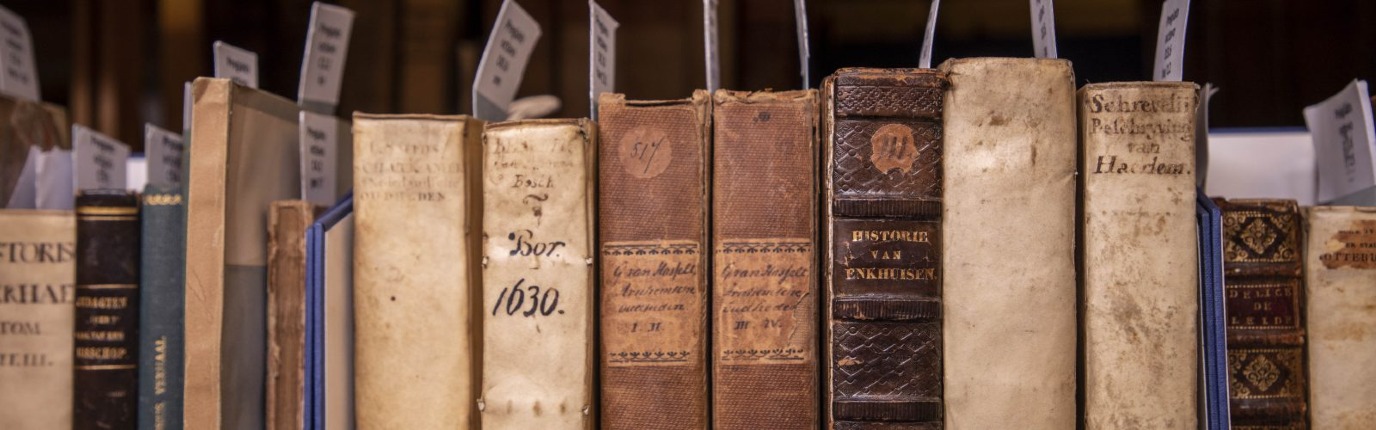
Our collection consist of:
Printed monographs These form the core of the collection and cover all key subject areas of the library as defined in our collection development policy.
Periodicals This section includes both current titles and journals that are no longer in publication. In some cases, an online version is also available.
Online resources These include open access and restricted access materials that can be consulted via a link in the URBS catalogue. In addition, restricted access resources are accessible on site through our cooperation with the University Library of the University of Groningen.
Special collections These are information resources of various types and origins that are of particular value to our institute and are carefully managed and preserved by us. For more information, click here.
Encyclopaedias, linguistic and bibliographical dictionaries, bibliographies, maps and other types of documents support the research function of the library and complement our collection.
All the resources are classified according to the prevailing library classification standards.
The current KNIR library collection is the result of an evaluation and discard project with the aim of reducing the size of the collection in order to create space for new acquisitions. A second objective of the project was to bring the collection more closely in line with our collection development policy. This reorganisation was carried out alongside the normal periodic maintenance of the collection. More information about our acquisition and collection development policy.