

Dr. Maria Bonaria Urban
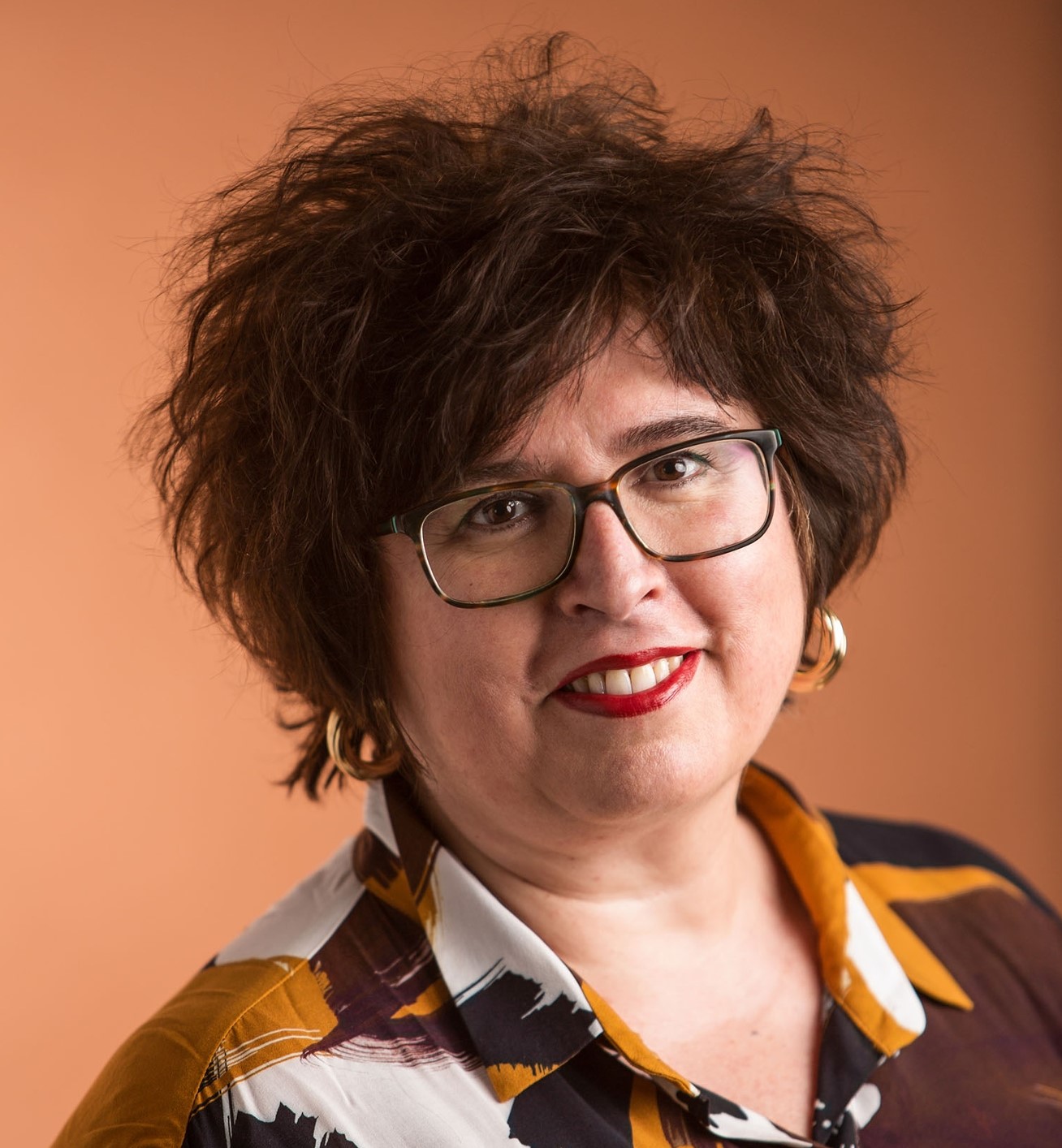
At the Royal Netherlands Institute in Rome (KNIR) Maria Bonaria Urban teaches on the history and culture of modern and contemporary Italy, Italian literature, cinema and media.
Profile
Trained in Literary Studies and History in Italy, I am a cultural historian interested in how artistic artefacts and cultural practices mediate narratives of national identity and contribute to shaping a vision of the past, by intersecting cultural production with history, politics and media. In so doing, I have adopted different research methods and a strong interdisciplinary and transnational approach.
I hold a Laurea in Lettere Moderne (1992) from the University of Cagliari (Italy) (cum laude) where I also received my Ph.D in Medieval history (1997) with the thesis Cagliari catalano-argonese. Topografia e insediamento nei secoli XIV-XV. Between 1994-1997, to complete my thesis, I carried out extensive archival research at Archivo de la Corona de Aragón and was affiliated with the Istituto sui rapporti italo-iberici, Consiglio Nazionale delle Ricerche (CNR), Cagliari, Italy [now Istituto di Storia dell’Europea Mediterranea]. In 1995 I also graduated from Scuola di Archivistica, Paleografia e Diplomatica at the Archivio di Stato di Cagliari.
For my Ph.D thesis I explored how the Catalan conquest of the Kingdom of Sardinia (1323) resulted in a new urbanistic plan for the city of Cagliari. Combining urban history, history of ideas and architectural history I reconstructed the transformation of the city within the broader transnational culture and politics of the Corona de Aragón in the XIVth and XVth century. My Ph.D thesis was published in a monograph entitled: Cagliari aragonese. Topografia e insediamento (ETS, 2000).
After moving to the University of Amsterdam (UvA) in 2003, my research and teaching shifted toward the modern and contemporary cultural history of Italy. From 2003-2020 I taught BA and MA courses (in Dutch and English) on Italian modern and contemporary history and culture, European literature, Italian cinema, cultural nationalism, migration and postcolonial studies at the Departments of Italian Studies and European Studies at the UvA. In 2008, I was awarded the UvA Lecturer of the Year Prize.
Bringing together my expertise in history, literary and film studies, I have explored the construction of national identity in literature and film through the lens of the “stereotype of the South” between the 19th and 21st century. My research on the cultural construction of the South resulted in two main publications. The first was the co-edited volume Le frontiere del Sud (CUEC 2011). After that, I reconstructed the mediation of Sardinian imagery in European culture between 1800 till the present through a vast and heterogenous body of works in the monograph Sardinia on Screen. The Cultural Construction of the Sardinian Character in Italian Cinema (2013), published by Rodopy/Brill in the book series Studia imagologica.
Furthermore, for many years I have been fascinated by the cultural memories of political violence, therefore I have developed a specific interest in the Italian Resistance (1943-1945) and terrorism which has resulted in several articles and book chapters that explore how the partisan war and political violence in the Sixties and Seventies have been mediated in literary and cinematic production. Building on my interest in the dynamics between history, memories and media I have co-edited the volume Televisionismo. Narrazioni televisive della storia italiana negli anni della seconda Repubblica (Edizioni Ca Foscari’ Digital Publishing Innesti/Crossroads 8, 2015) which explores how Italian television series rewrite national history for a large audience.
My current research projects at KNIR focus on my long-lasting interest in the history and legacy of fascism and colonialism. I have co-edited the volume Transatlantic Practices of Fascism(s) and Populism(s) from the Margin: The Cultural Politics of “Us” versus “Them” (Routledge, 2026) on the transnational dimension of fascism and populism, and the legacy of anti-fascism in contemporary protest movements in Europe and Latin America. Moreover, I am developing a new research project on the role of the Vatican and Catholic missions in the former Fascist colonies in East Africa between 1941-1956.
Currently I am KNIR Deputy Director and Director of Studies in History at the KNIR where I do research and teach on the cultural history of modern Italy, heritage and memory, and film studies. Since 2014 I have been a Senior lecturer (UD1) in Italian Studies at the Faculty of Humanities, University of Amsterdam. I am a member of the Amsterdam School for Regional, Transnational and European Studies (ARTES) and the Amsterdam Centre for European Studies (ACES-UvA). Furthermore, I am part of the editorial board of the Journal of Italian Cinema and Media Studies (Intellect) and Book Review Co-Editor of Annali d’Italianistica (JSTOR), after having served as a member of the editorial board of Incontri. Rivista europea di studi italiani and of the Board of the Werkgroep Italië Studies.
As Director of Studies in History at the Royal Netherlands Institute in Rome (KNIR), Maria Bonaria supervises students and Ph.D candidates in the field of (cultural) history, cultural memories, literature, cinema and media.
Research
My research focuses primarily on Italian cultural history of the 20th and 21st century. Main areas of interests are in contemporary (cultural) history, fascism, colonialism, heritage & memories studies, film and television studies, (post)colonial and migration studies, Imagology, and Sardinian culture. My current research deals with narratives of (anti-)fascism, political violence, and colonialism in written texts and visual media from an interdisciplinary and transnational perspective.
Publications
See also Academia.edu and UvA
R. Dhondt, M. Jansen, M.B. Urban (eds). 2026. Transatlantic Practices of Fascism(s) and Populism(s) from the Margins: The Cultural Politics of ‘Us’ versus ‘Them’. Routledge, book series Studies in Fascism and the Far Right. www.routledge.com/9781032463629
R. Dhondt, M. Jansen, M.B. Urban (2026). ‘Studying Interconnected Practices of Fascism(s) and Populism(s) from a Transatlantic Perspective’, in R. Dhondt, M. Jansen, M.B. Urban (eds), Transatlantic Practices of Fascism(s) and Populism(s) from the Margins: The Cultural Politics of Us versus Them. Routledge, book series Studies in Fascism and the Far Right. 1-31.
C. Brook, M. Jansen, M.B. Urban (eds) (2024). Postsecular Italy: Transnational and Interdisciplinary Approaches, Special Issue, Italica, vol. 101, issue 3.
C. Brook, M. Jansen, M.B. Urban (2024), Introductions by the Editors, in C. Brook, M. Jansen, M.B. Urban (eds), Postsecular Italy: Transnational and Interdisciplinary Approaches, Special Issue, Italica, pp. 382-390.
M.B. Urban (2024). “Noi eravamo felici!”: gli anni Settanta fra memoria dell’attivismo e identità generazionale in Città sommersa, in S. Contarini, M. Milanesi (eds), Anni Settanta: la grande narrazione, Firenze, Franco Cesati, pp. 29-39.
M.B. Urban (2024). ‘The 1970s beyond the years of lead: mediating generational identity in “Città sommersa”’, in Diacritica, fascicolo n. 52, 2024, 31 luglio 2024, https://diacritica.it/letture-critiche/the-1970s-beyond-the-years-of-lead-mediating-generational-identity-in-citta-sommersa.html.
M.B. Urban (2023). “Narrare il fascismo nell’era digitale: storia, memoria e transmedialità in M. Il figlio del secolo”, in Annali di Italianistica, special issue Fascism in Italian Culture (1945-2023), n. 41, 2023, pp. 445-472.
M.B. Urban (2022). Nel laboratorio dell’immaginario cinematografico: l’identità sarda fra spettacolo etnografico, autoesotismo e riscoperta delle radici, in Creazioni identitarie. Arte, cinema e musica in Sardegna dal secondo dopoguerra a oggi, a cura di Paolo Dal Molin, Il Maestrale, pp. 205-223.
M. Jansen & M.B. Urban (2021). The 'fabrication' of religion in The Young Pope. The double irony of post-secular 'iconoclash'. In A. Mariani (Ed.), Paolo Sorrentino’s Eclectic Oeuvre (Trajectory of Italian Cinema and Media; Vol. 2), Intellect books. pp. 228-241.