

Practicum: Remote Sensing in ancient Samnium. Aerial archaeology and geophysics practicum in Molise
In this research-oriented field work campaign, you explore the possibilities of aerial archaeology, especially drone imagery, in combination with geophysical prospection to study ancient mountain society, together with a small, international team in the Apennines.
Target group and admission
The field work practicum is open to Bachelor, Master, Research Master and PhD students in Archaeology, Ancient History, Classics, Geoarchaeology and related fields enrolled in one of the KNIR partner universities in the Netherlands (RU, RUG, UL, UU, UvA, VU). Students from Italian or other (international) universities are emphatically welcome to apply too, with the only difference that no international travel costs can be reimbursed. Because of the international character of the project, the project working language is English.
Each student should arrange with his/her home coordinator whether the practicum can be a part of the existing curriculum, for instance as an internship. The KNIR can provide a certificate stating your participation.
Practicum period
1 – 31 May 2026
Credits
max. 6 ECTS
Teaching staff
Prof. dr. Tesse Stek
Berend Beekhuis, MA
Dr. Flavia Palazzini
Iris Verbiesen, MA
Marcello de Vos, MA
Time period and activities
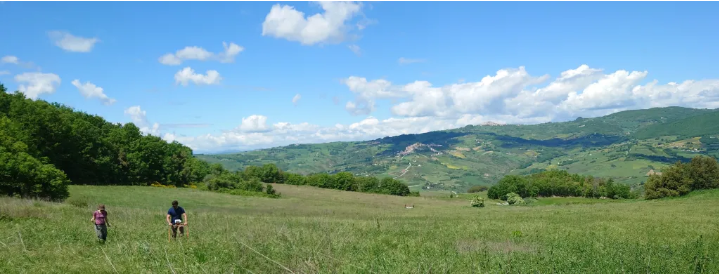
The field work project is organized by the Royal Netherlands Institute in Rome (KNIR). It consists of intensive field and lab work in the Apennine mountains. Although the focus of the project is on research, not on teaching, the high staff-student ratio provides ample room for learning in practice. Autonomy, creativity and initiative are key in this practicum. Besides collecting and interpreting multispectral and LiDAR data, the team will be using various geophysical prospection methods, such as ground penetrating radar and georesistivity. The collected data will be analysed along with satellite imagery, historical aerial photos and pedestrian survey data. Students may join for any 2-4 week period during the field season; though we kindly request arrivals and departures occur on weekends. Field and laboratory work takes place Monday through Saturday lunchtime.
Expenses and Accommodation in Molise
Throughout most of this campaign, the team will stay at our study centre in Jelsi, Molise (CeDISA). Tuition and lodging is free for all participants. After successful completion of the campaign, international travel expenses will be reimbursed up to €100,- for students enrolled in the KNIR partner universities. If you travel by train from the Netherlands to Molise, you are eligible for a reimbursement of your travel expenses up to €125,-. Local travel and meals during working days are included. Participants sleep in shared rooms (up to 3 people) at our (somewhat spartan) accommodation at the CeDISA; please bring a sleeping bag, clothes for both hot and cold weather, a hat and sturdy mountain boots.
Application and admission
Students can apply by sending a mail to: secretary@knir.it with subject: “Application practicum Remote Sensing 2026”, and include in your mail the following documents (merged to 1 PDF file):
• a brief letter of motivation (max. 1 A4), explaining also previous field work experience. Experience with flying drones is of course very useful, but not obligatory.
• a cv
• a recent official list of grades
Application deadline - CLOSED
9 April 2026
More info
E-mail: secretary knir.it, b.beekhuis knir.it, m.devos knir.it
Phone: (+39)063269621