

Room for politics. Political Space in Rome from the Principate to Late Antiquity
Where was the room for politics in Rome in imperial times? It used to be thought that the advent of monarchical rule at the end of the first century BCE led to the demise of political freedom. No matter how violent, no matter how much manipulation took place, during the previous centuries members of the elite had been able to debate among themselves, and voices of the population were being heard (if often ignored). When emperors started to monopolise power, this type of politics came to an end. Although the senate retained her official function, its power diminished dramatically, while the urban populace was appeased with bread and circuses and in return had little more to do than shout acclamations in support of the rulers.
Recently, however, the attention of scholars has shifted to the agency of individuals and groups. Mass meetings and social rituals served not only to provide legitimacy to the emperor, but also offered possibilities for negotiation. The language of honour created a normative discourse in which parties formulated expectations of each other’s behaviour. Although the power of the people was exercised in a less explicit form than that of their emperor, it was definitely tangible.
This course investigates the room for politics in imperial Rome, from the first to the fifth century CE. It consists of an online introductory meeting, followed by a stay in Rome at the KNIR. In Rome we visit the physical spaces where the relation between state and subject took shape. We investigate not only how such spaces were used for politics, but also how their use changed over time, with the advent of Christianity. We discuss texts showing how individuals and groups interacted, formulated their wishes, negotiated, and made claims about their position. Ultimately, we try to formulate what Roman ‘politics’ in this period actually meant.
Target group and admission
The course is open to 15 selected (R)MA students in Classics, Archeology, History, Art History and related studies from KNIR partner universities (University of Amsterdam, Vrije Universiteit Amsterdam, Leiden University, Utrecht University, Radboud University, University of Groningen).
Credits
The study load is the equivalent of ECTS 5 (140 hours) or 6 ECTS (168 hours). Each student should arrange with their university coordinator whether the course can be a part of their existing curriculum. After successful completion of the course, the KNIR provides a certificate mentioning study load and grade.
Costs
Participants will receive free tuition and excursions (including most entry fees for museums and archaeological sites). Travel expenses to and from Rome will be reimbursed up to € 100,- (or € 125,- in case you travel by train) upon a successful completion of this course. Meals and personal expenses are not included.
Facilities in Rome
All participants will be housed at the Royal Netherlands Institute near Rome’s Villa Borghese Park. From there, it is only a short walk to the historical center of Rome. The KNIR accommodation consists of shared bedrooms and bathrooms, and includes a living and dining space, a large kitchen, washing machine and wireless internet. All residents have 24/7 access to the library and gardens of the Royal Netherlands Institute.
Application and admission
The selection of participants is based on grades, the added value of the course in the student’s curriculum, a letter of motivation, and the composition of the group. You can apply via the button on the course overview page, and include in your application the following documents (in PDF format):
-
a letter of motivation explaining how the course fits into your study programme (max. 1 A4)
-
a CV
-
a recent list of courses followed and grades provided by your university, both for BA and MA
-
the name and e-mail address of a teacher at your university who is upon request willing to provide further information about you (no letter of reference is needed); this person cannot be one of the teachers of the course
At KNIR we believe diversity enriches debate: different perspectives contribute to the quality of our work. We therefore value and highly encourage applications from students with diverse backgrounds and identities.
Deadline applications
04 December 2026, 5 p.m. You will be notified about the outcome within two weeks after the deadline. Please note that the decision of the selection committee is final and no correspondence will be entered into.
More info
E-mail: secretary knir.it
Phone: (+39)063269621
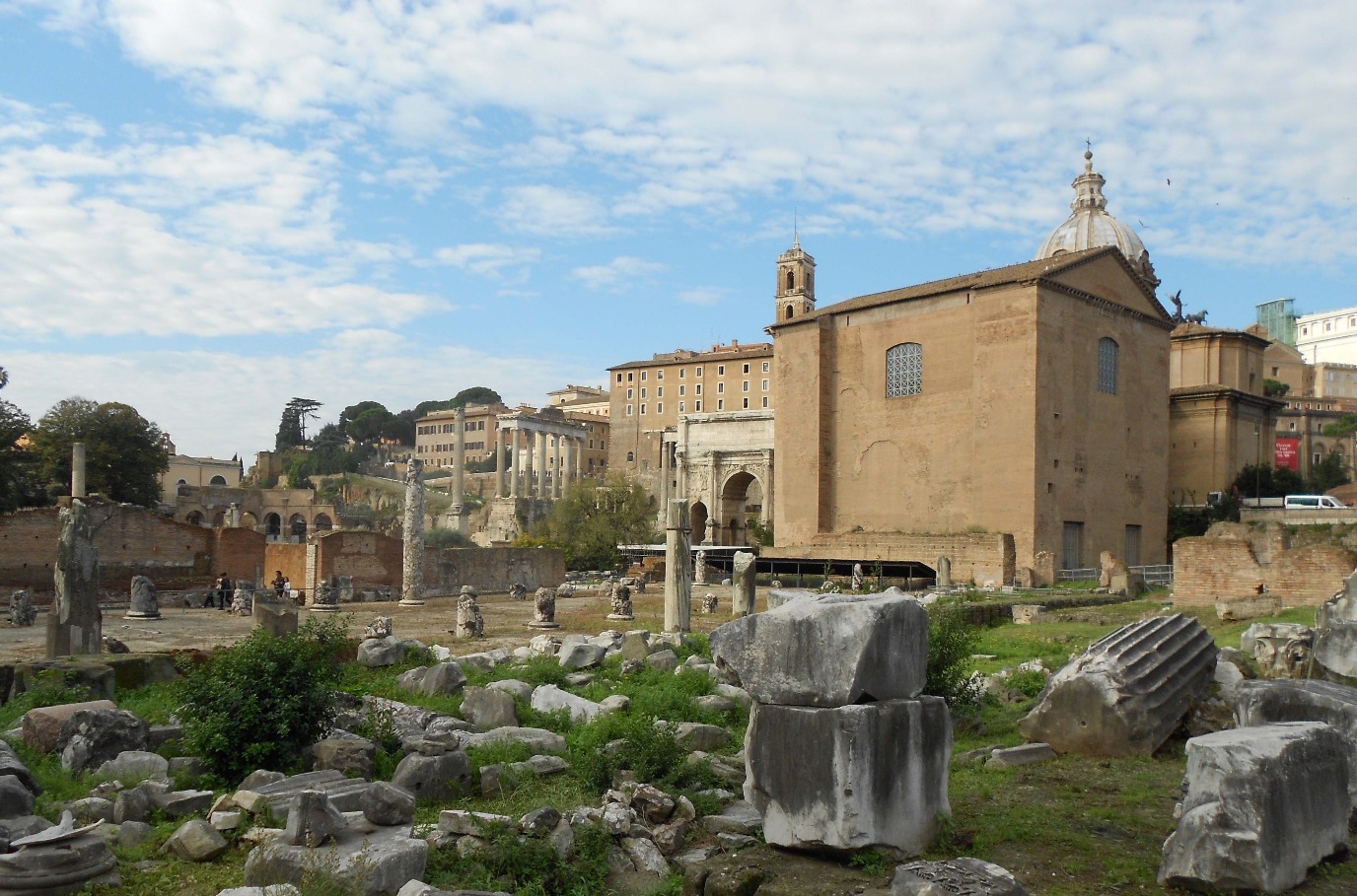
© photos: Curia Iulia on the Forum Romanum. Source: Wikipedia (tile) / Wikipedia (page)