

Lines worth writing. Working on the publication of pedestrian surveys in San Giovanni in Galdo (Molise, CB)
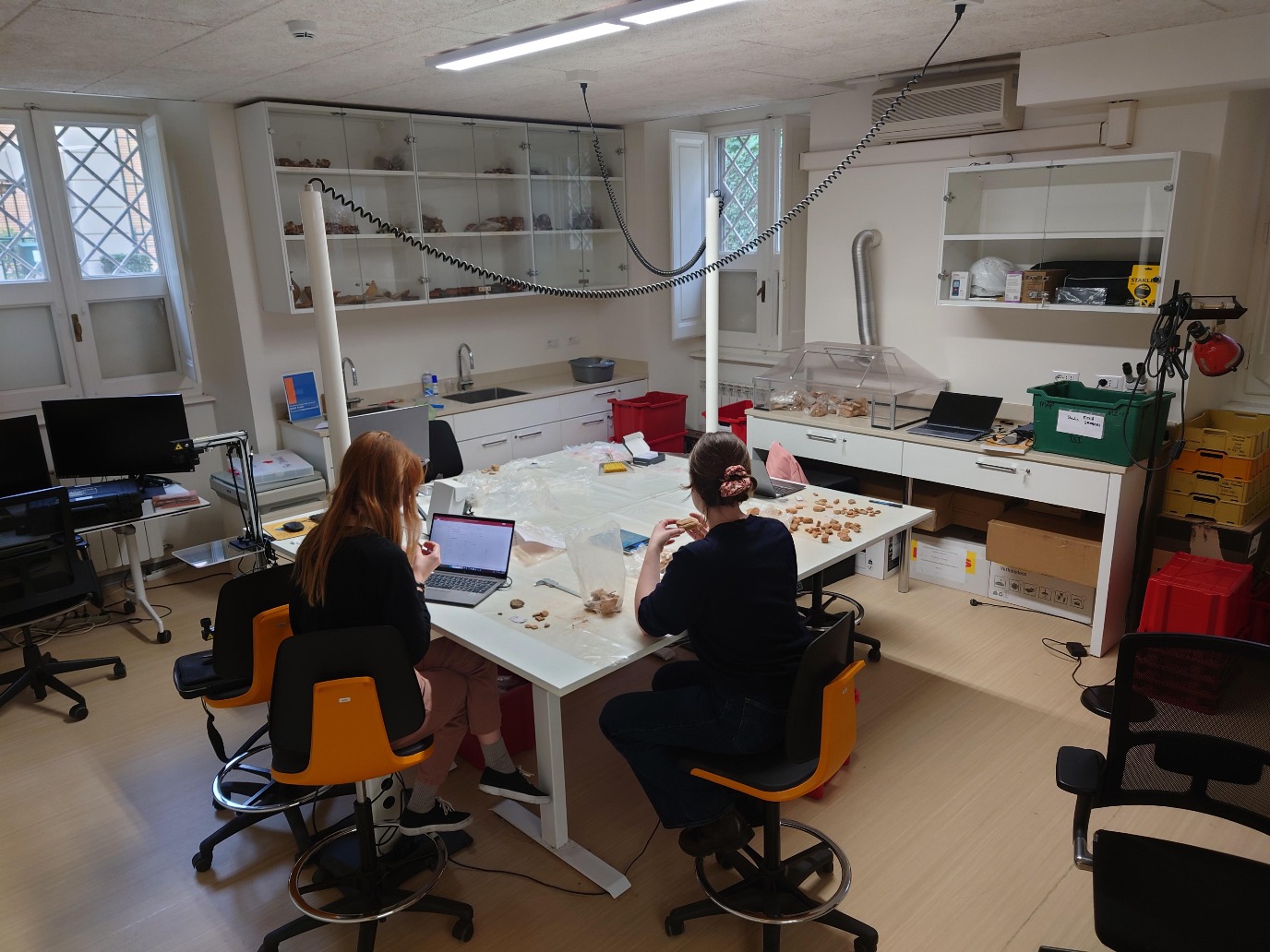
The fieldwork of the Tappino Area Archaeological Project aims to contribute to the understanding of the ways the inland and mountainous area of ancient Samnium was settled and cultivated in antiquity. Besides the surveys that the KNIR currently organises, an important part of this objective is the publication of the survey results of past campaigns. Over the years, a large portion of one of the municipalities in the research area, San Giovanni in Galdo (Molise, CB), has been investigated with transect surveys by teams of archaeologists and students. Additionally, sites they identified were subsequently examined with various remote sensing methods. Now that these investigations in the field have taken place, it is time to move on to the next step: working towards a publication of the results in the form of a Carta Archeologica.
In this practicum students will work on the publication of the pedestrian survey results and remote sensing data that were gathered during field work in San Giovanni in Galdi (Molise, CB). Students will become familiar with various types of archaeological material found during pedestrian survey, learn how to draw pottery and how to find dateable references in order to establish chronologies for the sites that were identified during the fieldwork, as well as integrating these results with aerial imagery and geophysical data to get to a more complete understanding of the sites and the ancient landscape.
Part of the practicum will take place at the KNIR, and part of the practicum will take place at the CeDISA, the fieldwork base in Molise.
Course language
English
Staff
Prof. dr. Tesse Stek (University of Groningen)
Dr. Flavia Palazzini (KNIR)
Berend Beekhuis, MA (KNIR)
Iris Verbiesen, MA
Student selection
Students are selected on the basis of prior experience, study results and a letter of motivation. In these respects, the KNIR didactical practice distinguishes itself from the regular academic teaching at Dutch universities. Participating students will be evaluated on their capacity to familiarise themselves with and understand the course materials in an autonomous way, and their active participation during group work and discussions.
Credits
The workload of the intensive practicum is 5 ECTS (140 hours). Students should arrange with their university coordinator whether the course can be a part of their existing curriculum. After successful completion of the practicum, the KNIR provides a certificate mentioning study load and grade.
Costs
Participants will receive free tuition and excursions (including most entry fees for museums and archaeological sites). If you are enrolled in one of our partner universities, travel expenses to and from Rome will be reimbursed up to € 100,- (or € 125,- in case you make the complete trip by train) upon a successful completion of this practicum. Meals and personal expenses are not included.
Facilities in Rome and Jelsi
All participants will be housed at the Royal Netherlands Institute near Rome’s Villa Borghese Park during the part of the practicum that takes place in Rome, and at the CeDISA in the former convent of Santa Maria delle Grazie in Jelsi (Molise, CB) during the part in Molise. The KNIR accommodation consists of shared bedrooms and bathrooms, and includes a living and dining space, a large kitchen, washing machine and wireless internet. All residents have 24/7 access to the library and gardens of the Royal Netherlands Institute. As the CeDISA is housed in an old structure in rural Italy, accommodation here is somewhat more spartan, bedrooms are shared by max. 2 people, and a washing machine and wifi are available.
Application and admission
This practicum is open to max. 3 BA, (R)MA students. The selection of participants is based on grades, the added value of the practicum in the student’s curriculum, a letter of motivation, and the composition of the group. Students can apply via the button ‘Register for a course’ on the course overview page. Include in your application:
-
a letter of motivation (max. 1 A4)
-
a cv
-
a recent list of courses followed and grades provided by your university
We believe diversity enriches debate: different perspectives contribute to the quality of our work. We therefore value and highly encourage applications from students with diverse backgrounds and identities.
Deadline applications
10 November 2026. You will be notified about the outcome within two weeks after the deadline. Please note that the decision of the selection committee is final and no correspondence will be entered into.