

Field school: Exploring Mountain Society in Guarda (Portugal) with the GAP project
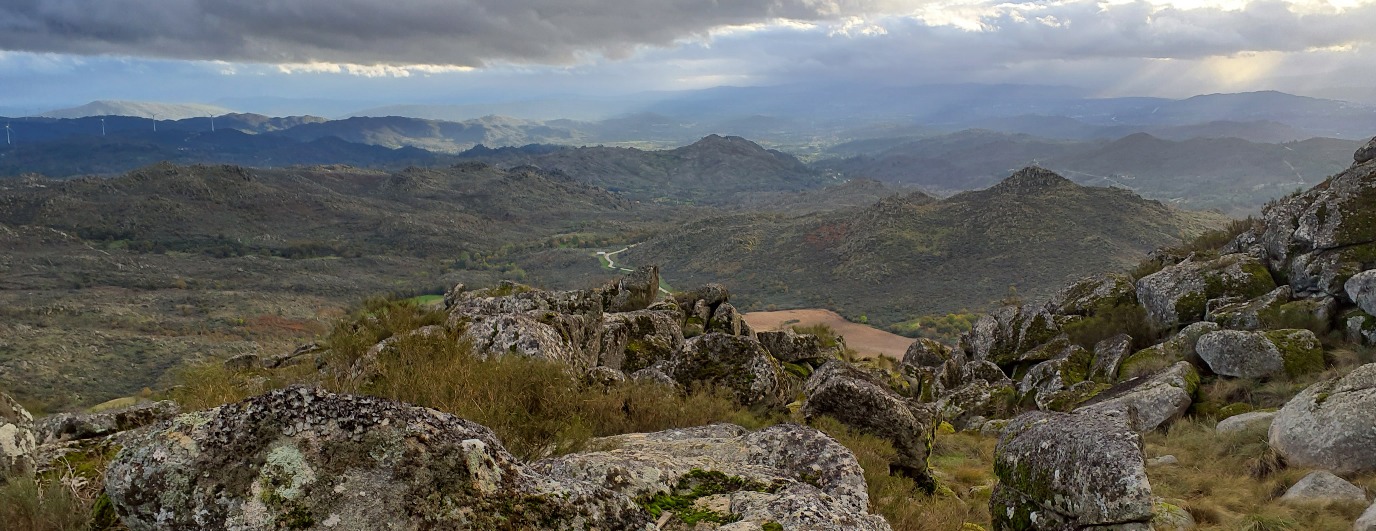
This field and laboratory campaign is part of the Guarda Archaeological Project (GAP), a collaboration between KNIR, NOVA University of Lisbon, the University of Groningen, and the Municipality of Guarda. Guarda, located in the Serra da Estrela mountains, is the highest municipality in Portugal and lies between the Mondego, Zêzere, and Côa valleys. The region is known for its beautiful, rolling landscape and, during protohistory as well as the Roman and Medieval periods, played a significant role in mineral mining and metal exploitation in the western Mediterranean world.
Target group
Bachelor, Master, Research Master and PhD students in Archaeology, Ancient History, Classics, Geoarchaeology, Cultural Heritage, and Tourism who are enrolled at NOVA University Lisbon or at one of the KNIR partner universities in the Netherlands (RU, RUG, UL, UU, UvA, VU) are eligible to apply. Students from other Portuguese, Italian, Spanish, or international universities are also strongly encouraged to apply.
Language
Because of the international character of the project, the standard project language is English.
Activities and time period
28 June (arrival) – 19 July (departure)
This archaeological field school involves: (1) stratigraphic excavation at a high-altitude settlement in the Serra da Estrela mountains; (2) field survey in the territory around Guarda; and (3) intensive study of finds and GIS documentation in the laboratory of the Museum of Guarda, including the processing and drawing of ceramic and metal finds collected during previous project campaigns. Field and laboratory work takes place from Monday through Saturday lunchtime. The high staff-to-student ratio ensures ample opportunities for hands-on learning.
Teaching staff:
Tomás Cordero Ruiz, Anita Casarotto, Tiago Ramos, Daniel Sardinha, Flavia Palazzini
Expenses and Accommodation in Guarda
Students will stay in a hostel in Guarda in shared rooms (further details will follow). The working base for data processing will be the laboratory at the Museum of Guarda. Tuition is free for all participants, as are lodging and meals.
For students enrolled at one of the Dutch KNIR partner universities (RU, RUG, UL, UU, UvA, VU), travel expenses will be reimbursed upon successful completion of the campaign - up to €100 for students travelling by plane and up to €125 for students travelling by train.
Credits and assessment
The study load is equivalent to 4 ECTS. Each student should coordinate with their home institution or programme coordinator to determine whether this field school can be integrated into their existing curriculum. Students will be assessed based on their participation and the development of insights and skills during the field school. After the campaign, a certificate of participation will be issued by the KNIR.
Application and admission
Please note that places are limited and participation in the field school is subject to selection; only selected applicants will be admitted.
Students can apply via the button ‘Register for a course’ on the course overview page. Include in your application:
• a brief letter of motivation (max. 1 A4)
• a brief CV (if applicable, pointing out previous field work experience, max. 1 A4)
• a recent list of courses followed and grades provided by your university
Deadline
3 May 2026, 23:59 CET.
More info
E-mail: secretary@knir.it
Phone: (+39)063269621