

Behind the DCC Scenes: Willem Jan van der Veen
Would you like to know more about the people who work at the UG Digital Competence Centre? In our behind-the-scenes series, our data stewards, IT consultants, and data protection professionals share their role and their perspectives on the research landscape when it comes to data. In this edition: Willem Jan van der Veen.
Text: Willem Jan van der Veen
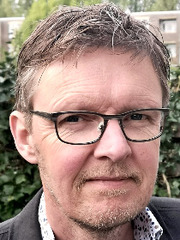
It does not take a lot of effort to read or hear about data issues, as they have a prominent position in the daily news in your newspaper, on the radio and on the internet. These issues may range from data breaches, data autonomy, big tech, AI, truthfulness or data protection; their common denominator is that they have their origin in worldwide political, economic and commercial forces and profoundly affect and challenge your own scientific conduct.
I realize how much effort it takes to collect, process and manage data in a way that meets current scientific and societal standards. As a former researcher in demography and epidemiology, I have the impression that these challenges have become ever more massive, particularly to PhD students starting their scientific career. These challenges are about designing an appropriate data plan that fits the research questions of your project, measures to collect data safely and securely, methods to analyze data, and strategies for storage, archiving and publishing data. It seems quite demanding to me, to open up your research work to the world but at the same time deal with all kinds of safety and security threats in a responsible and ethical way.
What I particularly like about my work at the DCC and the library is that I can provide practical assistance… to design an appropriate data plan that works.
In several ways, I assist in searching for, accessing and processing data. A down-to-earth example is my work with LSEG Workspace, a platform for financial and economic data. Two years ago, together with colleagues from the library, CIT and the Faculty of Economics and Business, I set up a new set of procedures to assign licenses to Economics staff and students. In my role as an information specialist at the University Library, I frequently help students find their way in data platforms like these and extract data which serve to answer their research questions. I have also supported the extraction of larger quantities of data out of platforms like LSEG Workspace and Wharton Research Data Services (WRDS).
In my role as data steward at the DCC, I’m involved in having consultancy meetings with PhD-students from the Faculty of Spatial Sciences on their Research Data Management Plan (RDMP). These meetings may be on diverse issues, such as obtaining informed consent, dealing with audio or video data, employing transcribing tools (but not using American cloud services), de-identification of personal data, and sharing data in a data repository.
Good and meaningful science can flourish with a clear understanding of challenges and risks.
What I particularly like about my work at the DCC and the library is that I can provide practical assistance and contribute to a better understanding of what is needed to design an appropriate data plan that works. This may range from assistance with licenses, resources or technical issues, to advice on navigating the rather complex context of regulations, measures, and guidelines for good scientific conduct. Even though the world turns in unpredictable ways, I’m convinced that good and meaningful science can flourish with a clear understanding of challenges and risks, a well thought out study design and data plan, and sometimes a little help.
More news
-
12 October 2026
Farewell to Big Tech: ‘It requires a different mindset’
-
08 October 2026
Exam period: extra opening hours UB - UG-only
-