
PhD defence Lizzie Roeble
Lizzie Roeble (TRÊS)
Promotores: Prof. L.M. Lima Valente (TRÊS/Naturalis), Prof. R.S. Etienne
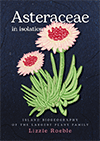
Asteraceae in isolation - Island biogeography of the largest plant family
Islands are hotspots of biodiversity, harboring a disproportionate number of species despite their small land area. Many island species are endemic, occurring nowhere else, and islands are renowned for their spectacular adaptive radiations, such as Darwin’s finches on the Galápagos and the iconic Hawaiian silverword alliance. These systems have long been viewed as natural laboratories, offering insights into the ecological and evolutionary processes that generate and maintain biodiversity.
In this thesis, I explored how ecological and evolutionary processes shape island plant diversity. With approximately 34,000 species, Asteraceae are the most diverse plant family worldwide and a prominent component of island floras. Asteraceae provide a powerful lens to examine how biodiversity is assembled, maintained, and lost on islands. I worked across scales, combining macroecological, phylogenomic, and biogeographic models to build a more complete understanding of island Asteraceae diversity.
My work shows that Asteraceae are exceptionally successful on oceanic islands, where diversity is concentrated in particular archipelagos and lineages and shaped by repeated island radiations. At broad ecological scales, native species richness conforms to classic island biogeography theory. In contrast, analyses at evolutionary and archipelago scales reveal community assembly dynamics that diverge from classic island biogeography predictions. Speciation-driven communities can operate under non-equilibrium dynamics, demonstrating that speciation cannot be ignored in island biogeography models, particularly on large, remote archipelagos. Together, these findings show that the processes shaping island biodiversity are scale-dependent.
This thesis also highlights major conservation challenges for island floras. Conservation assessments remain critically incomplete for island Asteraceae. Modern human-driven extinction rates are hundreds of times higher than natural background rates. Anthropogenic extinctions are having severe and deep evolutionary impacts on these vulnerable island floras. Understanding the patterns and processes that generate the incredible diversity of plants on islands is essential for meaningful conservation.