Page content
Section menu
Main menu
Associative links
Page content:
English

Behavioural Biology


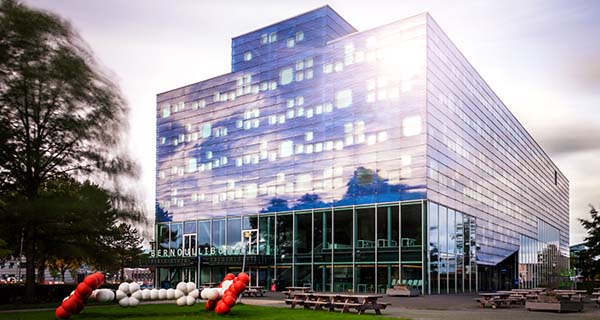
The research group Behavioural Biology is part of the Centre for Behaviour and Neurosciences, which is one of the research institutes of the Faculty of Mathematics and Natural Sciences of the University of Groningen ), located in the north of the Netherlands. The group is also part of the Educational Institute of the Life Sciences and the Graduate School of Sciences, both of the same faculty. It also participates in the research school Behavioural and Cognitive Neurosciences that integrates research from different faculties. At the moment the group consists of 3 tenured and one tenure research staff, 2 postdoc's and supervises 9 PhD students in house and 7 elsewhere. The research group Behavioural Biology is part of the Centre for Behaviour and Neurosciences, which is one of the research institutes of the Faculty of Mathematics and Natural Sciences of the University of Groningen ), located in the north of the Netherlands. The group is also part of the Educational Institute of the Life Sciences and the Graduate School of Sciences, both of the same faculty. It also participates in the research school Behavioural and Cognitive Neurosciences that integrates research from different faculties.

Working with
Working with

Vision, mission and objectives

Behaviour in all its dazzling diversity is a major target of natural selection and one of the most complex results of evolution. All animals, including humans, continuously perform and react to behaviour. Thorough understanding of the complexity of behaviour is indispensable when using even simple behavioural parameters as read-outs for brain mechanisms. In addition, a full understanding of behavioural mechanisms needs an evolutionary perspective. Our group, therefore, finds its inspiration for investigating causal mechanisms of behaviour in how animals, including humans, deal with solving problems of survival and reproduction in real life. Functional or evolutionary questions about adaptation and life history trade-offs do not only inspire our proximate analyses, but knowledge gained by the latter also feeds back on questions about function and evolution We have the expertise and facilities to integrate both ultimate and proximate approaches, enabling us to test the causes and consequences of behavioural variation ultimately on the whole organism, in (semi)natural conditions. In addition, we take advantage of the enormous diversity of animals that natural selection has generated, by carefully selecting optimal study species for our research questions. This approach, combined with integration from the molecular level to the population, and combining lab and field studies, opens up new animal models, generates novel insights, and broadens our perspective on the mechanisms and development of behaviour.

Last modified:November 01, 2011 11:15
Associative links:

Behavioural Biology

Related Research groups

Research Institute